Hair Colors for Brunettes: 12 Stunning Shades to Transform Your Look
The right hair color can add warmth, depth, or brightness without taking away from your natural brunette base. You may want a subtle refresh, a low-maintenance change, or a richer shade that makes your hair look more polished.
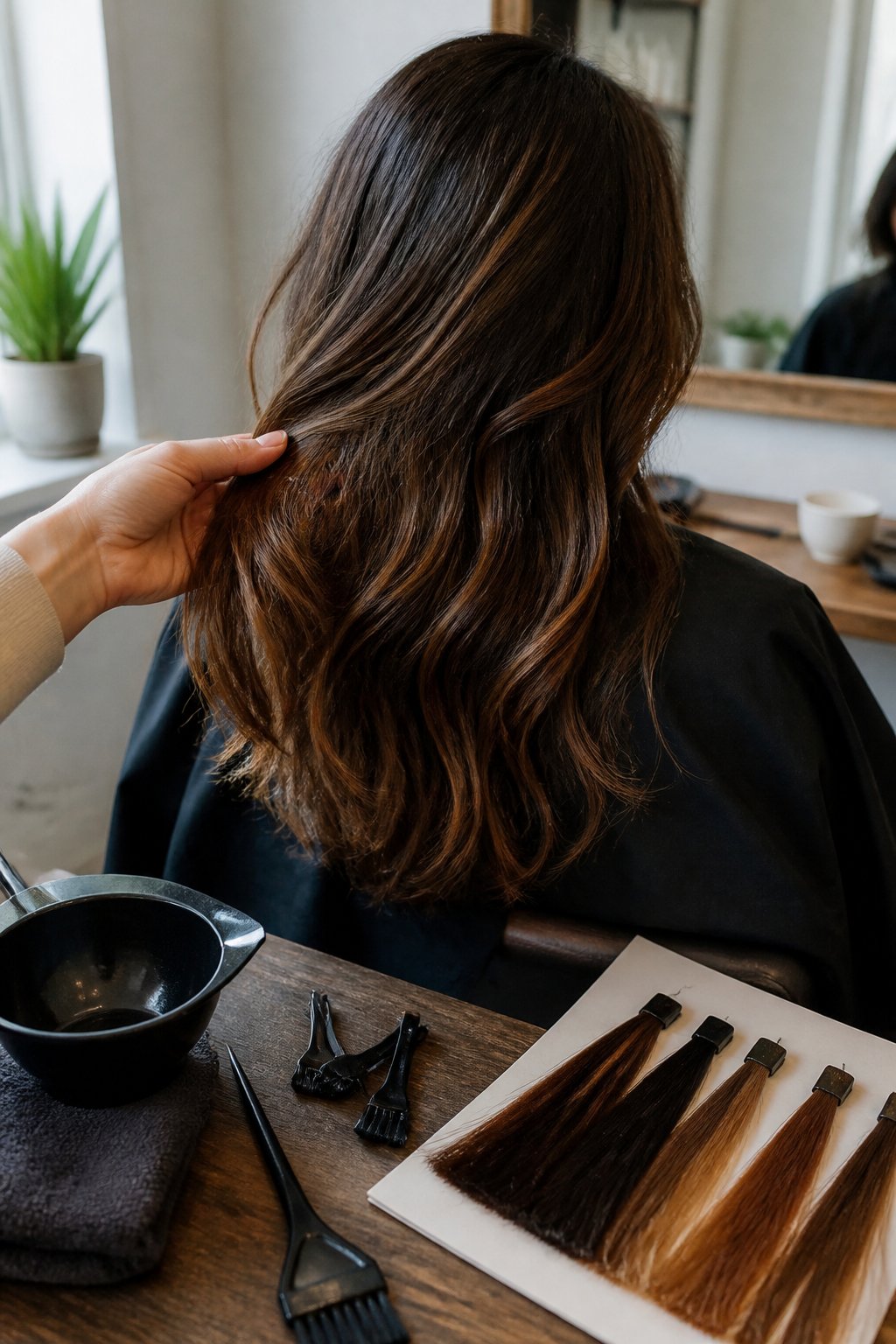
You can find a brunette color that suits your skin’s undertone, personal style, and preferred level of upkeep. Explore rich browns, soft highlights, cool shades, and red-based tones, along with practical guidance for keeping your color glossy and vibrant.
1. Rich Chocolate Brown
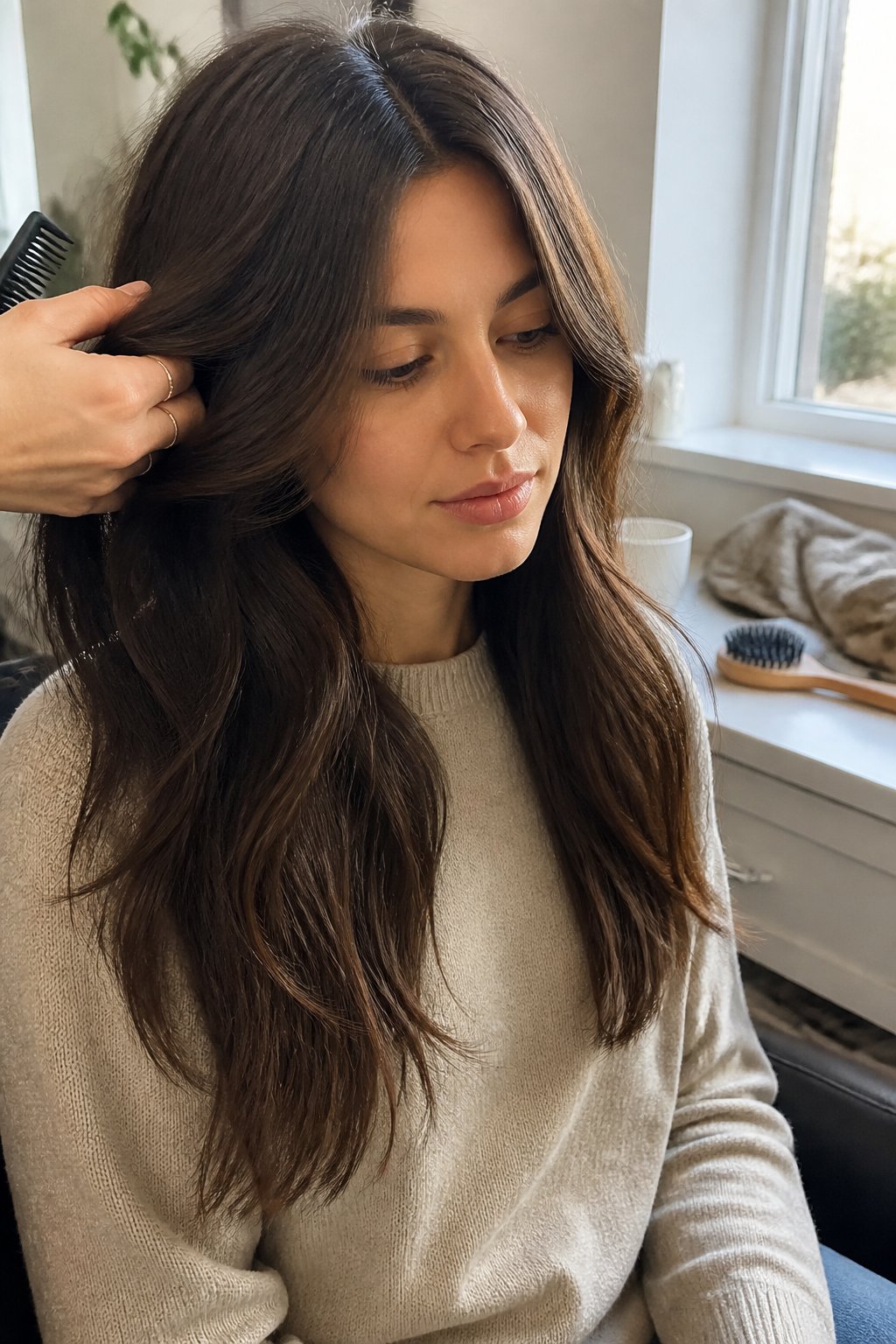
Rich chocolate brown gives your brunette hair a deep, polished look without appearing black. You can choose warm milk-chocolate tones, balanced cocoa, or cooler mocha shades based on your skin’s undertone and personal style.
Ask your colorist for subtle highlights if you want more movement. Caramel ribbons suit warm complexions, while soft ash or espresso pieces can balance cooler undertones. A single flat shade may look heavy, especially on long or thick hair.
Protect the color with a sulfate-free shampoo, wash less often, and use heat protection before styling. If your hair has old highlights, your colorist may need to fill uneven areas first so the brown looks smooth. Choose a chocolate shade that adds depth while keeping your natural brunette character.
2. Espresso Brown
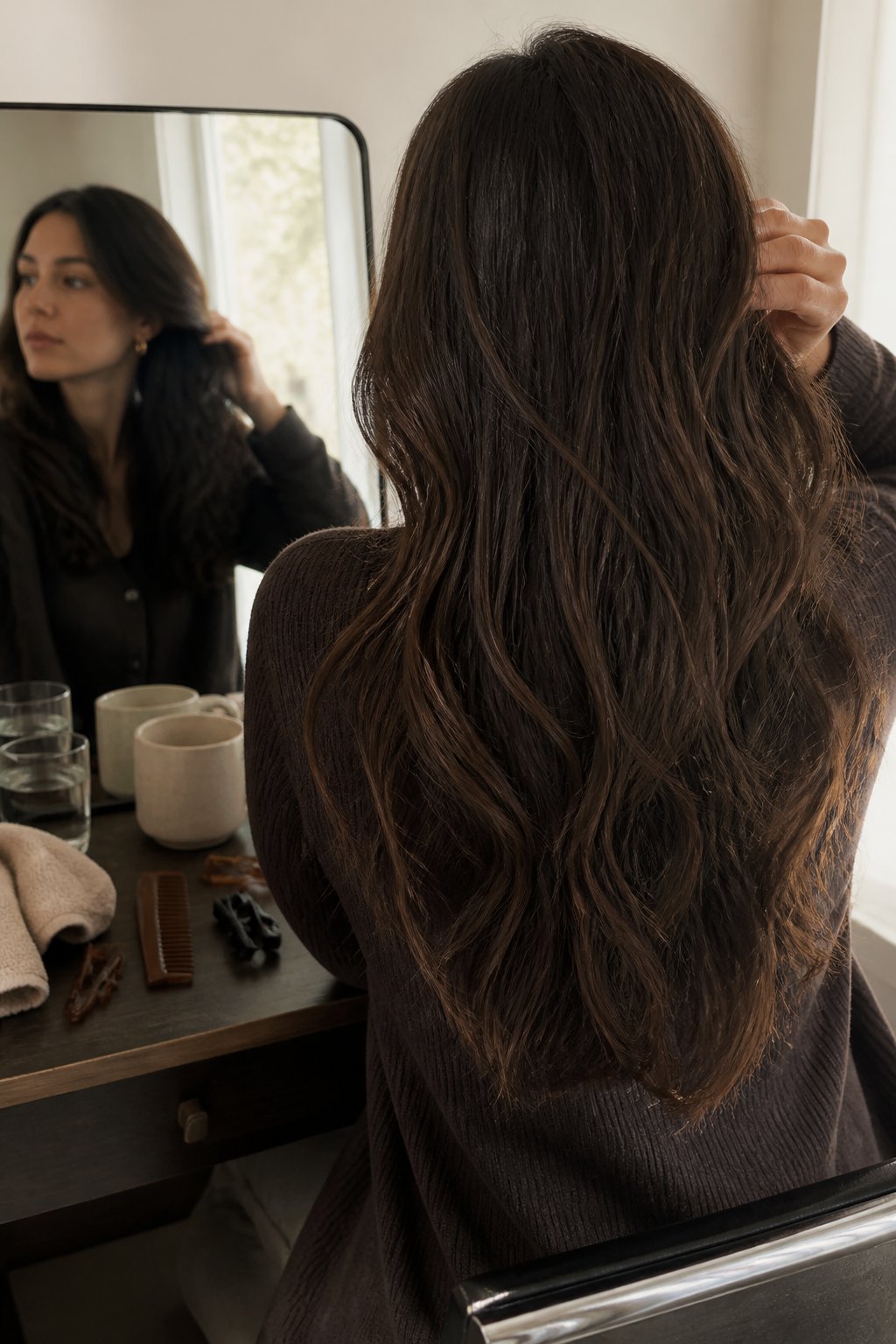
Espresso brown gives you a deep, polished brunette shade without the flat look that pure black can create. Its subtle mix of warm and cool brown tones adds dimension, especially when light catches smooth, healthy hair.
Choose a single espresso shade if you prefer a low-contrast, sophisticated look. For more movement, ask your colorist for soft chocolate lowlights or fine caramel pieces around your face. These highlights can brighten your features while keeping the dark base intact.
Before coloring, discuss your hair’s current tone and condition. A common mistake involves requesting cool espresso over warm, previously colored hair without a plan; unwanted red or orange tones may show through. Regular gloss treatments and color-safe shampoo can help preserve the rich finish. Bring natural-light photos to your appointment so you and your colorist share the same goal.
3. Warm Chestnut Brown
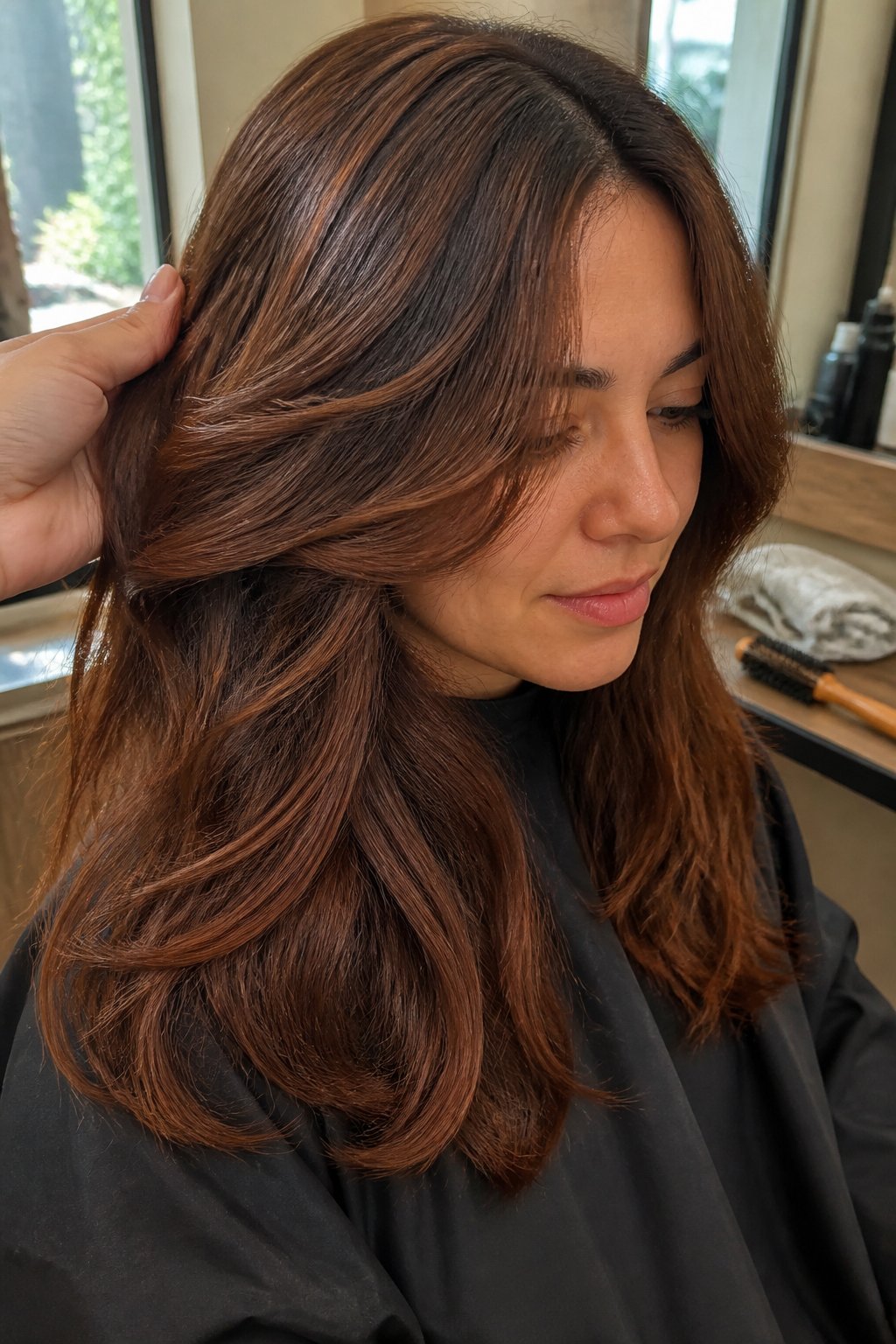
Warm chestnut brown gives brunette hair a rich brown base with soft red, copper, or caramel tones. Choose it when you want more warmth and shine without moving into full auburn or blonde.
For a natural result, ask your colorist for a medium or deep chestnut base with subtle golden-brown dimension. Fine balayage through the mid-lengths can add movement, while a single chestnut gloss works well when you want a lower-maintenance change.
Your skin’s undertone can guide the shade. Golden chestnut often suits warm undertones, while a deeper, softer chestnut can balance neutral or cool undertones. Avoid adding too much red if your hair already pulls orange; request a controlled brown formula instead.
Protect the color with color-safe shampoo, regular conditioner, and heat protection. Bring a real photo to your appointment so your stylist can match the depth and warmth to your starting color.
4. Honey Caramel Balayage
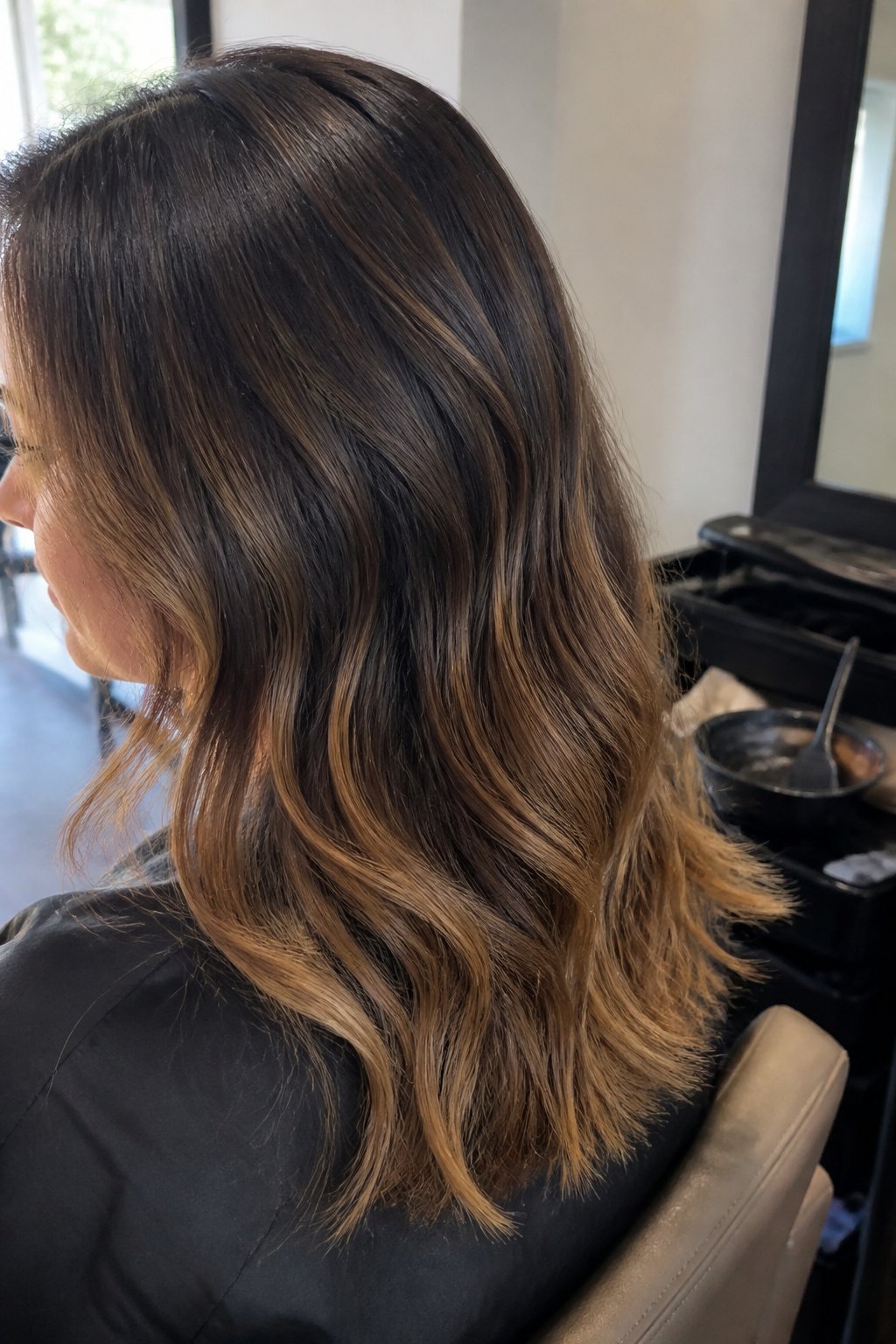
Honey caramel balayage gives brunette hair warm, hand-painted brightness without removing its natural depth. Your stylist blends golden caramel, honey, and toffee tones through the mid-lengths and ends, keeping the roots close to your natural shade for a softer grow-out.
Ask for fine ribbons around your face if you want a subtle change, or wider pieces through the lower layers for more contrast. On dark brown hair, the stylist may lighten sections first, then add a toner to control unwanted orange or yellow tones.
Bring photos that show both the color and placement you prefer. A common mistake is asking for “caramel” without explaining how warm or light you want it; the result may look more golden than expected. Use color-safe shampoo, wash less often, and apply a weekly conditioning mask to protect shine. Choose a finish that matches your natural depth and maintenance routine.
5. Golden Bronde
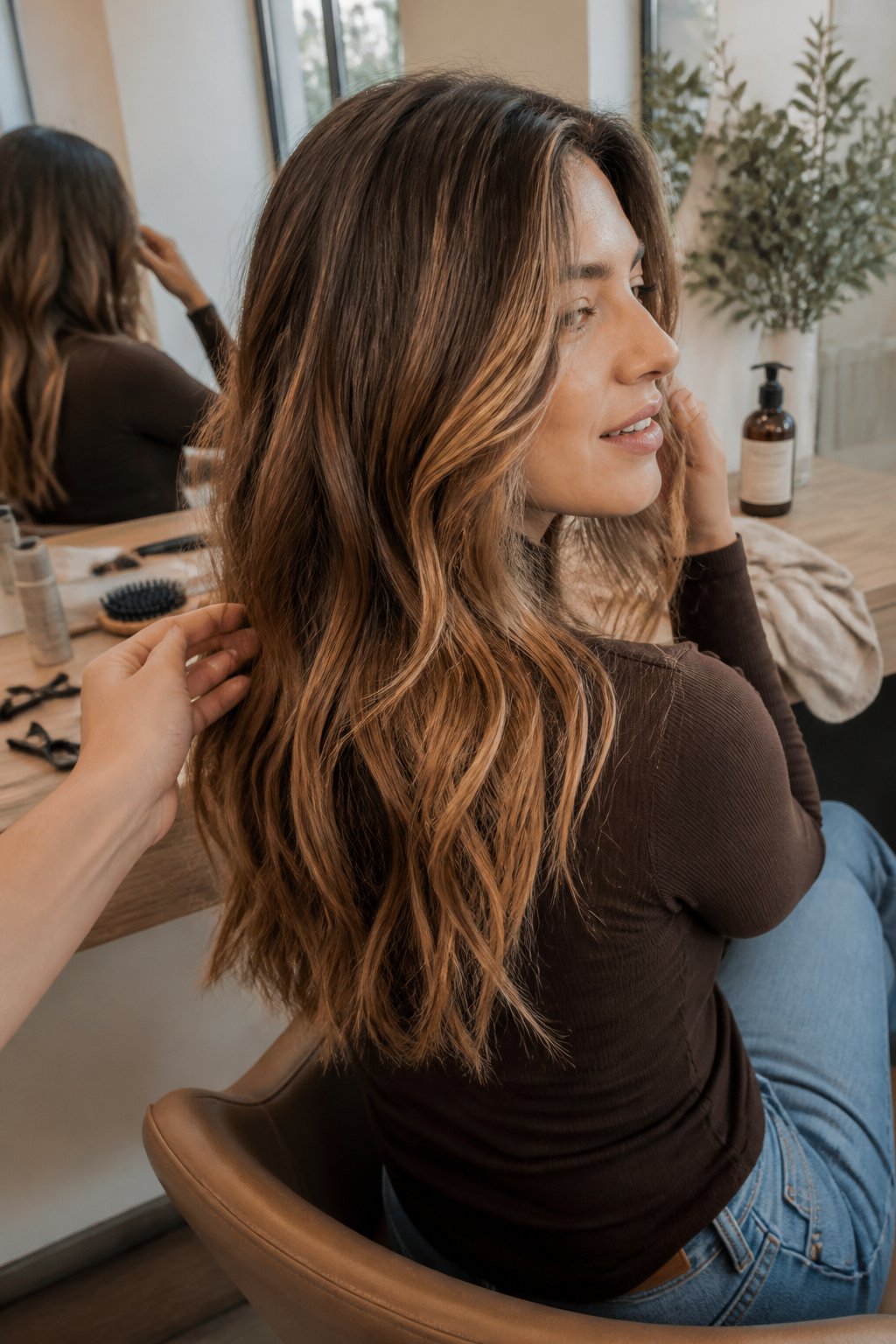
Golden bronde blends brunette depth with warm blonde ribbons, giving you a soft, sunlit hair color without a full blonde commitment. It works well with balayage, babylights, or foils, depending on how much brightness you want around your face and through the lengths.
Ask your colorist for a deeper root and lighter golden ends if you prefer low-maintenance growth. Long layers and loose waves can show the color’s dimension, while a smoother style creates a more polished finish.
Watch for tones that turn too orange, especially if your hair naturally pulls warm during lightening. A purple or blue shampoo may help control unwanted brassiness, but use it sparingly so you do not dull the golden tones. Bring a photo to your appointment and ask for a shade that suits your skin’s undertone.
6. Mocha Brown
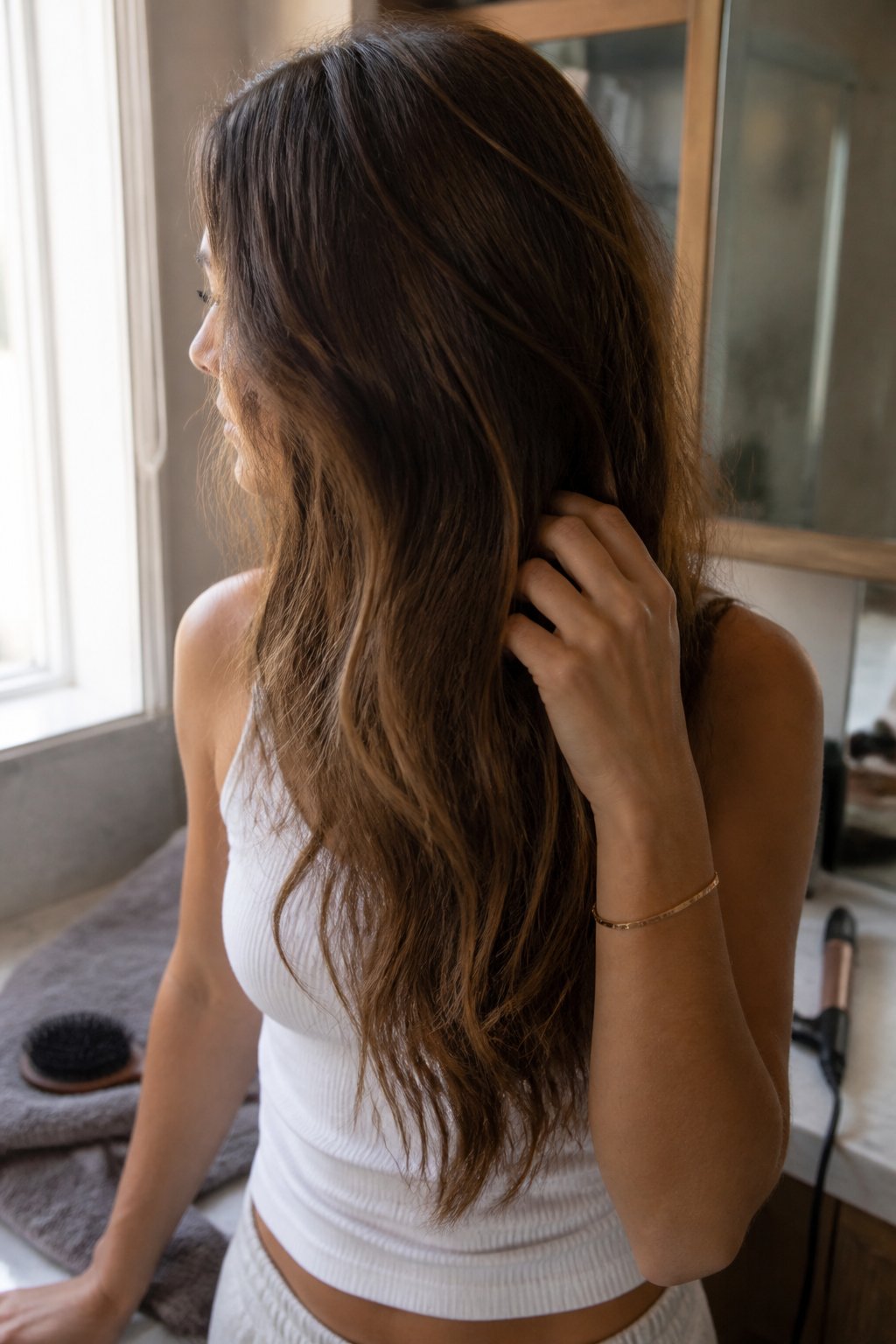
Mocha brown gives you a polished brunette look with a balanced mix of chocolate, coffee, and creamy brown tones. You can wear it deep and glossy or add soft caramel highlights for more dimension.
Ask your colorist to adjust the shade to suit your undertone. Warmer mocha works well with golden or olive skin, while cooler espresso mocha can complement pink or neutral undertones. Subtle lowlights can also make fine hair appear fuller without creating a dramatic change.
Avoid choosing a single flat brown if you want movement. A few blended highlights around your face can brighten the style, but too much lightness may push the color toward brassy caramel. Use a color-safe shampoo and limit heat styling to help preserve its shine.
Bring photos that show the depth and warmth you want, then let your colorist tailor the formula to your natural hair.
7. Ash Brown: A Cool-Toned Brunette Guide
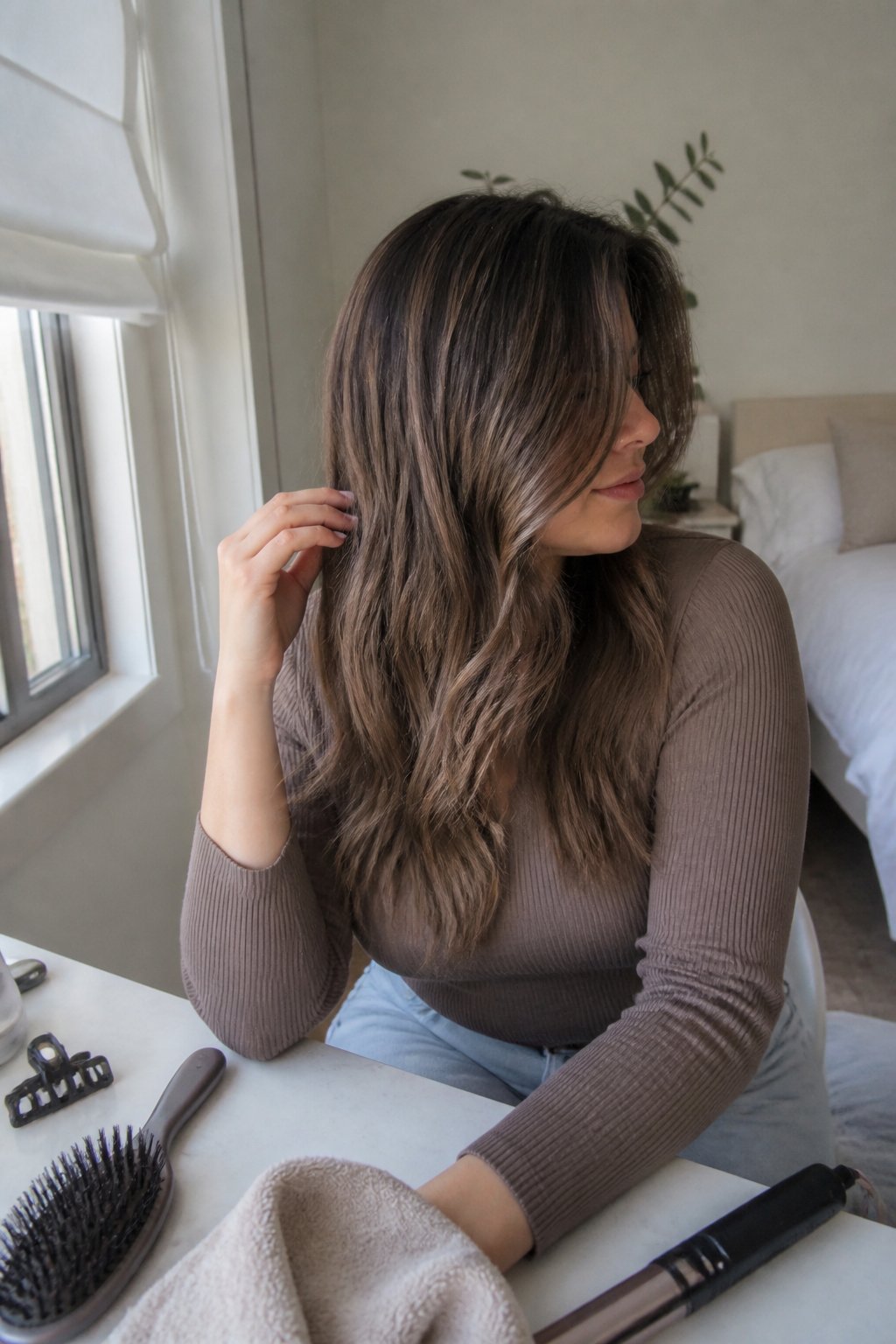
Ash brown gives you a brunette base with cool gray or smoky tones. It works well when you want to soften warm red or gold tones without choosing a much lighter shade. Dark ash brown suits a deep natural brunette, while mushroom brown adds a softer, muted finish.
You can wear this color as an all-over shade, balayage, ombré, or subtle highlights. For example, ask your stylist for ash-brown pieces around your face if you want added brightness without frequent touch-ups. Your skin’s undertone matters, but your stylist can adjust the shade to keep it balanced.
Avoid choosing a color from a box based only on the photo. Existing dye, natural warmth, and hair condition affect the result, and overly cool toner can make hair look dull. Use color-safe products, wash less often, and limit heat styling to help maintain the shade.
8. Mushroom Brown Hair for Cool-Toned Brunettes
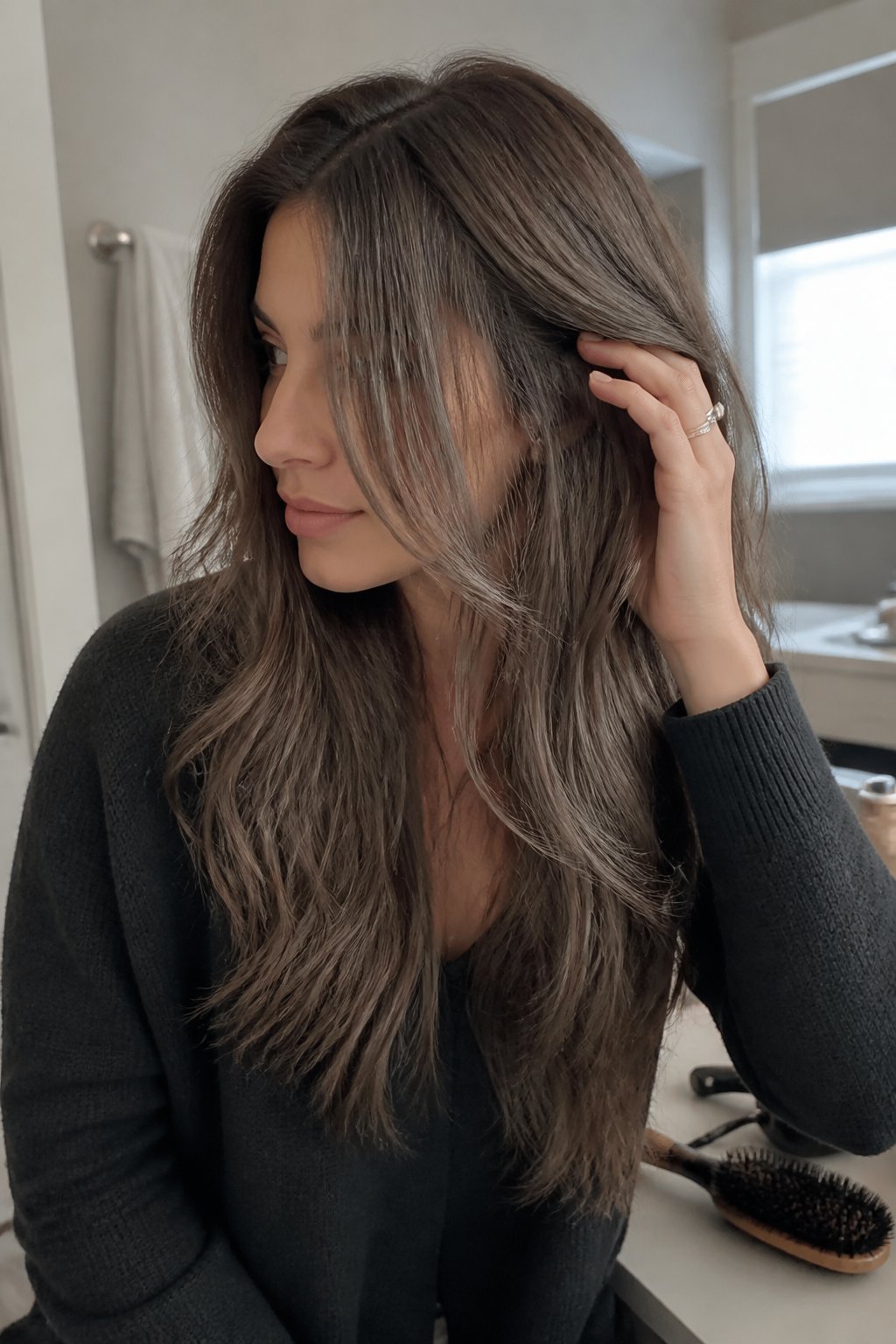
Mushroom brown gives you a soft, cool brunette shade with taupe, ash, gray, and beige tones. It works well when you want lower warmth without choosing a very dark or dramatic color.
Ask your colorist for a dimensional result rather than one flat shade. Subtle balayage or worn-in highlights can add movement while keeping the base natural. On medium or dark brown hair, your stylist may need to lighten selected pieces before applying a cool toner.
Watch for brassiness, especially if your hair lifts easily to orange or gold. Use a blue shampoo when needed, wash with cool water, and choose products made for color-treated hair. A professional consultation helps prevent uneven bands and overly gray results.
Bring photos that show the tone and contrast you want before your appointment.
9. Cinnamon Brown
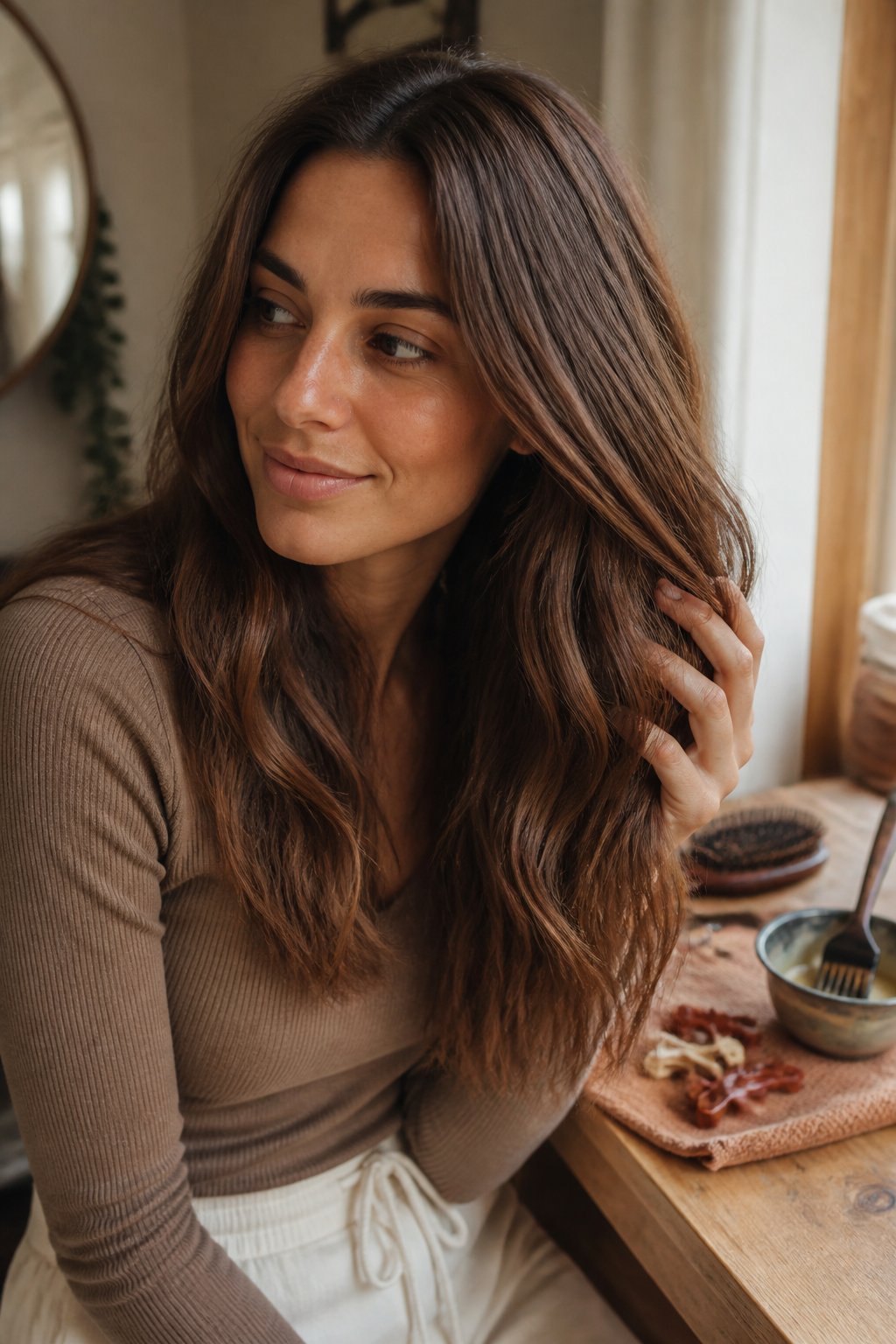
Cinnamon brown gives your brunette hair a warm, reddish-brown finish without moving fully into auburn. You can choose a deep chocolate base with subtle copper tones, or add lighter balayage pieces for more visible dimension.
Ask your colorist to match the shade to your natural brown and skin undertone. Fine highlights can brighten dark hair, while lowlights help keep the result soft and natural. A common mistake is adding too much red at once, which can create uneven, brassy tones.
Protect the color with sulfate-free shampoo, cooler water, and regular gloss treatments. If you use heat tools, apply a heat protectant because dryness can make warm tones look dull. Choose cinnamon brown when you want brunette depth with a noticeable but polished change.
10. Auburn Brown
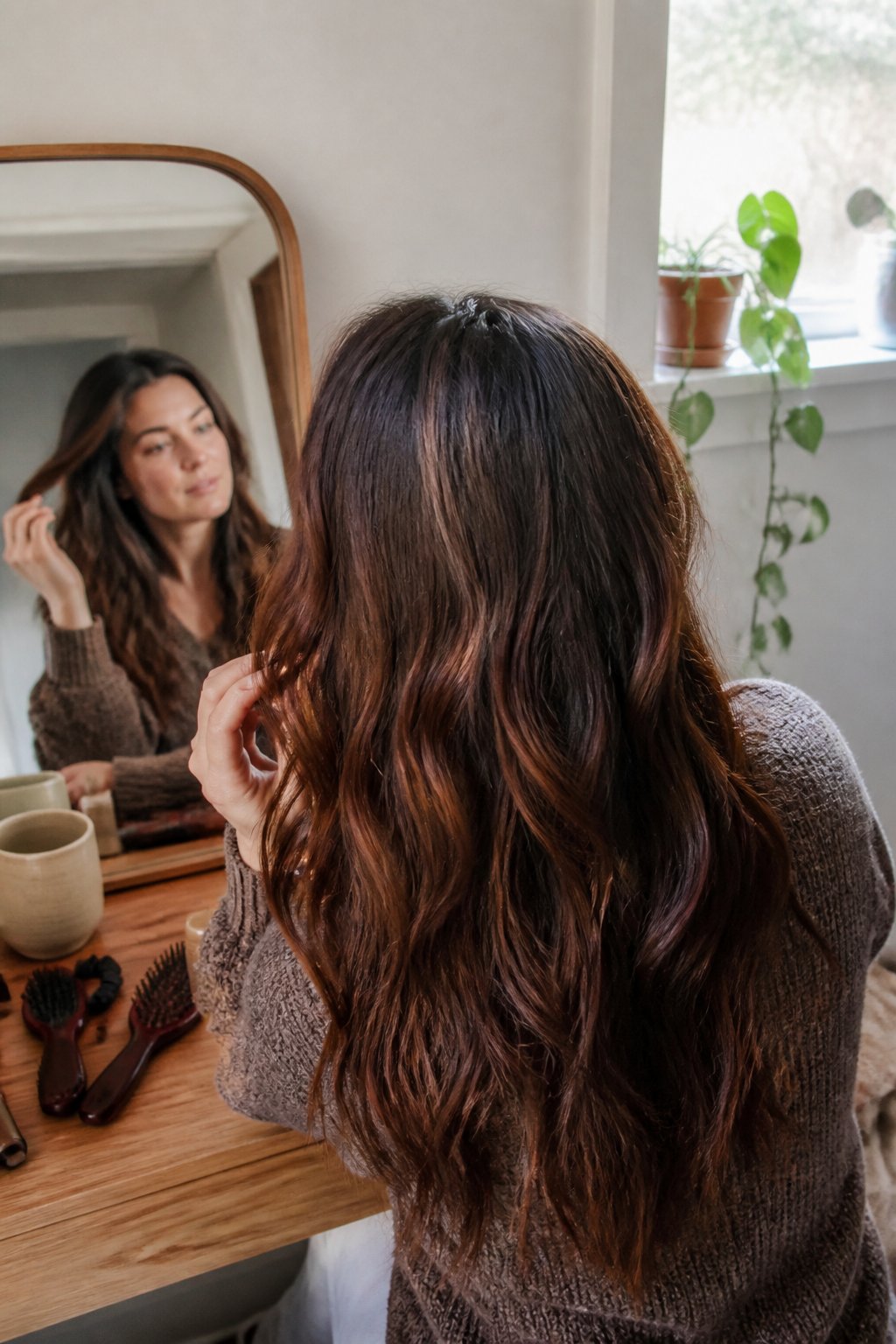
Auburn brown adds warm red and copper tones to a brunette base without creating a bright red look. Choose it when you want visible warmth but still prefer a natural, wearable color.
For a subtle change, ask for an auburn gloss, soft balayage, or fine copper-brown highlights. A deeper mahogany auburn suits dark brown hair, while cinnamon or chestnut tones create a lighter effect. Your stylist can adjust the shade to complement your skin’s undertone and eye color.
Avoid choosing a red tone from a photo without discussing your starting color. Existing dye, gray hair, and lightening history can change the result. Use color-safe products and refresh the warmth with a tinted mask when the shade begins to fade.
Bring two or three reference photos to your appointment and ask which auburn brown will need the least maintenance.
11. Mahogany Brown
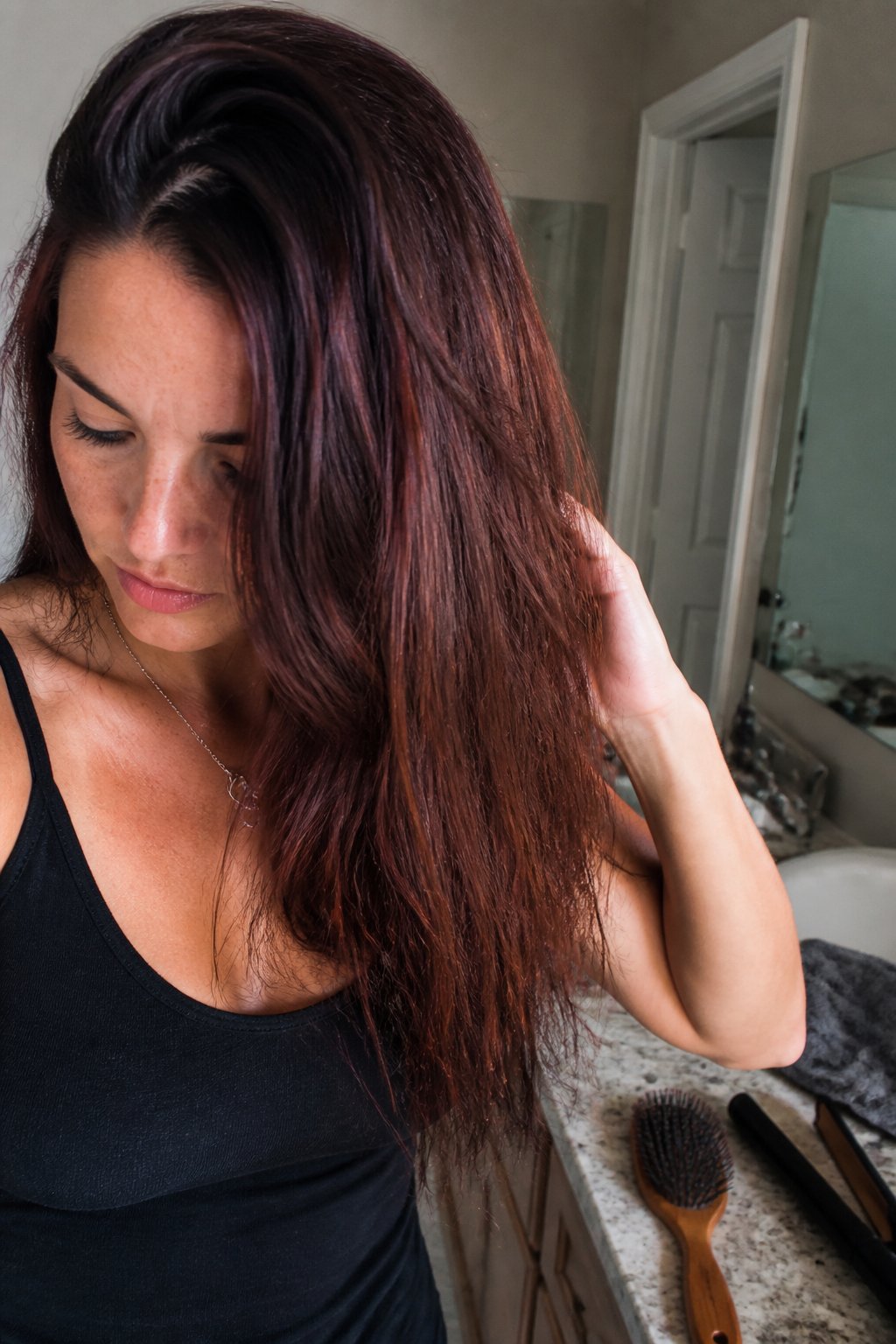
Mahogany brown gives brunette hair a rich blend of brown and red without looking as bright as copper. You can choose a subtle brown mahogany for a natural update or a deeper red-brown shade for more visible warmth.
This color works well as an all-over shade, soft balayage, or face-framing highlights. On naturally dark hair, a gloss may add enough tone and shine, while lighter hair may need a stronger formula to hold the red pigment.
Ask your colorist to adjust the balance of brown, red, violet, or plum based on your skin tone. If you prefer a cooler result, avoid formulas that lean strongly orange. Red tones can fade quickly, so use color-safe products, wash with cool water, and limit heat styling.
Choose mahogany brown when you want your brunette color to look deeper, warmer, and more dimensional.
12. Burgundy Brown
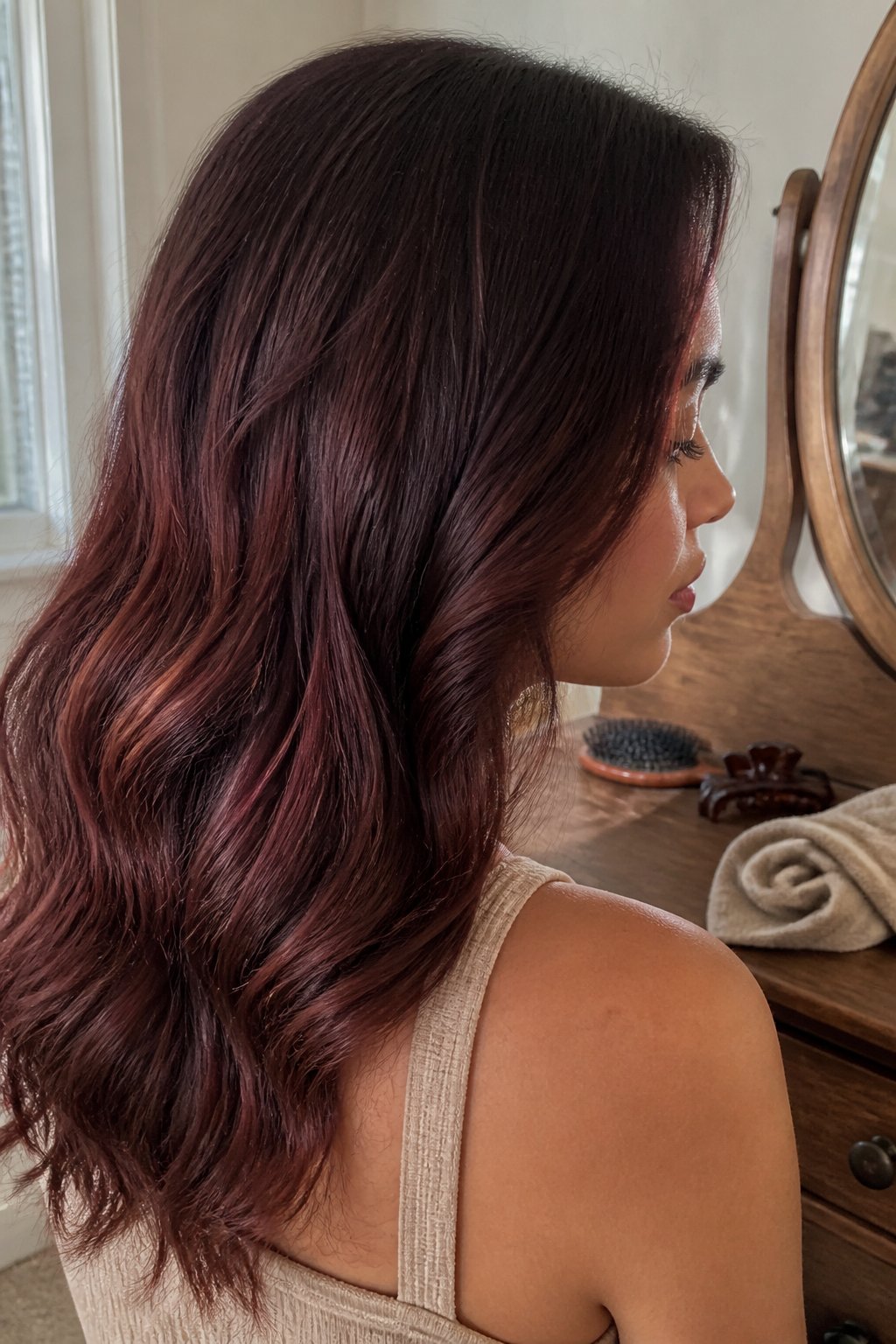
Burgundy brown gives brunette hair a deep red-purple tint while keeping a natural brown base. You can choose a subtle gloss for a low-commitment change or add brighter burgundy balayage for more visible color.
This shade works well on medium and dark brown hair because the existing depth supports the rich tone. Ask your colorist to adjust the mix for your skin’s undertone: warmer burgundy can suit golden tones, while plum-leaning shades may complement cooler undertones.
For easier upkeep, use color-safe shampoo, wash with cool water, and limit high heat. Burgundy can fade faster than brown, especially with frequent washing. Avoid choosing a shade from a photo alone; lighting and your starting color can change the result.
Bring a few real salon photos to your appointment and ask how the color will look as it fades.
Choosing Brunette Hair Shades Based on Undertone
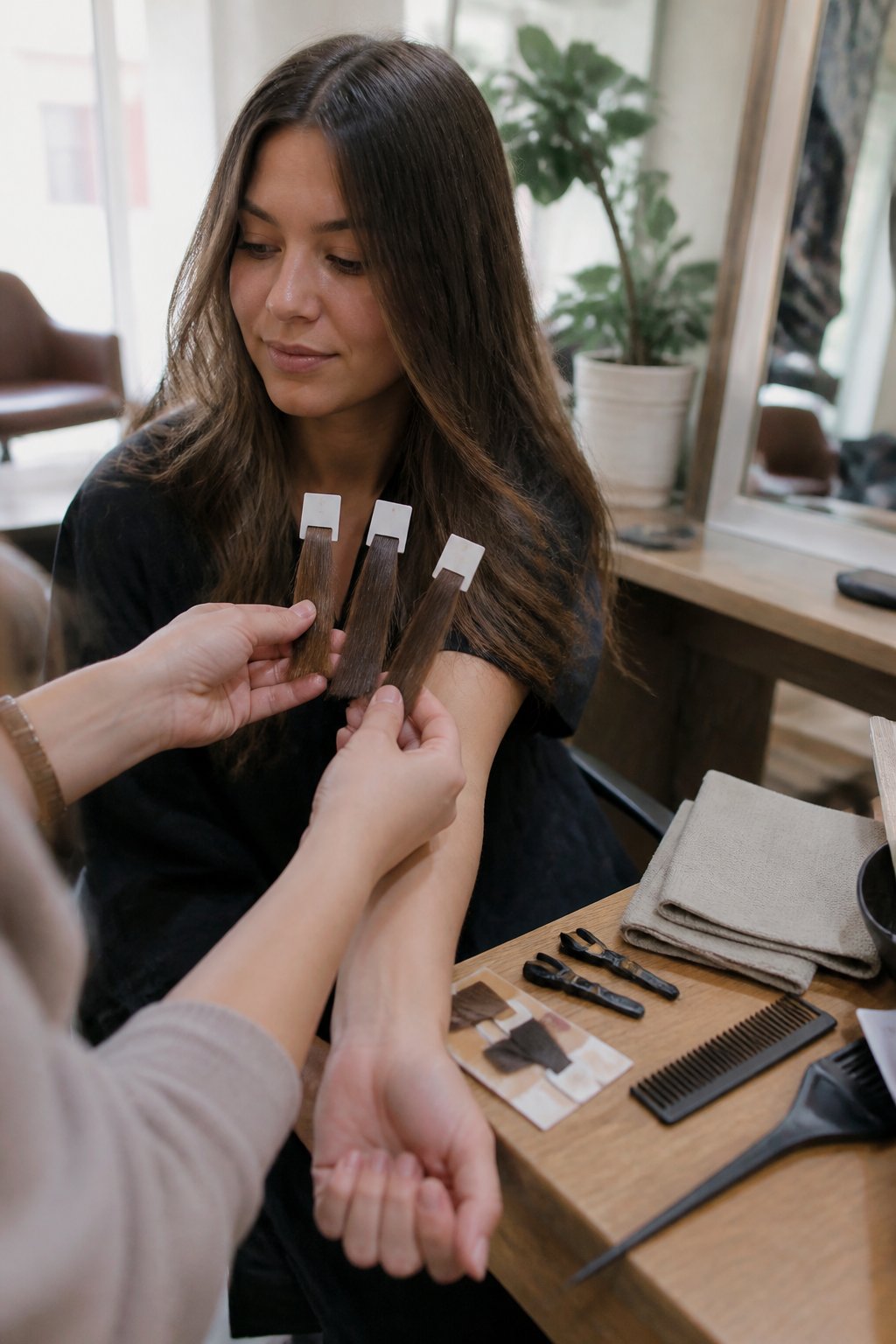
Your skin’s undertone helps you choose brunette colors that make your complexion look balanced and healthy. Match the shade’s warmth or coolness first, then adjust the depth to suit your natural hair and desired maintenance.
Warm, Cool, And Neutral Undertones
If you have a warm undertone, choose shades with golden, red, or orange notes. Caramel highlights, honey brown, warm chocolate, chestnut, and soft mahogany can complement golden or peachy skin. Avoid overly gray ash tones if they make your complexion look dull.
A cool undertone often suits ash brown, mushroom brown, cool espresso, and deep brunette shades with blue or violet notes. These colors can balance pink or rosy skin. If your hair pulls orange after coloring, ask your stylist about a toner designed to reduce unwanted warmth.
With a neutral undertone, you can usually wear both warm and cool browns. Try neutral chocolate, beige brown, or a blended balayage that combines subtle caramel and ash pieces. Check your skin in natural daylight before choosing; indoor lighting can make warm shades appear cooler than they are.
Considering Natural Base Depth
Your natural hair depth affects how a brunette shade will appear and how much upkeep it needs. If your hair is light brown, you can usually add caramel, honey, or ash tones with limited lifting. Medium brunettes can create contrast with lighter balayage or add richness through chocolate and espresso glosses.
Very dark brown or black hair may need lightening before caramel, copper, or burgundy tones show clearly. This process can expose orange or red undertones, so professional toning helps keep the result balanced. For lower maintenance, choose a shade within one or two levels of your natural base and add dimension through subtle highlights.
Consider your routine, too. A dramatic change often needs more frequent salon visits, while a close-match gloss or root-melted balayage grows out more softly. Discuss your starting color, past dye, and upkeep limits before your appointment.
Maintaining Color Depth and Shine
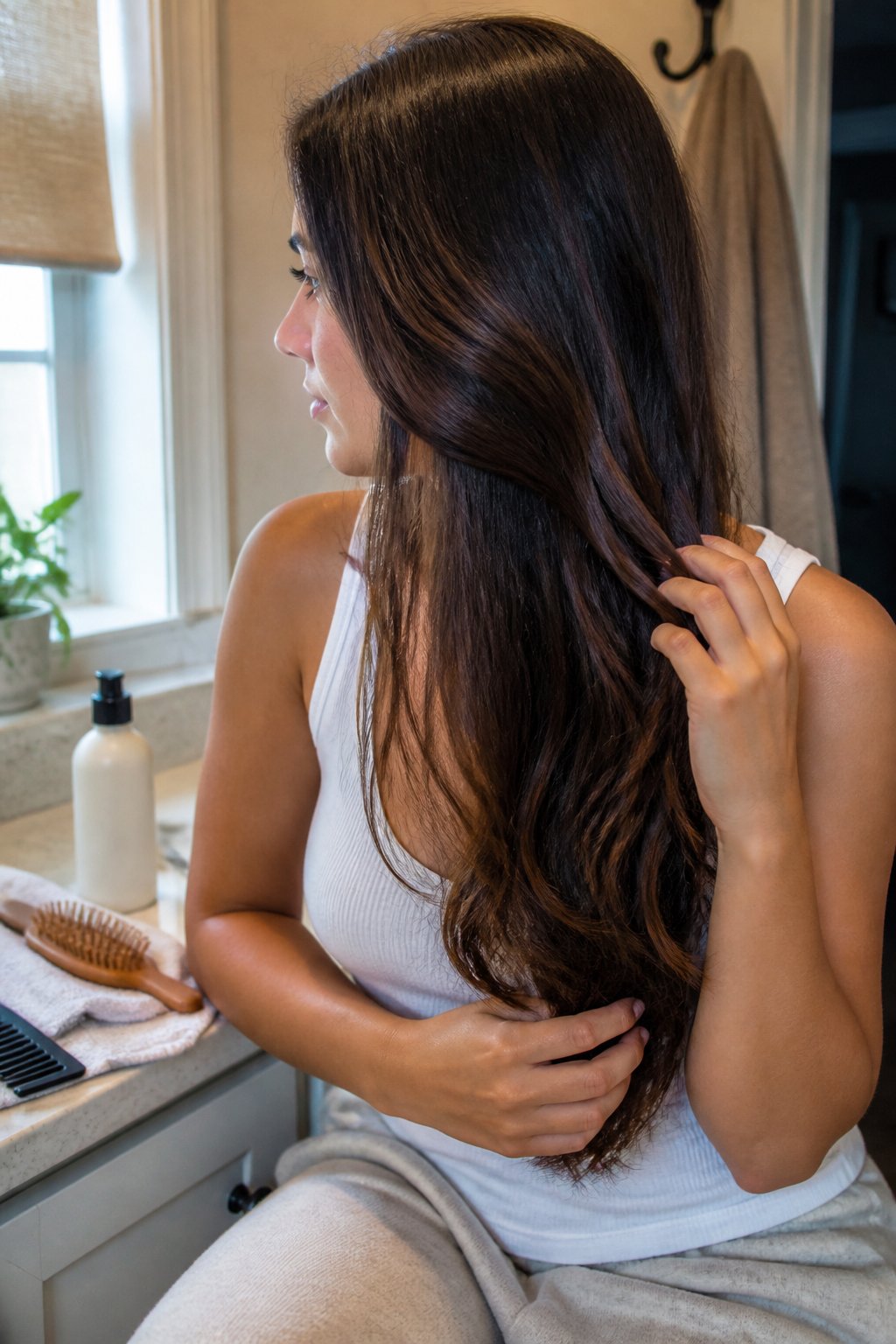
Keep brunette color rich by limiting fading, controlling unwanted warmth, and replacing moisture lost through coloring. Small changes to your washing routine and heat habits can protect both natural brown hair and salon-treated shades.
Protecting Color From Fading
Wash color-treated hair with lukewarm water and a sulfate-free, color-safe shampoo. Hot water can lift the cuticle and make brown dye fade faster. If your scalp allows, wash every two or three days and use dry shampoo between washes.
Apply conditioner from mid-lengths to ends, where dryness and fading often show first. A clear or brunette-enhancing gloss every few weeks can restore shine, while a color-depositing mask may refresh chocolate, chestnut, or cool brown tones. Always follow the product’s timing instructions; leaving a tinted formula on too long can create uneven color.
Heat and sunlight can also dull brunette shades. Use a heat protectant before blow-drying or styling, and wear a hat during long periods outdoors. If your brown hair turns orange or copper, use a blue shampoo occasionally, but avoid daily use because it can make hair look flat or overly cool.
Caring For Lightened And Treated Hair
Lightened brunette hair needs more moisture and gentle handling than untreated hair. Use a nourishing conditioner after every wash and apply a deep-conditioning mask once a week. Focus on the ends, which usually become dry and fragile first.
Reduce high heat from flat irons and curling tools. When you style, dry your hair fully before using an iron, keep the temperature moderate, and pass over each section only once. Detangle with a wide-tooth comb, starting at the ends and moving upward.
Watch for signs of damage, such as rough texture, split ends, or hair that breaks during brushing. A bond-building treatment may help strengthen treated strands, but it cannot repair split ends permanently. Schedule regular trims, especially after highlights or balayage, to keep the color looking polished and the ends looking healthy.
About the Author — Lena Harper
Lena Harper is a fashion writer and content strategist at Fashion Pops, known for creating thoughtful, trend-aware articles that feel both stylish and relatable. With a strong background in fashion journalism, she specializes in turning seasonal trends, outfit ideas, and styling concepts into easy-to-follow inspiration for modern women.
Her writing focuses on practicality without losing creativity — helping readers build outfits that feel current, wearable, and confident. When she’s not working on new articles, Lena enjoys exploring street style trends, discovering unique fashion finds, and curating inspiration boards that shape upcoming content at Fashion Pops.