Haircuts That Make Thin Hair Look Fuller: 11 Stunning Styles
Thin hair can look flat even when you style it carefully, but the right haircut can change its shape and make it appear fuller. Choosing the right length, ends, and layers helps you create a thicker-looking style that suits your hair and daily routine.
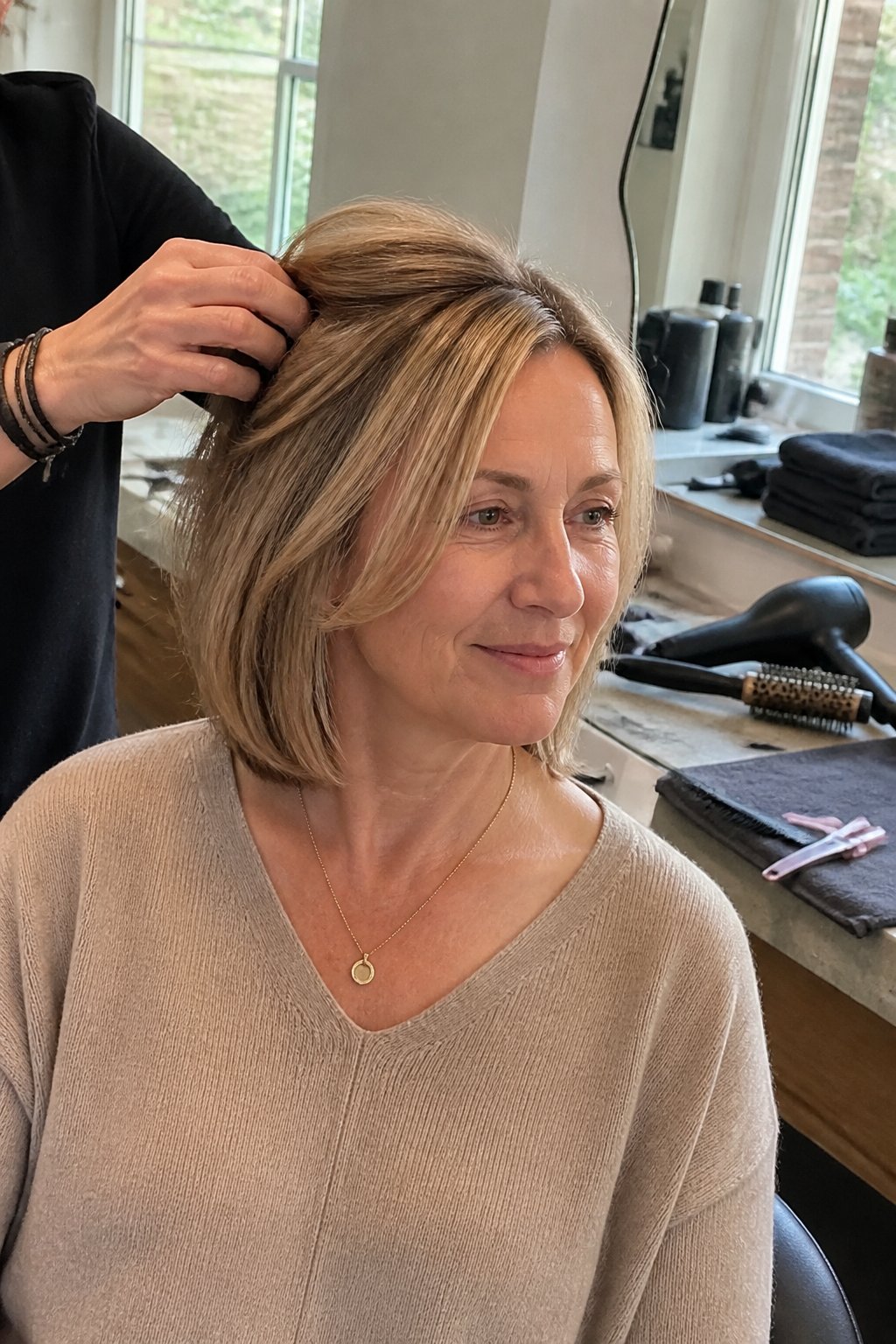
You’ll explore polished bobs, cropped cuts, shoulder-length styles, and soft layers designed for fine or thinning hair. You’ll also learn how cut shape, parting, styling, and maintenance work together so you can choose a look that adds body without making your hair seem sparse.
1. Blunt Chin-Length Bob
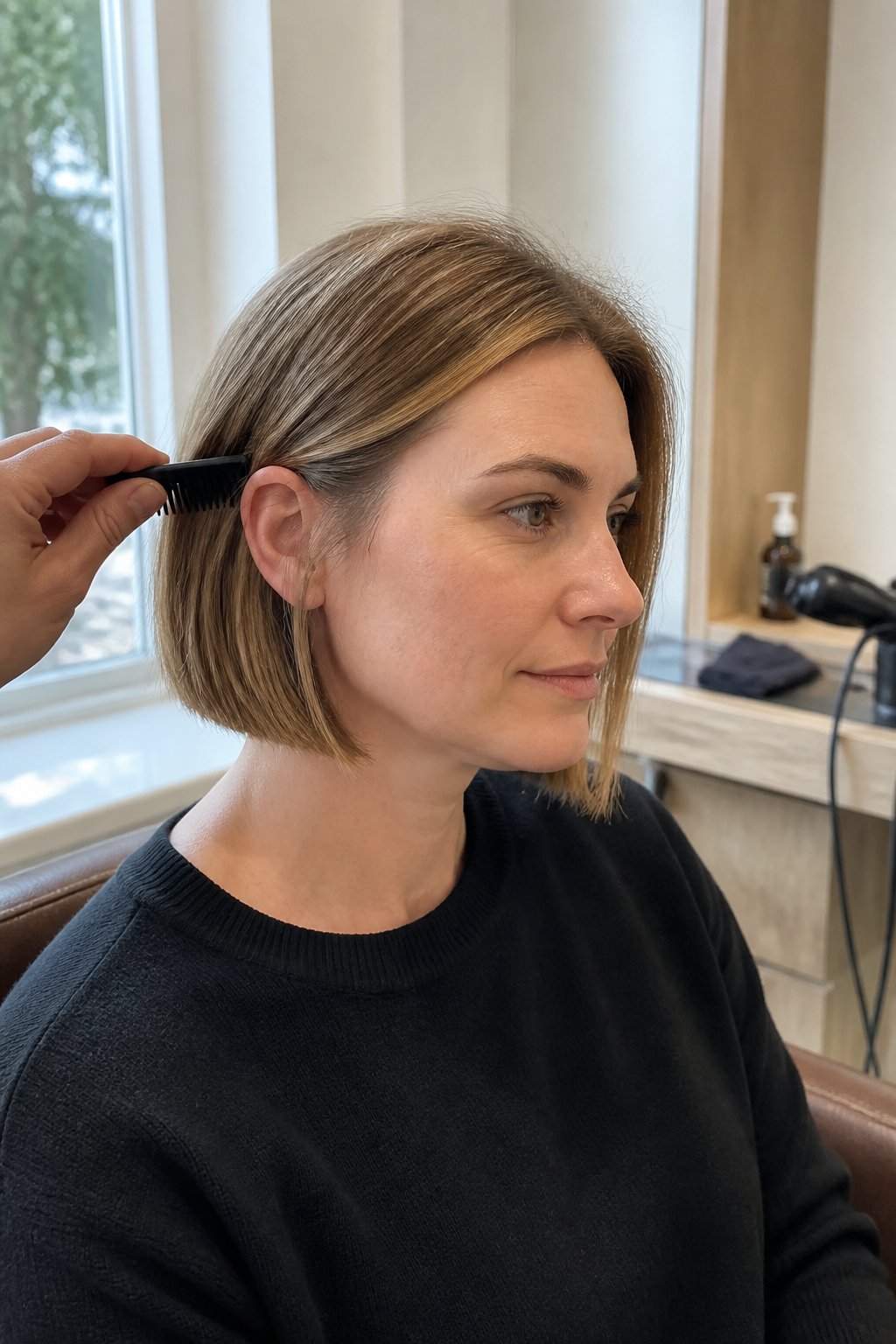
A blunt chin-length bob gives thin hair a stronger shape and a fuller-looking edge. Its straight perimeter keeps the ends together instead of spreading them across several layers, making the haircut appear denser.
Ask your stylist to keep the length near your chin or jaw and use minimal layering. Subtle internal shaping can add movement, but too many layers may remove the weight that helps fine hair look thick. A softly beveled edge can also create shape without making the ends appear wispy.
This cut works especially well if you have high cheekbones or want to frame your face. For styling, blow-dry your roots with a small round brush and keep heavy creams or oils away from the scalp. A common mistake is choosing excessive texture at the ends, which can make thin hair look uneven.
Bring a reference photo and ask for a clean, weight-supporting perimeter that suits your natural texture.
2. Jaw-length French bob
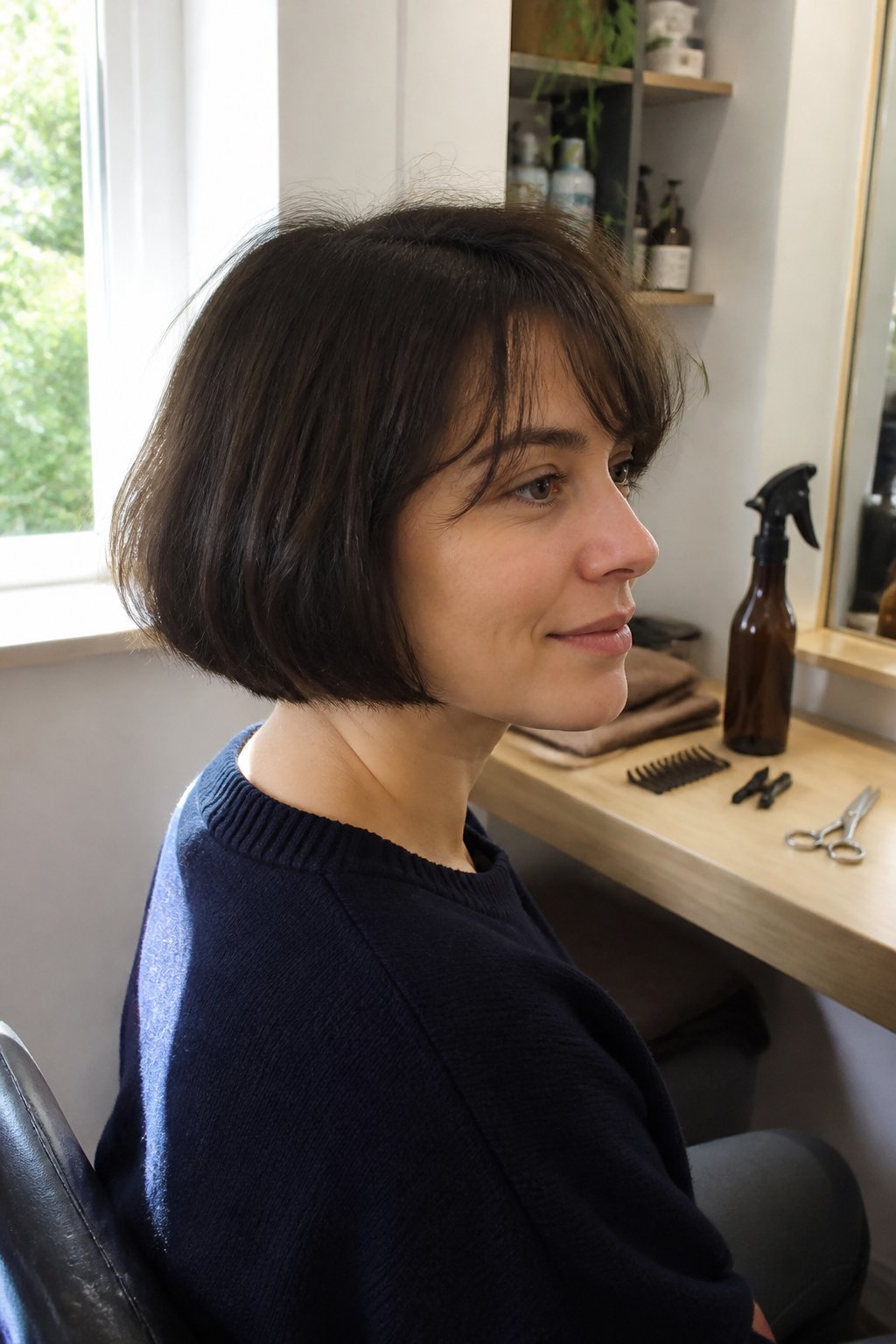
A jaw-length French bob can make thin hair look denser by keeping weight along the bottom edge. The cut usually rests near the jaw, with a softly rounded shape that frames your face without adding bulk.
Ask your stylist for a blunt or lightly softened perimeter rather than heavy layers. Too much texturizing can remove the hair you need to create a fuller outline. A short fringe can add French style, while a side part offers extra lift at the roots.
For everyday volume, blow-dry your hair with a small round brush and direct the roots upward. Keep styling products light; thick creams and oils can flatten fine strands. If your hair has natural waves, let them air-dry with a small amount of mousse for movement.
Bring a front and side photo to your appointment so your stylist can place the length correctly for your face shape and hair density.
3. Blunt lob with a center part
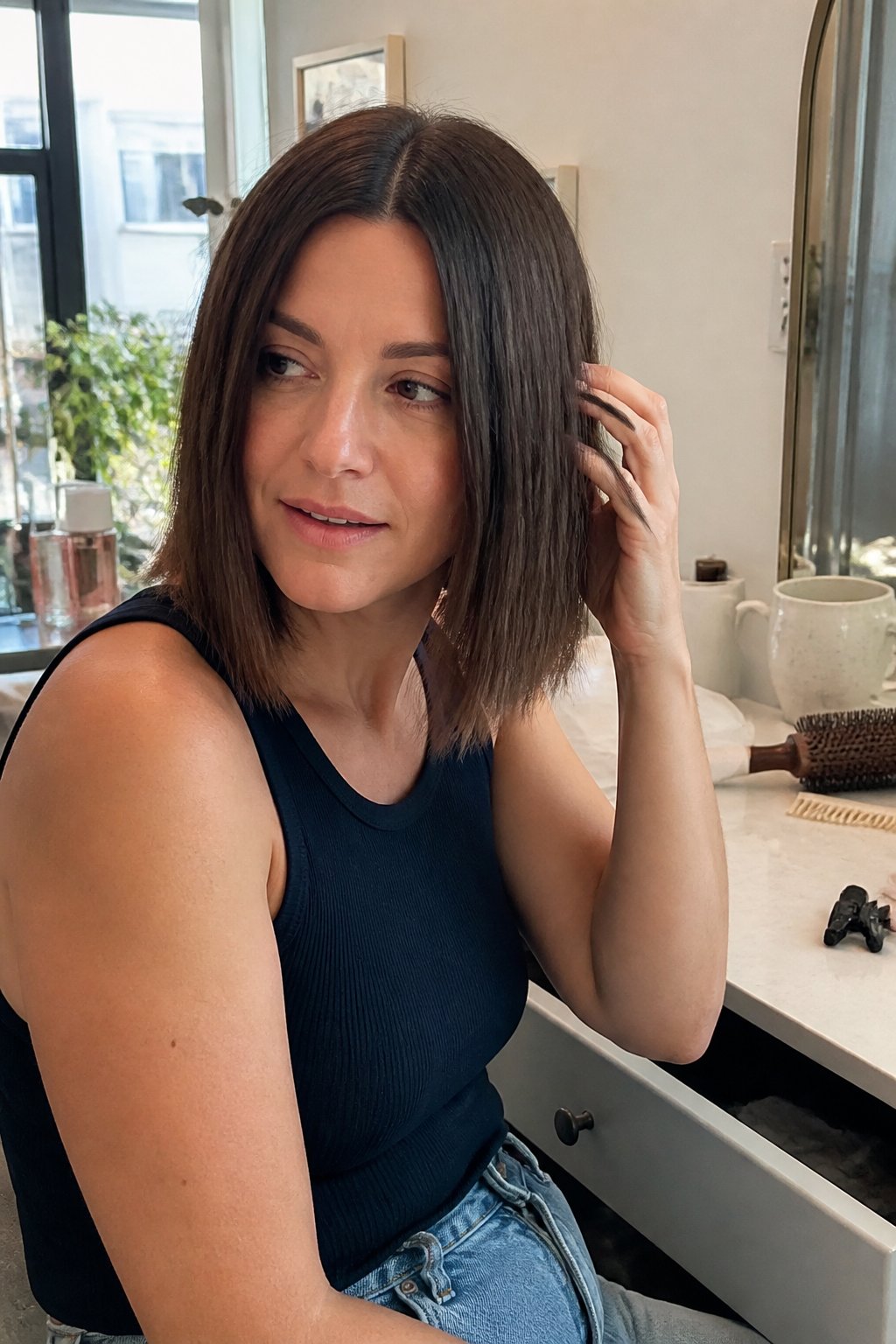
Choose a blunt lob with a center part when you want thin hair to look denser without heavy styling. Keep the length just above or at the collarbone, where the ends stay compact instead of spreading into wispy strands. A clean, one-length edge gives the haircut a stronger shape.
Ask your stylist to cut the ends bluntly and remove only minimal weight. Too many layers can make fine hair look thinner, especially near the bottom. A center part adds balance and exposes the roots, so use a lightweight volumizing mousse before blow-drying.
For a softer finish, add gentle bends with a large-barrel iron, leaving the ends straight. This creates movement without separating the hair into thin sections. Have the ends trimmed regularly to preserve the dense-looking line.
4. Pixie Cut With a Textured Crown
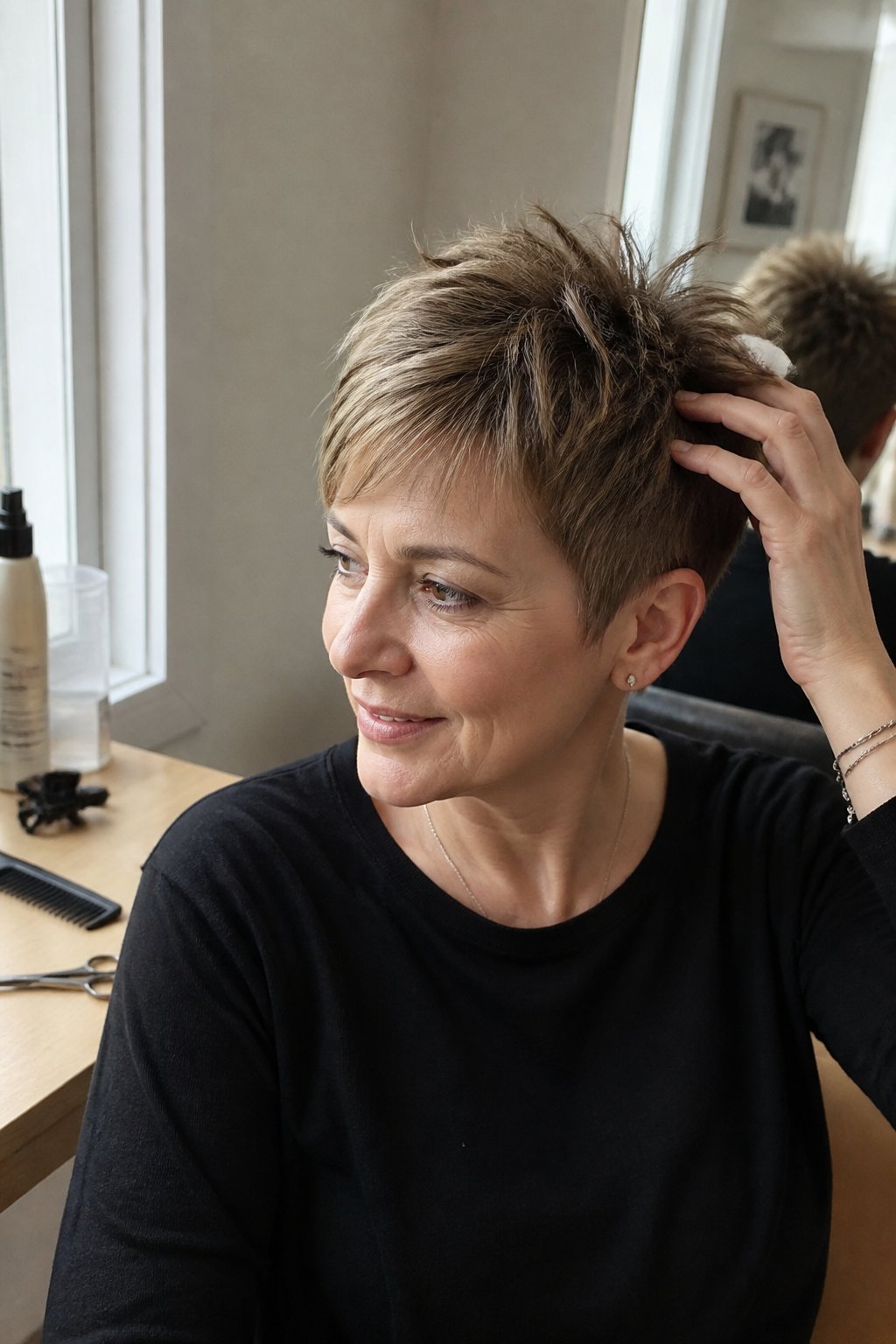
If you want thin hair to look fuller, ask for a pixie cut that keeps extra length through the crown. Your stylist can add soft, uneven layers that create lift and movement without removing too much weight.
Point cutting often works better than heavy thinning shears for fine hair. Too much thinning can leave the ends wispy and make the scalp show through. Keep the sides neat and shorter so the crown appears more substantial.
For daily styling, apply a small amount of lightweight mousse to damp roots, then lift the crown with your fingers while drying. Avoid heavy waxes and oils, which can flatten fine strands. Show your stylist a photo and ask for texture that suits your hair’s natural direction.
5. Short layered crop
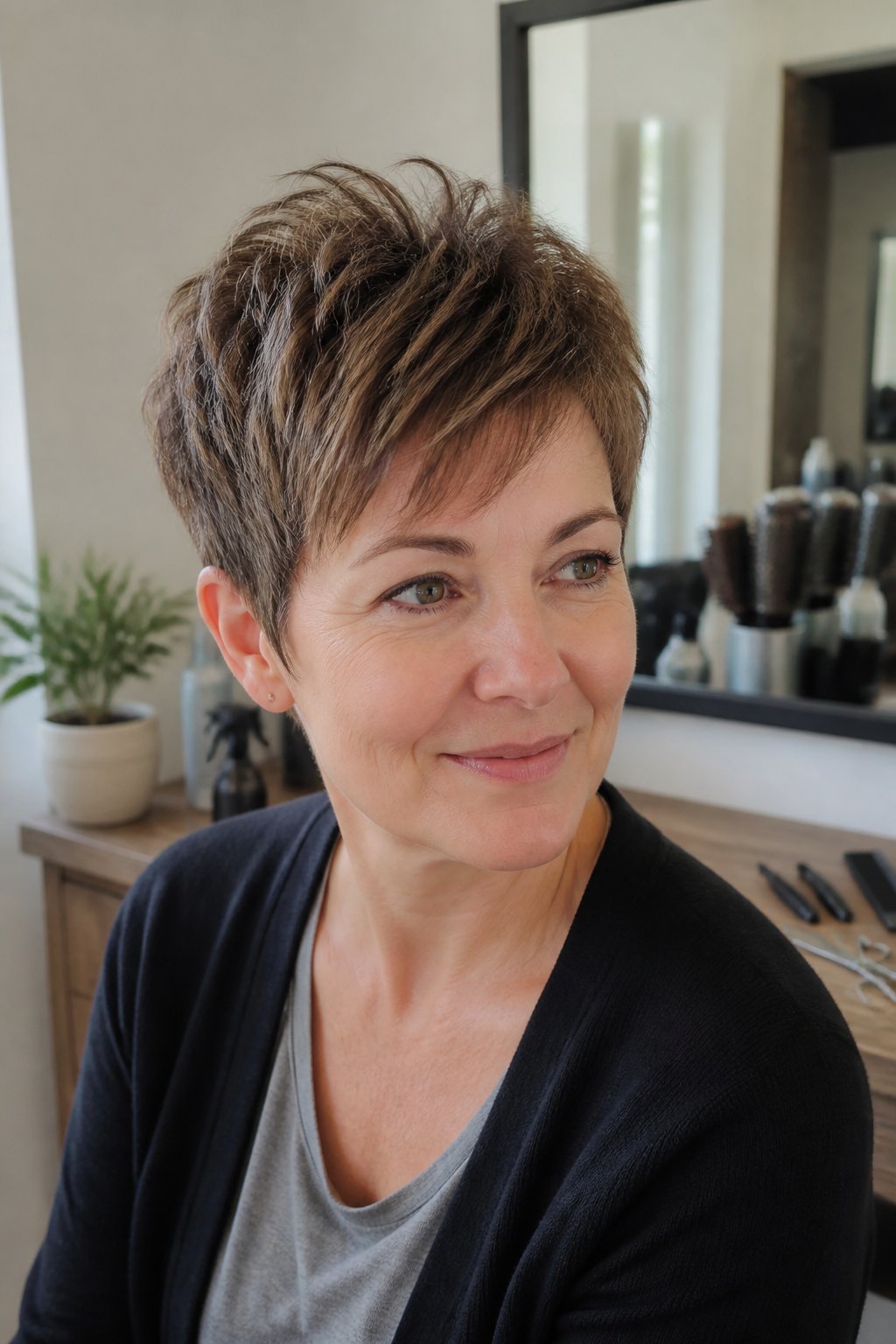
A short layered crop adds shape and lift without removing too much density. Ask your stylist to keep the sides neat, leave slight length on top, and use light, controlled layers rather than heavy texturizing.
You can wear the top forward for a soft fringe, sweep it to one side, or lift it with a small amount of styling mousse. A stylist may also use subtle face-framing pieces to keep the cut from looking too blunt.
Avoid excessive thinning shears. They can remove the weight that makes fine hair appear fuller and may leave the ends looking wispy. For the best result, request dry-textured shaping only where your hair needs movement.
Blow-dry your roots upward with a small brush, then finish with a light, flexible spray to hold the shape without weighing it down. Ask your stylist to adjust the crop to your hair’s natural growth pattern.
6. Side-swept pixie
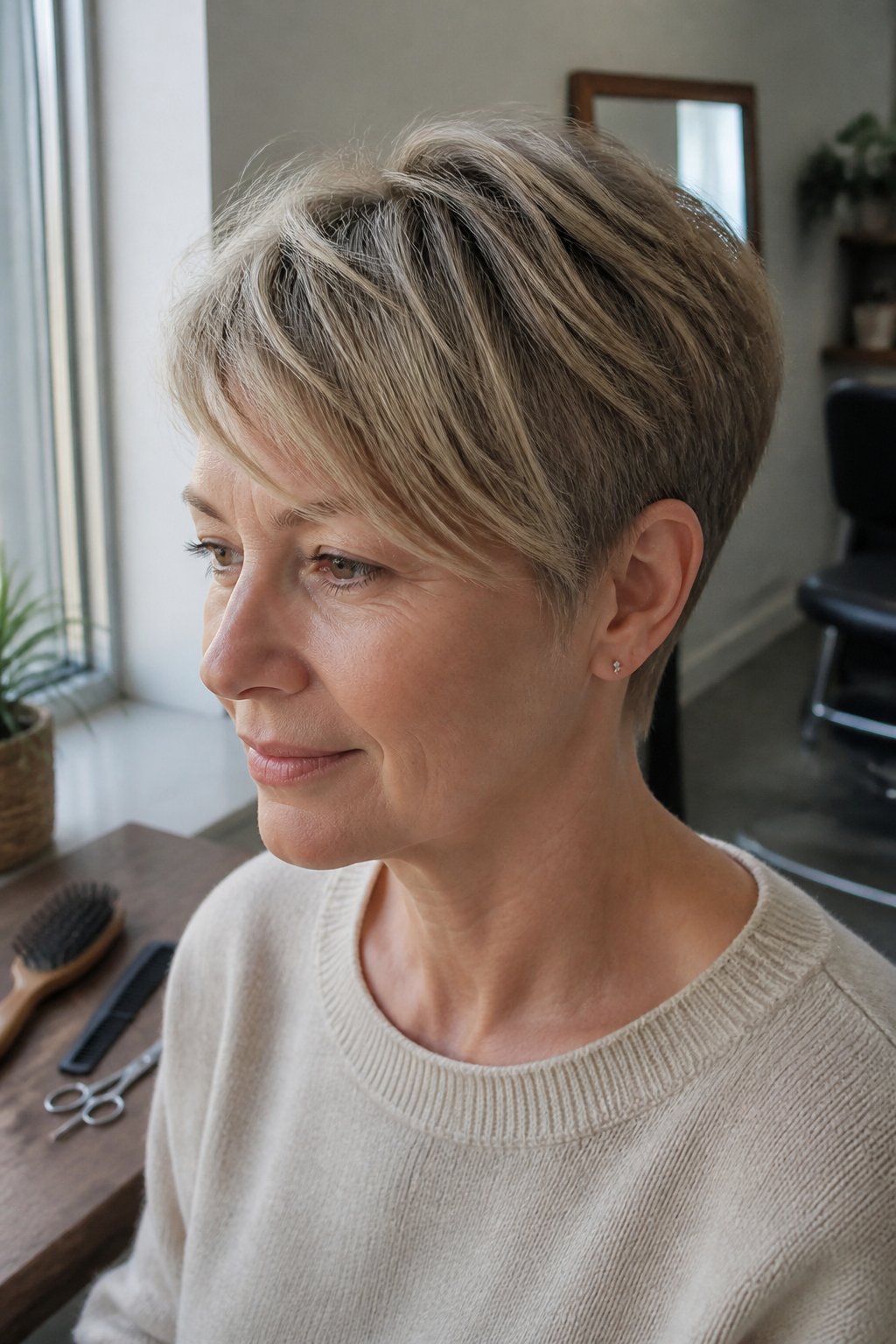
A side-swept pixie can make thin hair look fuller by directing attention across the forehead and adding shape at the crown. Ask your stylist to leave extra length in the fringe, then taper the sides softly so the top does not appear flat.
Style the cut on damp hair with a light volumizing mousse. Blow-dry the crown upward and sweep the fringe across your forehead. For a polished finish, use a flat iron only on the ends; too much heat or smoothing can remove needed lift.
Avoid heavy waxes and thick creams, which can separate fine strands and expose more scalp. A small amount of lightweight texture paste gives better control without weighing down the cut. Book regular trims to keep the side shape clean and the longer fringe balanced.
7. One-length shoulder cut
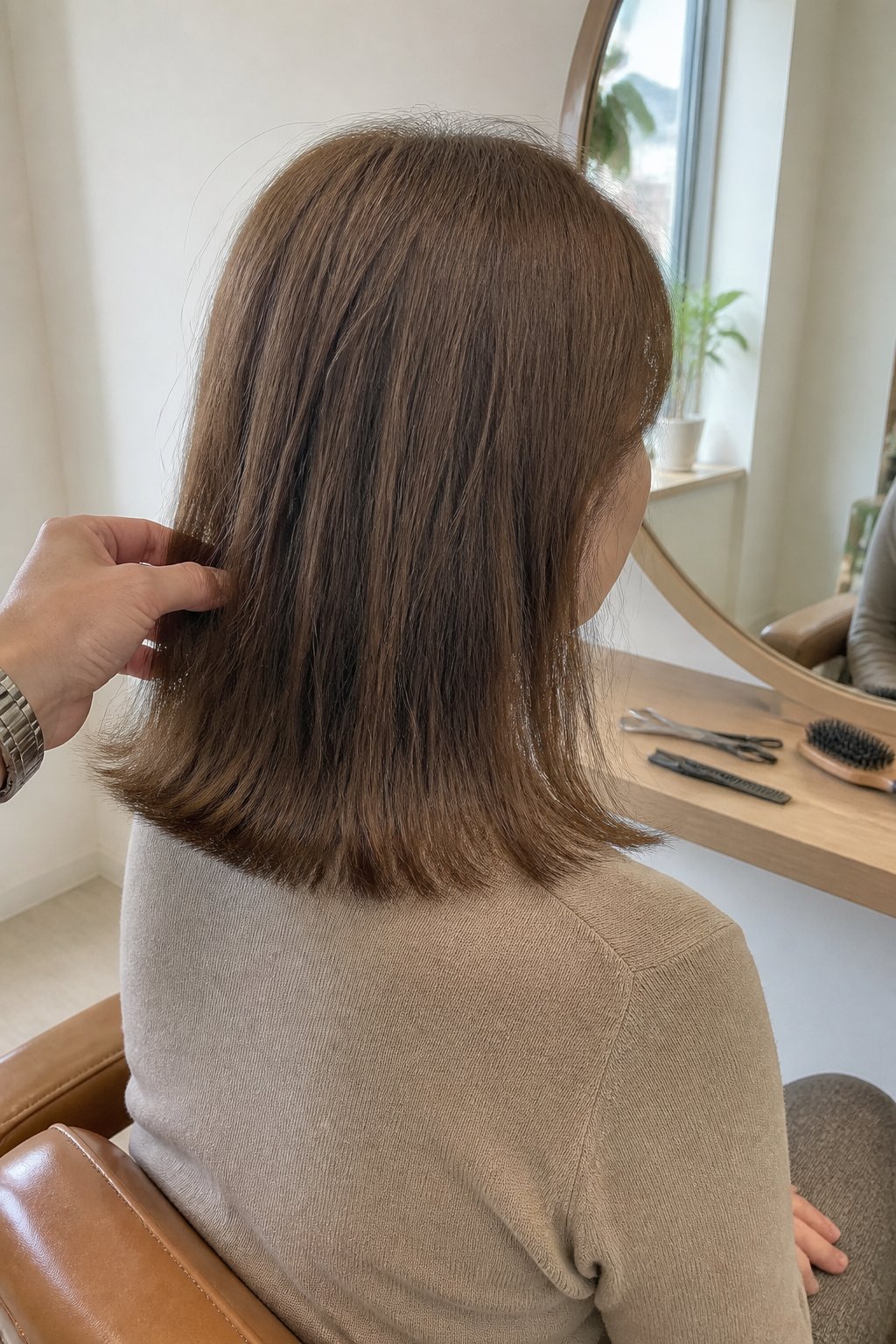
A one-length shoulder cut gives thin hair a clean edge that can make the ends look denser. Keeping the perimeter at or just above the shoulders also prevents extra length from pulling the hair flat.
Ask your stylist to avoid heavy thinning shears, which can remove too much weight from fine strands. A blunt finish usually works best, while a small amount of internal shaping can add movement without weakening the outline.
You can wear this cut straight for a polished look or add loose waves for texture. If your hair tends to separate at the crown, change your part and use a lightweight root-lifting spray before blow-drying. Avoid rich oils and heavy creams near the roots, since they can make thin hair look flatter.
Bring a photo that shows the exact length you want, then ask your stylist to keep the ends strong and even.
8. Soft shag with minimal layers
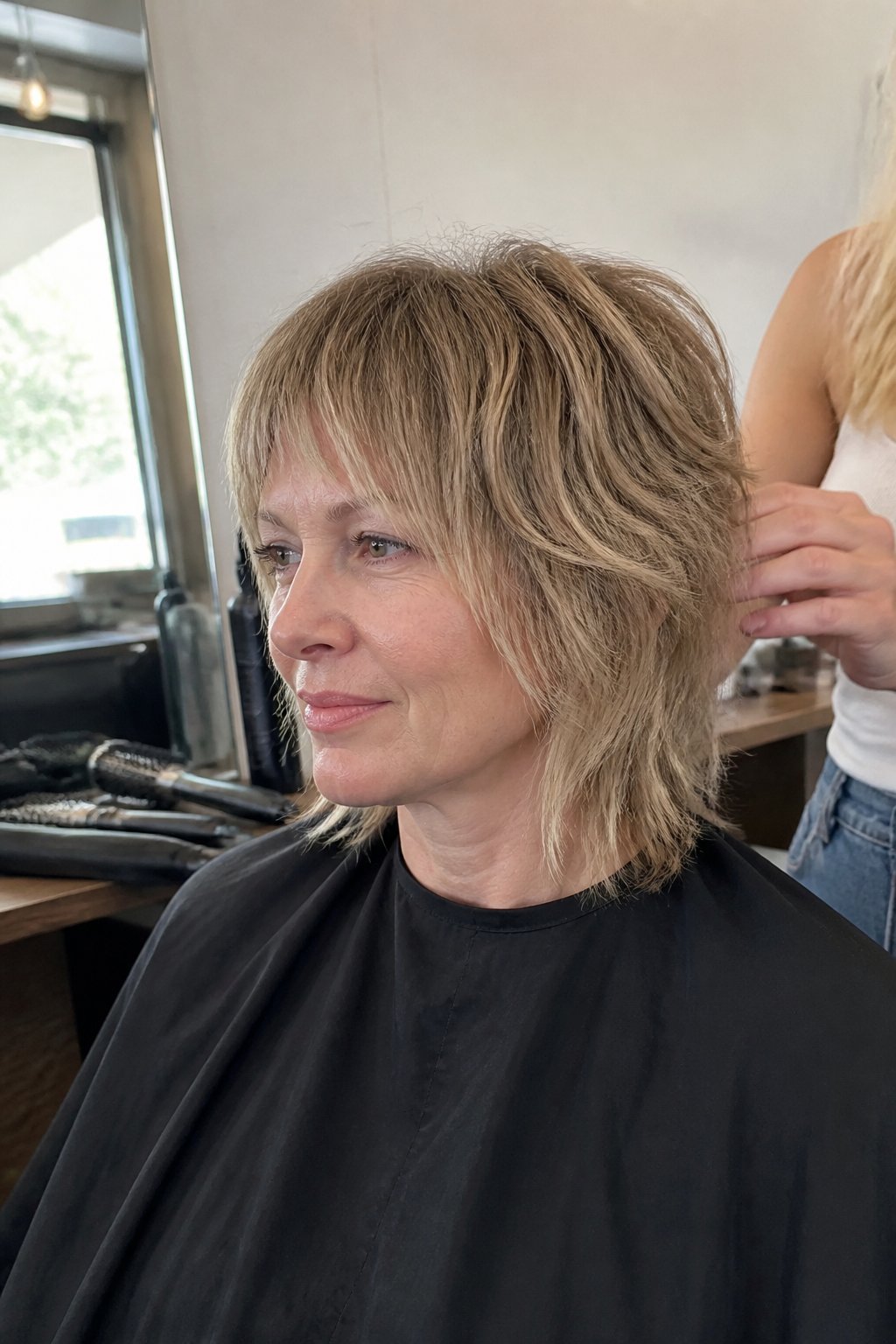
A soft shag with minimal layers can add movement to thin hair without removing too much weight. Ask your stylist to keep the ends fairly full, then add gentle layers around the crown and face. This shape works well at shoulder length or slightly shorter.
You can wear it with loose waves, a side part, or natural texture. Use a light mousse at the roots and scrunch your hair while it dries. Avoid heavy creams and oily products, which can flatten fine strands.
A common mistake involves asking for too many choppy layers. Excessive thinning can make the ends look sparse, especially if your hair lacks density. Show your stylist a photo and explain that you want softness, lift, and a fuller-looking perimeter.
Keep the cut polished with small trims every eight to ten weeks.
9. Collarbone cut with face-framing layers
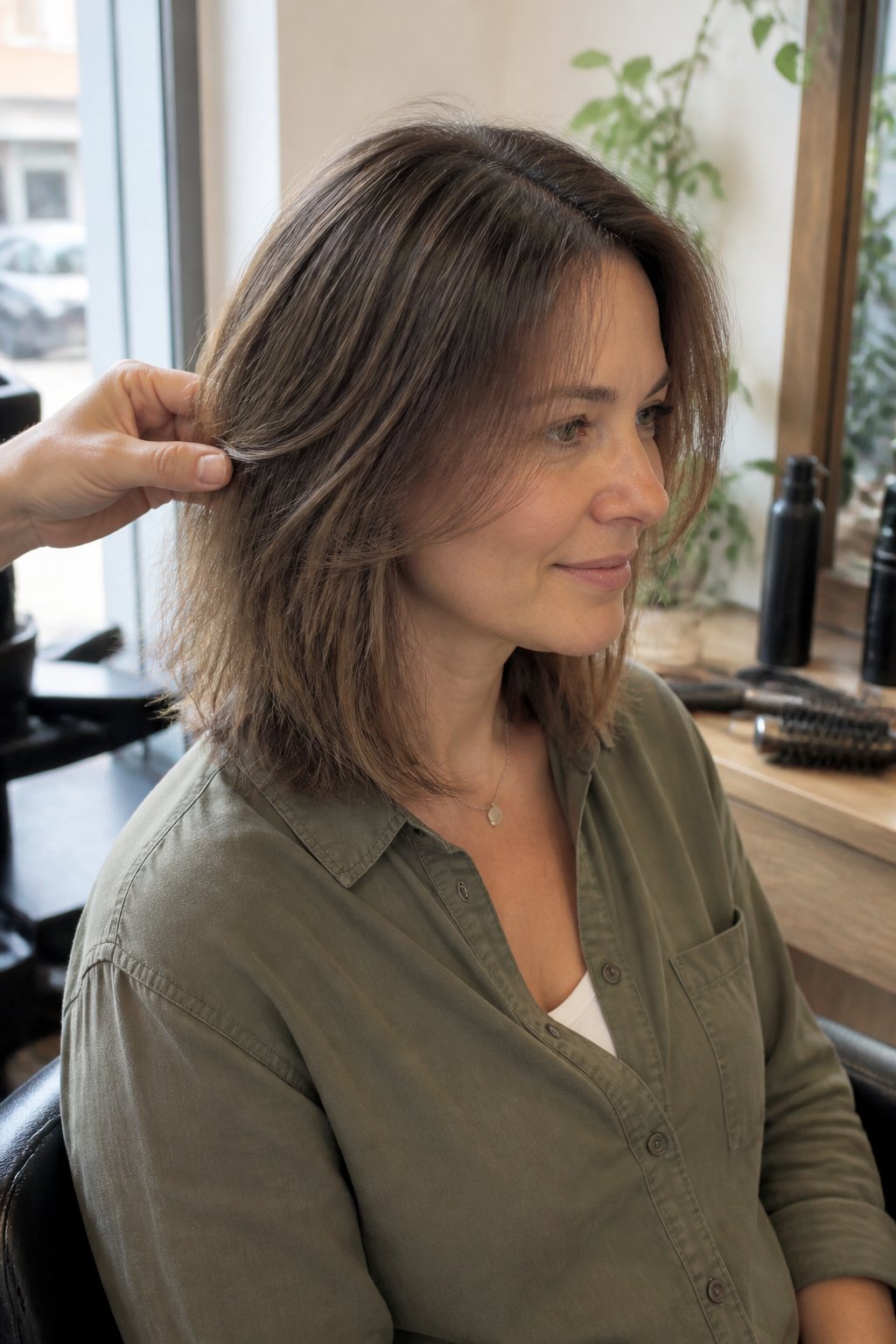
Choose a collarbone cut with light face-framing layers when you want thin hair to look fuller without losing useful length. Keep the bottom edge mostly blunt and let the shortest pieces begin near your cheekbones or chin. This creates movement around your face while preserving weight through the ends.
Ask your stylist to blend the layers gently rather than removing bulk throughout the cut. Too many short layers can make fine hair look thinner, especially if your strands are straight. For example, soft waves can add lift, while a smooth blow-dry shows off the clean, full-looking perimeter.
Style this haircut with a round brush, directing the face-framing pieces away from your face. Use a light volumizing mousse at the roots, but avoid heavy oils and thick creams that can flatten your hair. Bring a reference photo to your appointment so your stylist can match the layers to your face shape and natural texture.
10. Chin-Length Bob With Side Bangs
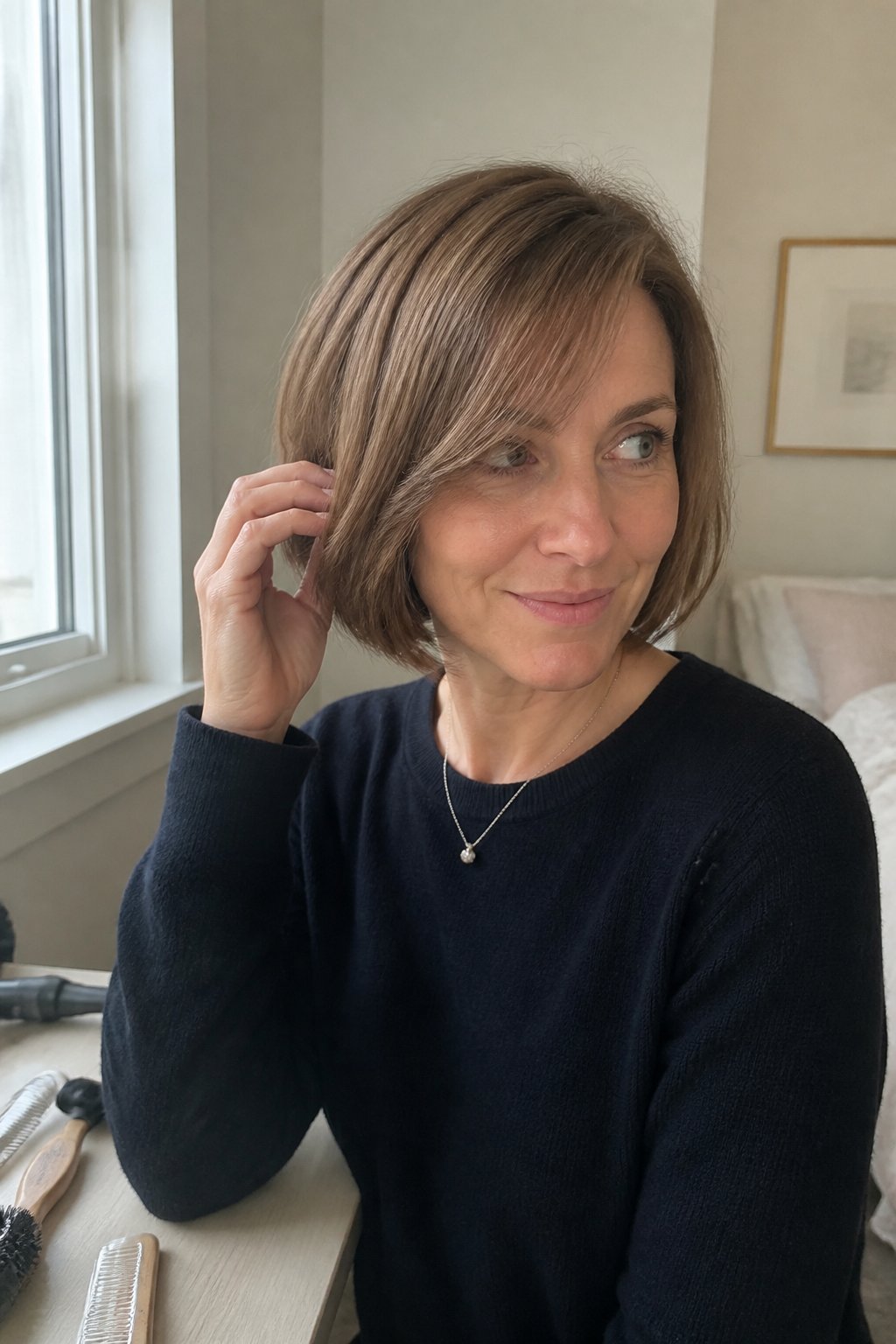
Choose a chin-length bob with side bangs when you want thin hair to look fuller without adding much styling time. A blunt or lightly graduated edge keeps the ends looking dense, while side-swept bangs add shape around your eyes and cheekbones.
Ask your stylist to avoid heavy layering, which can remove weight from fine strands. A slight graduation at the back can create lift, especially when your hair has medium density. Keep the front pieces near your chin rather than letting them become too long, since longer ends may look sparse.
For daily styling, blow-dry your roots with a small round brush and direct the bangs across your forehead. Finish with a light texturizing spray instead of heavy creams or oils, which can flatten fine hair. This cut gives you a polished shape while keeping your ends visibly full.
11. Wavy Textured Lob
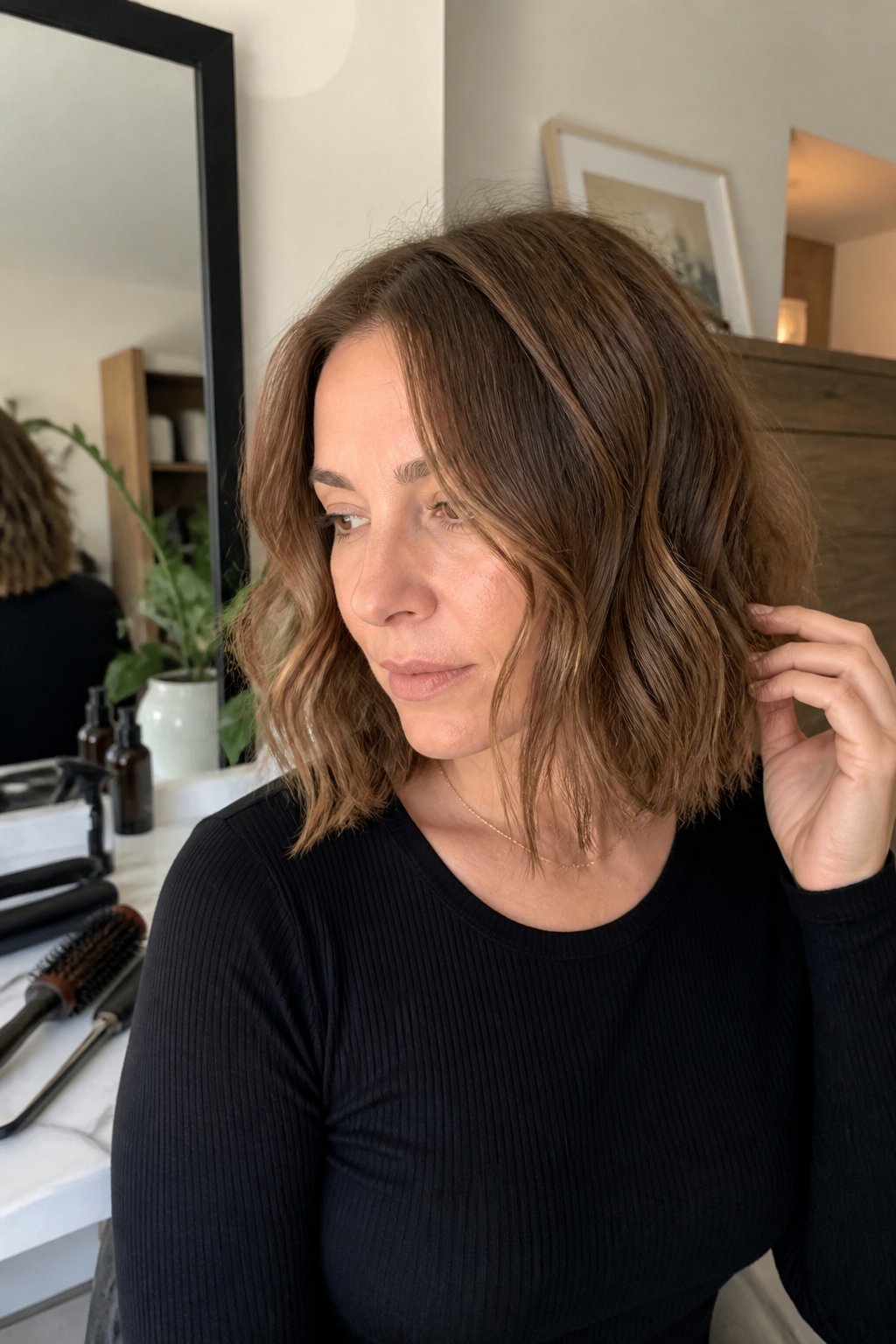
A wavy textured lob gives thin hair shape, movement, and a fuller-looking outline without removing too much length. Ask your stylist to keep the ends near the collarbone and use light, invisible layers through the mid-lengths.
Soft waves can add body, especially when you create them with a wide-barrel iron or overnight braids. Alternate the wave direction, then loosen the curls with your fingers instead of brushing them out.
Avoid heavy layers or aggressive thinning, which can make the ends look sparse. A blunt base with gentle texture usually works better for fine hair. Keep styling products light, such as a root-lifting spray and a small amount of dry texture spray.
For a low-maintenance look, let your hair air-dry until it is mostly dry, then enhance the natural waves with a diffuser. Ask your stylist to adjust the wave pattern and length to suit your face shape.
How Cut Shape, Length, and Layers Affect Volume
The right haircut creates the appearance of thicker hair by controlling weight, shape, and movement. A balanced length can lift the roots, while carefully placed layers add body without making the ends look sparse.
Choosing Lengths That Prevent Flatness
Fine hair often looks flatter when it grows past the shoulders. Extra length adds weight, which can pull the roots down and make the ends appear thin. A chin-length bob, collarbone cut, or shoulder-skimming lob usually gives you better lift and shape.
A blunt or softly rounded perimeter makes the ends look denser. If your hair is straight, ask for a clean line that sits near the jaw or collarbone. For wavy hair, a slightly longer cut can prevent shrinkage while keeping enough structure for volume.
Avoid keeping thin hair at one very long length unless you style it often. The weight can create a narrow, flat shape. A side part, face-framing pieces, or a slight angle toward the front can add height without removing too much density.
Using Layers Without Thinning the Ends
Layers can add movement, but too many can make fine hair look wispy. Ask your stylist to keep the lower edge full and place subtle layers through the crown or around the face. These shorter sections help lift the top while preserving weight at the ends.
Long, blended layers work well for medium or long fine hair. On shorter cuts, soft crown layers can create shape without leaving gaps. Avoid heavy razor cutting or aggressive texturizing if your ends already look thin; these techniques may remove density you need.
Bring a photo that shows the shape, not only the styling. Tell your stylist whether you air-dry, blow-dry, or wear your hair tied back, since the best layer placement depends on your daily routine.
Styling and Maintenance for Lasting Fullness
Small styling changes can help fine hair keep its shape between salon visits. Use light products, protect your roots from buildup, and refresh your haircut before split ends make the style look thinner.
Parting Techniques That Create Lift
A fixed side or center part can press the roots flat over time. To create more lift, change your part by about half an inch while your hair is damp, then dry the roots in the opposite direction. Once your hair cools, place it back where you want it. This brief change gives the roots more height without heavy teasing.
For a natural boost, try a soft side part rather than a sharp line. A zigzag part can also make the scalp less visible, but keep it subtle so it does not look forced. When you use a round brush, lift only the top sections and direct the airflow from the roots toward the ends. Avoid brushing the hair flat against your head.
Dry shampoo can add grip, but too much may leave fine hair dull or sticky. Apply a small amount at the roots, wait one minute, then massage it through.
Trimming Schedules and Product Choices
Schedule a trim about every six to eight weeks, depending on your haircut and how quickly your ends split. Blunt ends often make thin hair look denser, while excessive layers can remove too much weight. Ask your stylist to keep the perimeter strong and use light, targeted layers for movement.
Choose products labeled volumizing, lightweight, or for fine hair. Apply mousse or root spray to damp roots, not the full length. Use a small amount of conditioner from mid-length to ends, and rinse well to prevent flatness.
Avoid heavy oils, waxes, thick creams, and frequent layers of dry shampoo. If your hair starts losing volume soon after washing, use a clarifying shampoo once every one to two weeks, unless your scalp or color-treated hair needs gentler care.
About the Author — Lena Harper
Lena Harper is a fashion writer and content strategist at Fashion Pops, known for creating thoughtful, trend-aware articles that feel both stylish and relatable. With a strong background in fashion journalism, she specializes in turning seasonal trends, outfit ideas, and styling concepts into easy-to-follow inspiration for modern women.
Her writing focuses on practicality without losing creativity — helping readers build outfits that feel current, wearable, and confident. When she’s not working on new articles, Lena enjoys exploring street style trends, discovering unique fashion finds, and curating inspiration boards that shape upcoming content at Fashion Pops.