Heatless Hairstyles: 12 Stunning Looks That Turn Heads
Heatless hairstyles help you style your hair without relying on hot tools every day. If heat leaves your strands dry, or you want an easier morning routine, you can create polished looks while working with your hair’s natural texture.
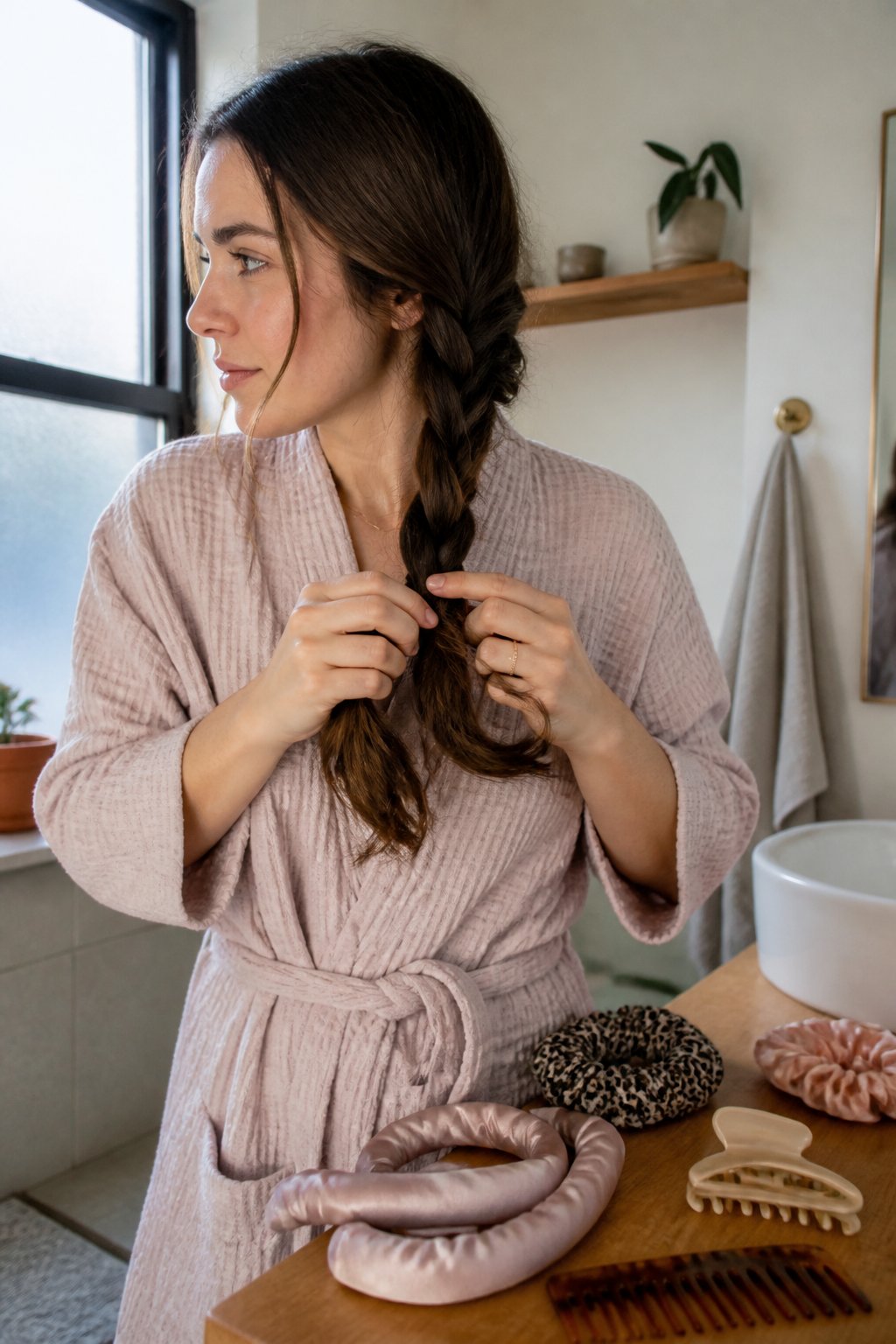
You’ll learn how to create curls, waves, buns, ponytails, and other heatless styles, along with practical tips for preparation, hold, comfort, and overnight care. These methods can help you choose a look that fits your hair type, schedule, and personal style.
1. Overnight heatless curls with a satin curling ribbon
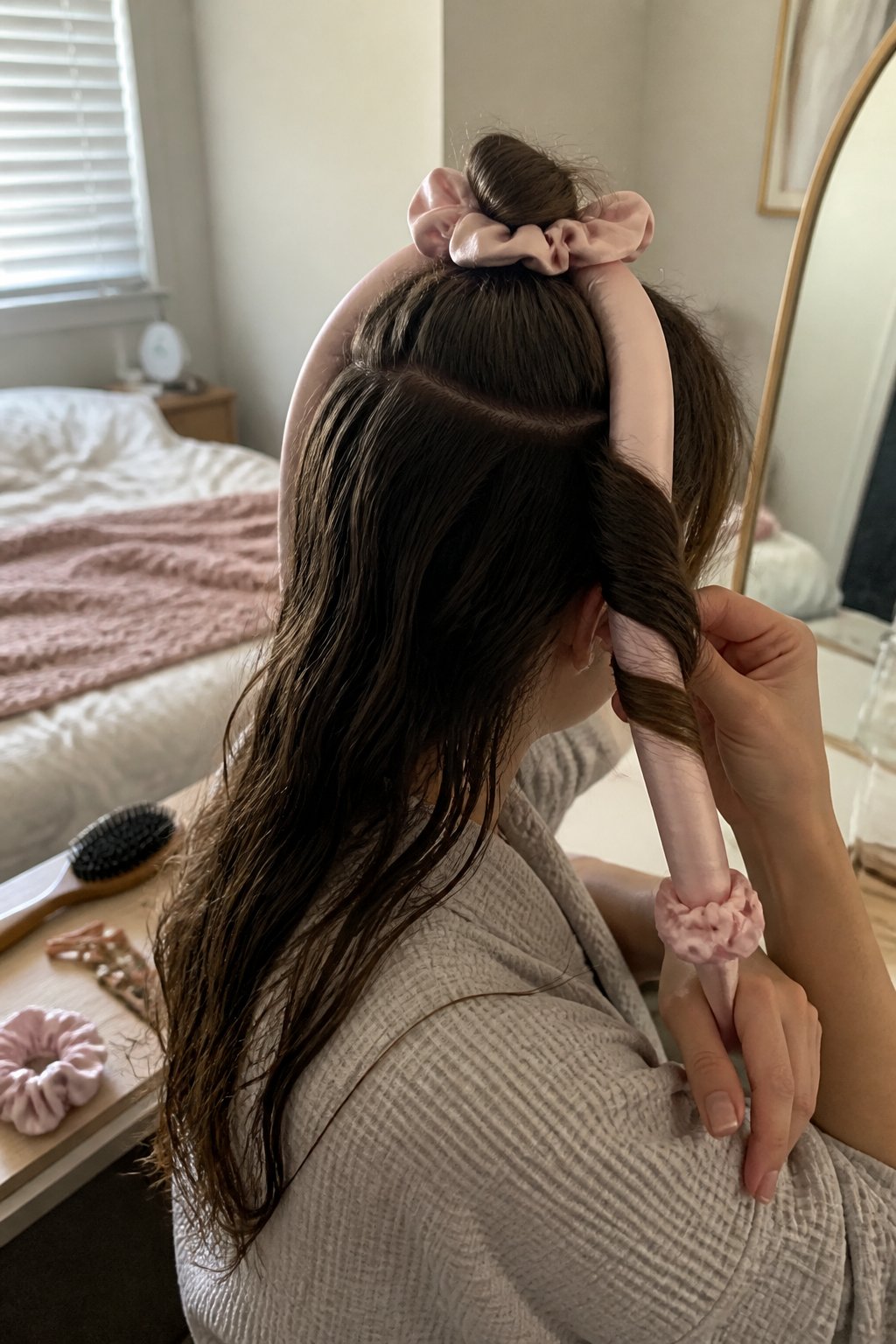
For soft overnight waves, start with clean, slightly damp hair—not wet hair, which may stay damp by morning. Place the satin ribbon over your head like a headband, then wrap small sections of hair around it, moving away from your face. Secure both ends with the included scrunchies.
Keep the tension even, but do not pull tightly at the roots. Tight wrapping can cause discomfort and create uneven curls. If your hair is fine, use smaller sections for more definition; for thick hair, choose larger sections and let it dry fully before removing the ribbon.
Sleep on a smooth pillowcase to reduce friction, then unwrap gently in the morning. Separate the waves with your fingers instead of brushing them out, and use a small amount of lightweight styling cream if needed. Satin helps reduce rubbing, but it does not replace careful handling.
2. French Braid Waves for Easy Overnight Styling
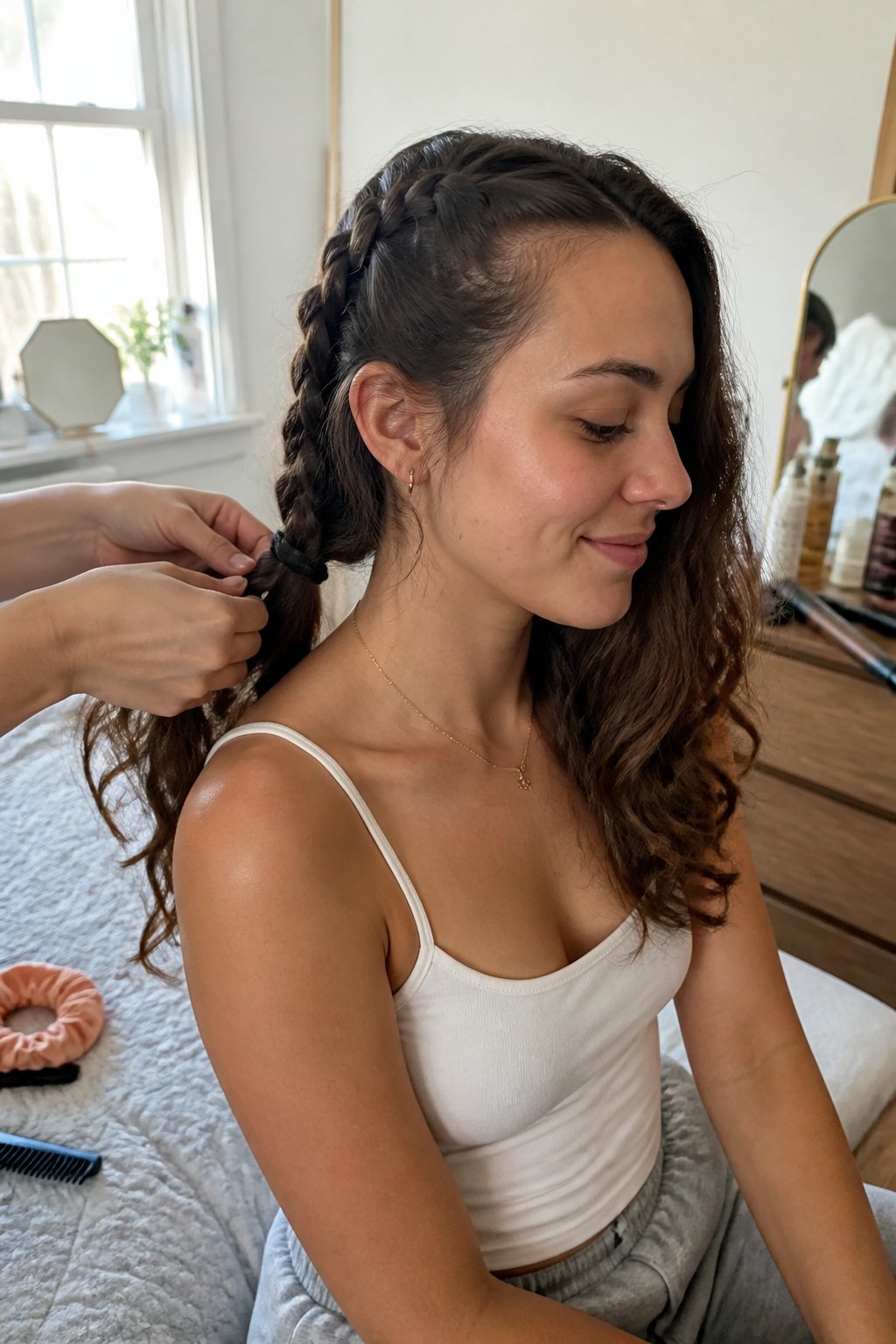
French braid waves give you soft, heatless texture with little effort. Start with clean, slightly damp hair, then apply a small amount of mousse or frizz-control cream. Avoid soaking your hair, since wet strands may stay damp overnight and create uneven waves.
Part your hair down the middle and make two loose French braids. Add similar-sized sections as you braid, but keep the tension gentle. Tight braids can leave sharp bends, flatten your roots, or cause discomfort while you sleep. Secure each braid with a soft fabric tie.
Let your hair dry fully before taking the braids out. In the morning, loosen them carefully and separate the waves with your fingers instead of brushing. Add a light mist of hairspray if you need hold, and smooth flyaways with a drop of hair oil. Adjust the braid size to create either relaxed beachy waves or more defined curls.
3. Dutch Braid Waves
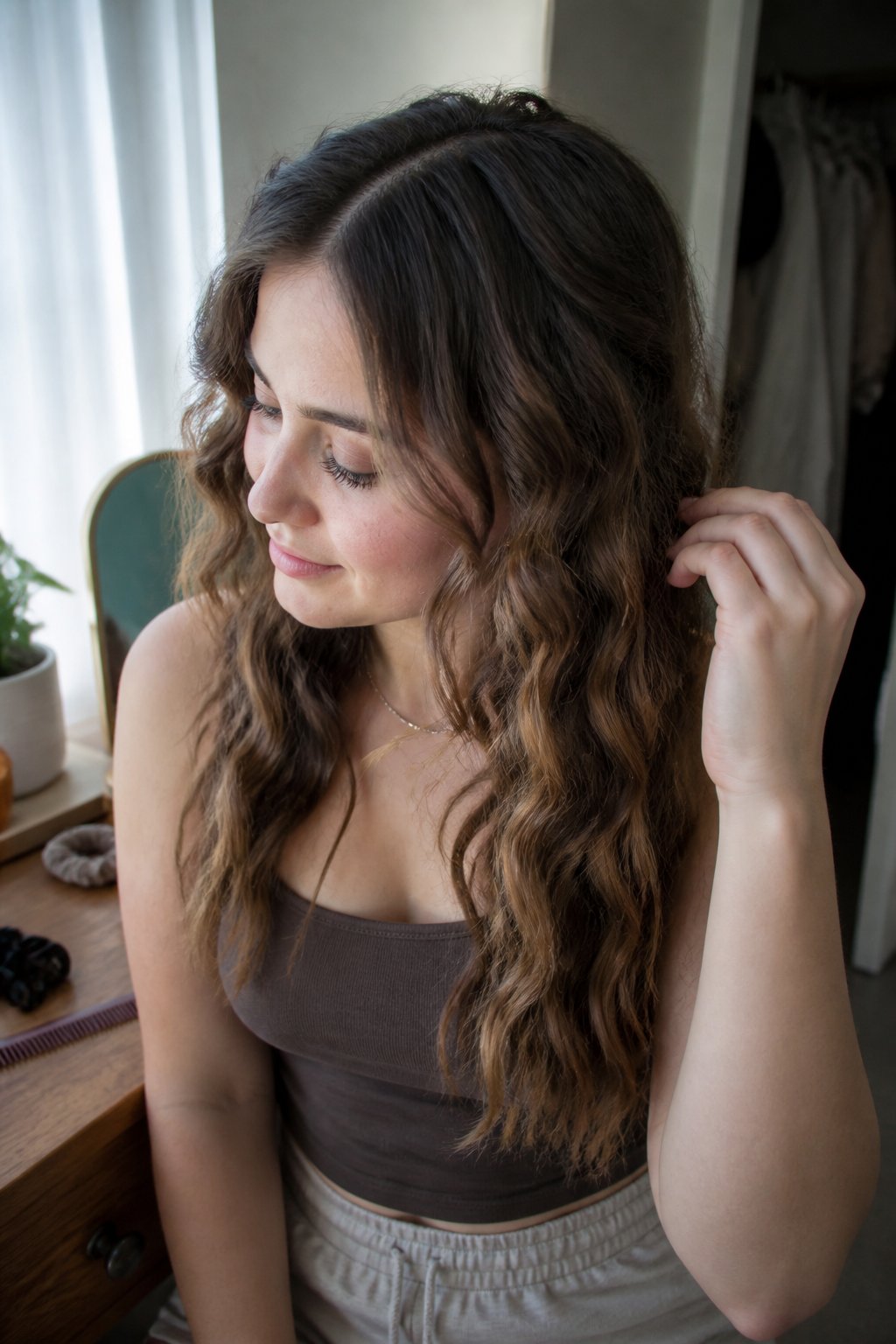
For soft, heatless waves, start with slightly damp hair and brush out any knots. Split your hair down the middle, then make a Dutch braid on each side by crossing each outer strand under the middle strand. Keep the braids firm near your scalp but not tight enough to cause discomfort.
Braid to the ends and secure each side with a soft tie. Let your hair dry completely, preferably overnight. If your layers slip out, tuck shorter pieces into the braid or pin them gently before bed. Damp hair will not hold the shape well if you undo the braids too soon.
In the morning, remove the ties and loosen the braids with your fingers. Avoid brushing, which can create frizz and flatten the wave pattern. Add a small amount of lightweight cream to the ends, then adjust the front pieces around your face for a softer finish.
4. Twisted Low Bun: A Simple Heatless Hairstyle Guide
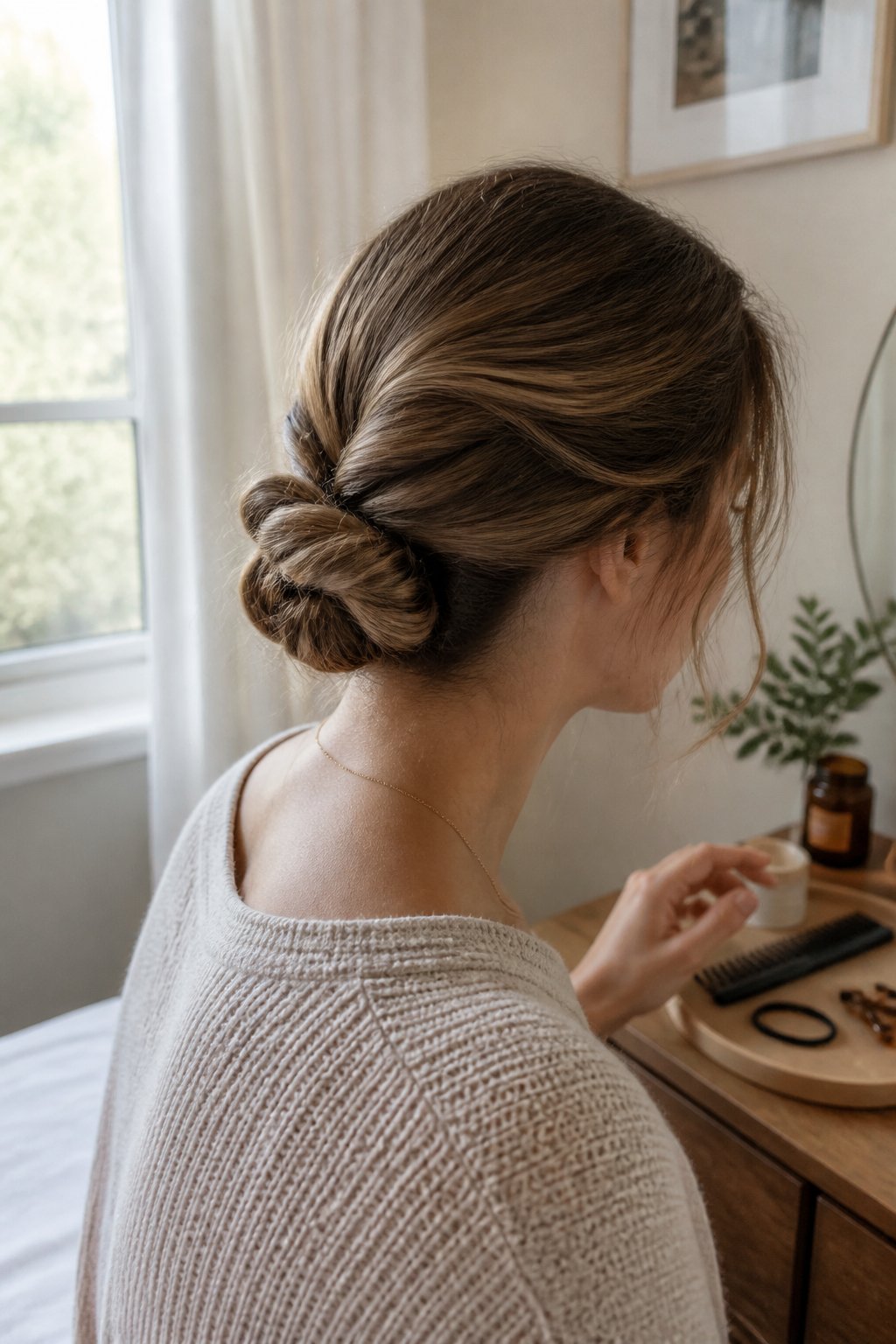
For a polished heatless hairstyle, gather your dry or slightly damp hair at the nape of your neck. Twist the length into a coil, wrap it into a low bun, and secure it with a soft hair tie and two or three bobby pins.
For a softer look, leave a few strands near your face loose. You can also add a ribbon or scarf around the bun for color. If your hair feels slippery, use a small amount of styling cream for grip, but avoid pulling the bun too tightly.
A common mistake involves placing the bun too low, where it can loosen against your collar. Keep it close to the base of your neck, then test the hold by gently moving your head. Adjust the pins before adding accessories. Try this style for work, errands, or a simple evening look.
5. Sleek low ponytail
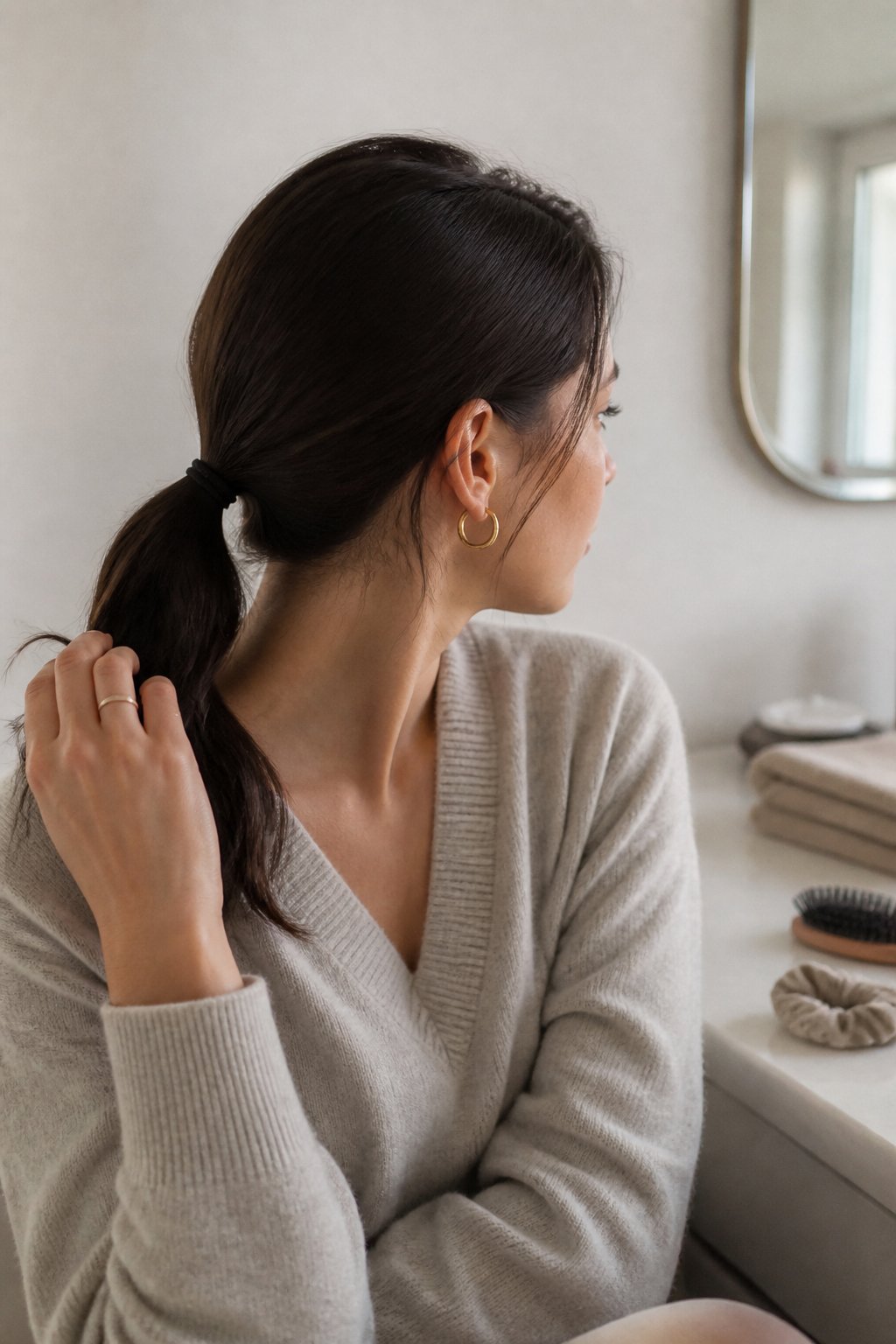
This polished style gives you a neat look without heat tools. Start with dry or slightly damp hair, then smooth a small amount of leave-in cream through the lengths. Use a center or side part, gather your hair at the nape, and secure it with a snag-free elastic.
For a smoother finish, brush the sides with a soft bristle brush before tying the ponytail. Wrap a thin strand of hair around the elastic and pin it underneath. Let the ends stay straight, or braid the ponytail while you sleep for soft waves by morning.
Avoid tying wet hair tightly, since this can cause pulling and breakage. If flyaways appear, press them down with a little styling cream rather than adding too much product. Add a simple ribbon or barrette when you want a more finished look.
6. Classic Chignon: A Heatless Low-Bun Tutorial
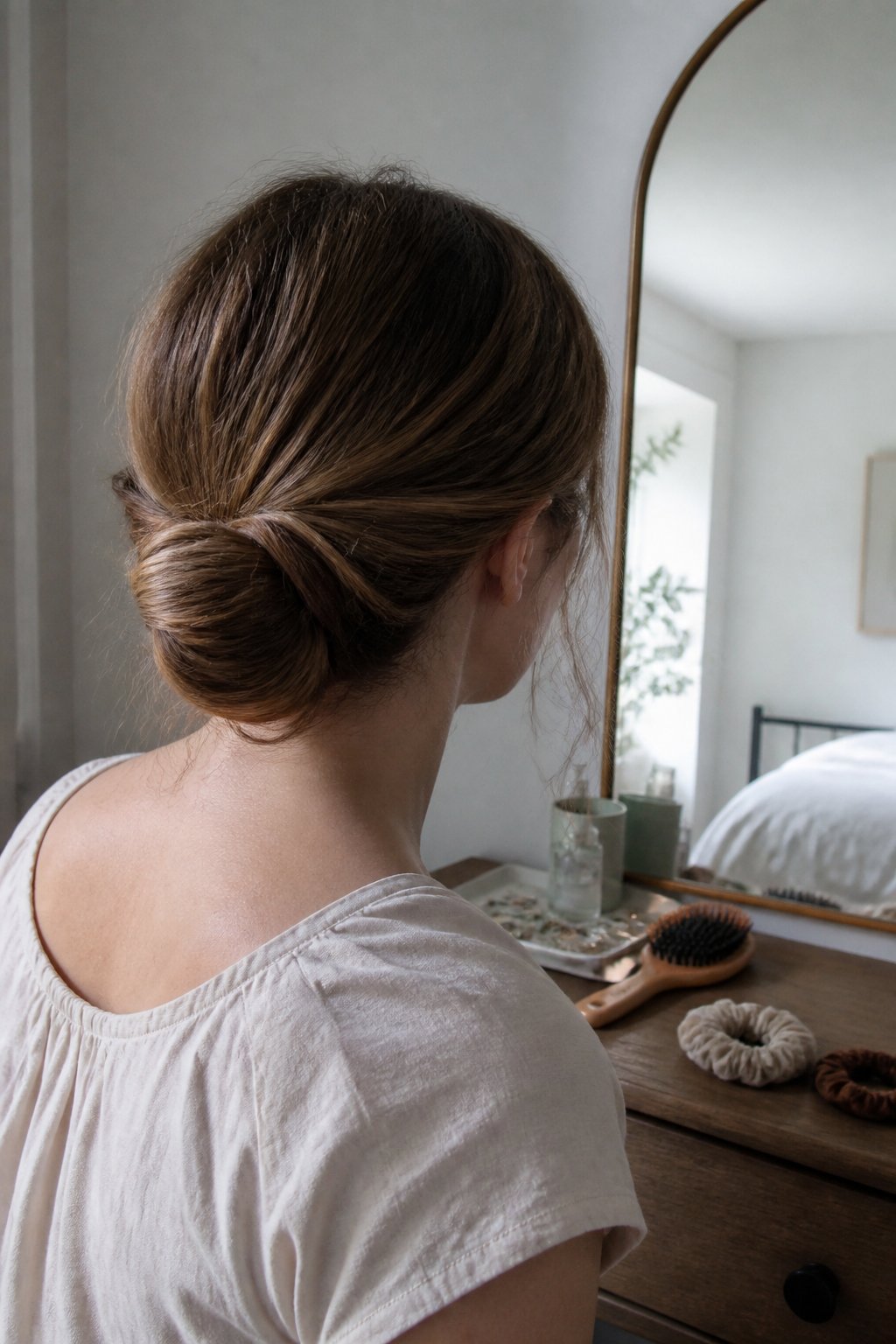
Create a polished classic chignon without heat by gathering your dry hair at the nape of your neck. Secure it with a soft elastic, twist the ponytail, and wrap it into a low bun. Tuck the ends underneath, then pin the bun in place with U-shaped pins.
For extra hold, lightly mist your hair with water or apply a small amount of smoothing cream before styling. A center part gives a neat finish, while loose pieces around your face create a softer look. You can also add a ribbon or simple pins for a wedding or formal event.
Avoid making the ponytail too tight, which can cause discomfort and flatten the style. If your hair slips easily, add texture with dry shampoo before twisting. Adjust a few face-framing strands, secure the final pins, and wear your heatless chignon with confidence.
7. Rope-twist ponytail
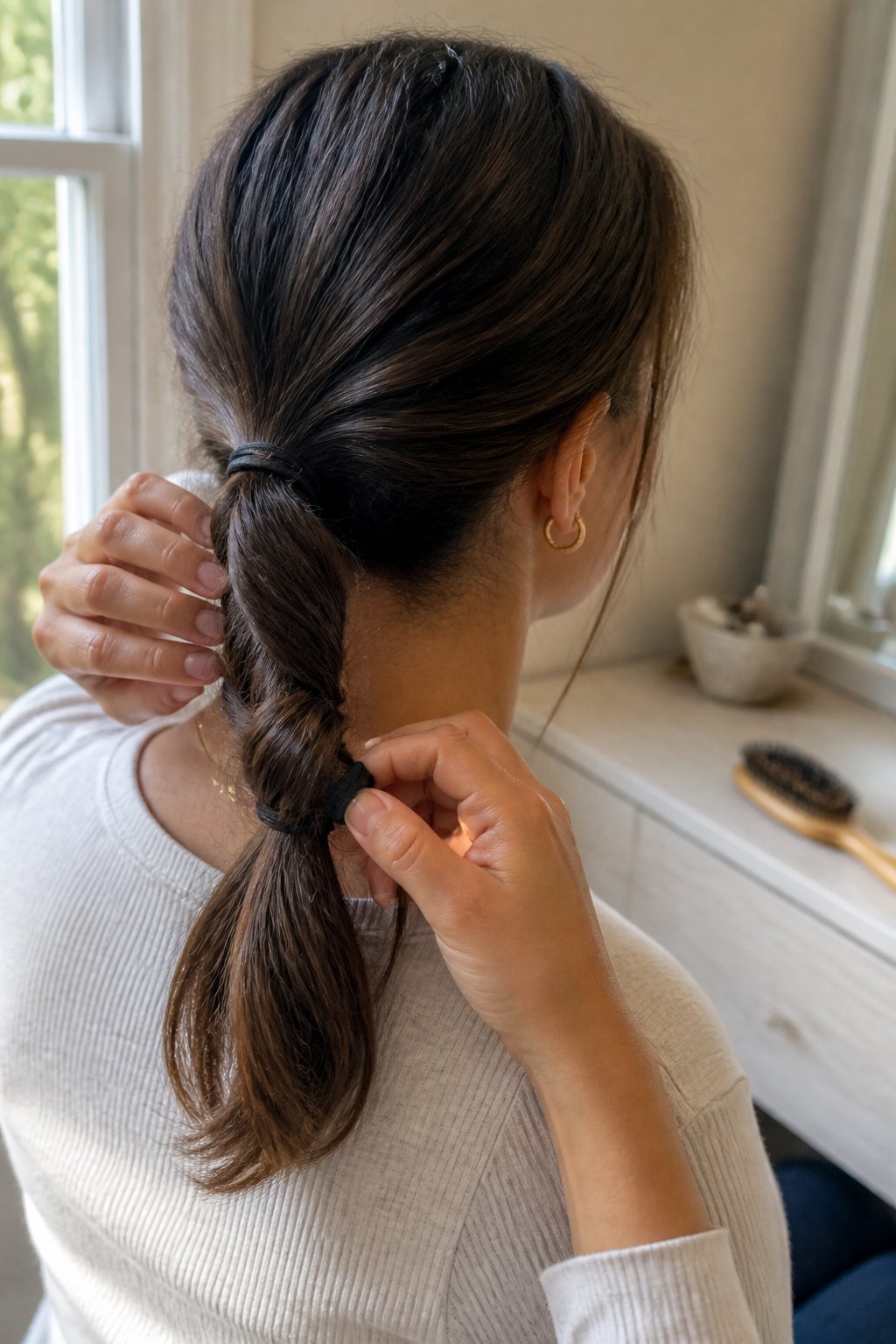
Create a polished, heatless style by dividing your ponytail into two equal sections. Secure the hair at your preferred height, then twist both sections in the same direction. Wrap them around each other in the opposite direction and tie the end with a small elastic.
Apply a little mousse or styling foam first if your hair slips easily. Smooth flyaways with a soft brush, but avoid pulling the ponytail too tightly, which can cause tension and flatten the twist. For extra fullness, gently loosen the finished rope with your fingertips.
A high rope-twist ponytail gives a sporty look, while a low version feels more refined. You can also wrap a small strand around the elastic for a cleaner finish. Use a satin scrunchie at night to reduce friction and help preserve the style.
8. Claw-clip twist
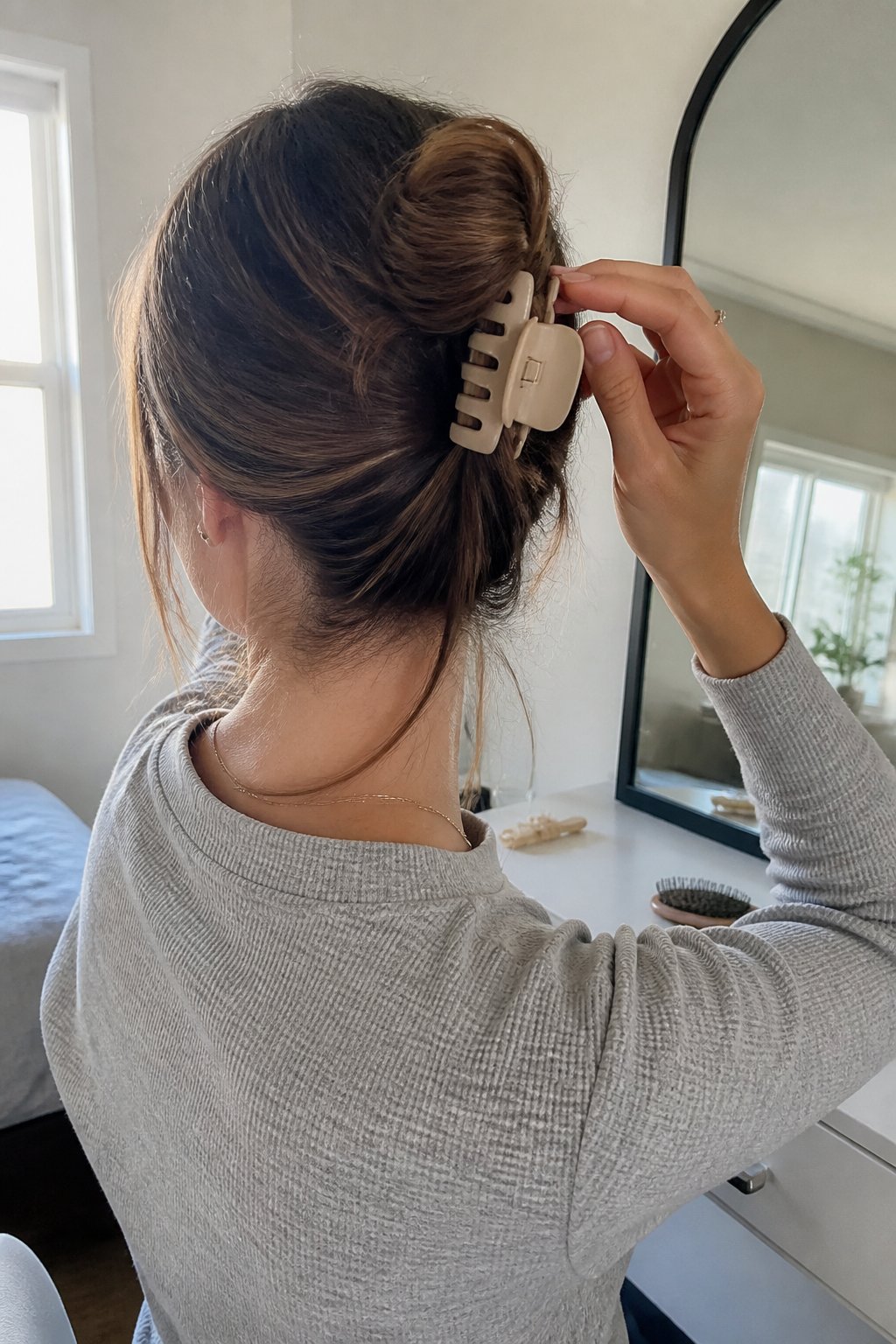
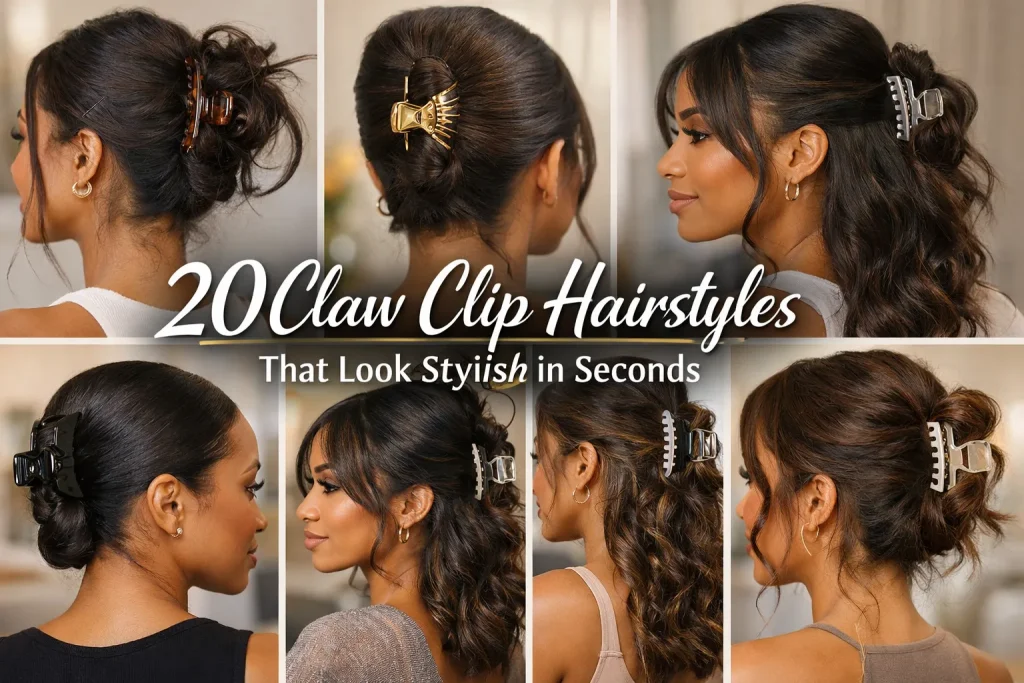
This quick claw-clip twist gives you a polished, heatless updo in about a minute. It works best on medium to long hair, but you can adapt it for shorter layers with a smaller clip.
Gather your hair at the nape of your neck and twist it upward until the ends point toward your crown. Fold the ends down, then secure the twist with a strong claw clip. Pull out a few face-framing strands for a softer look, or smooth the sides for a cleaner finish.
Choose a clip that fits your hair thickness. A common mistake is using one that cannot hold the twist, which can cause slipping and tension. If your hair feels too smooth, add a small amount of texturizing spray before twisting.
Try this style for work, errands, or a formal event when you want an easy, heat-free finish.
9. Half-up topknot
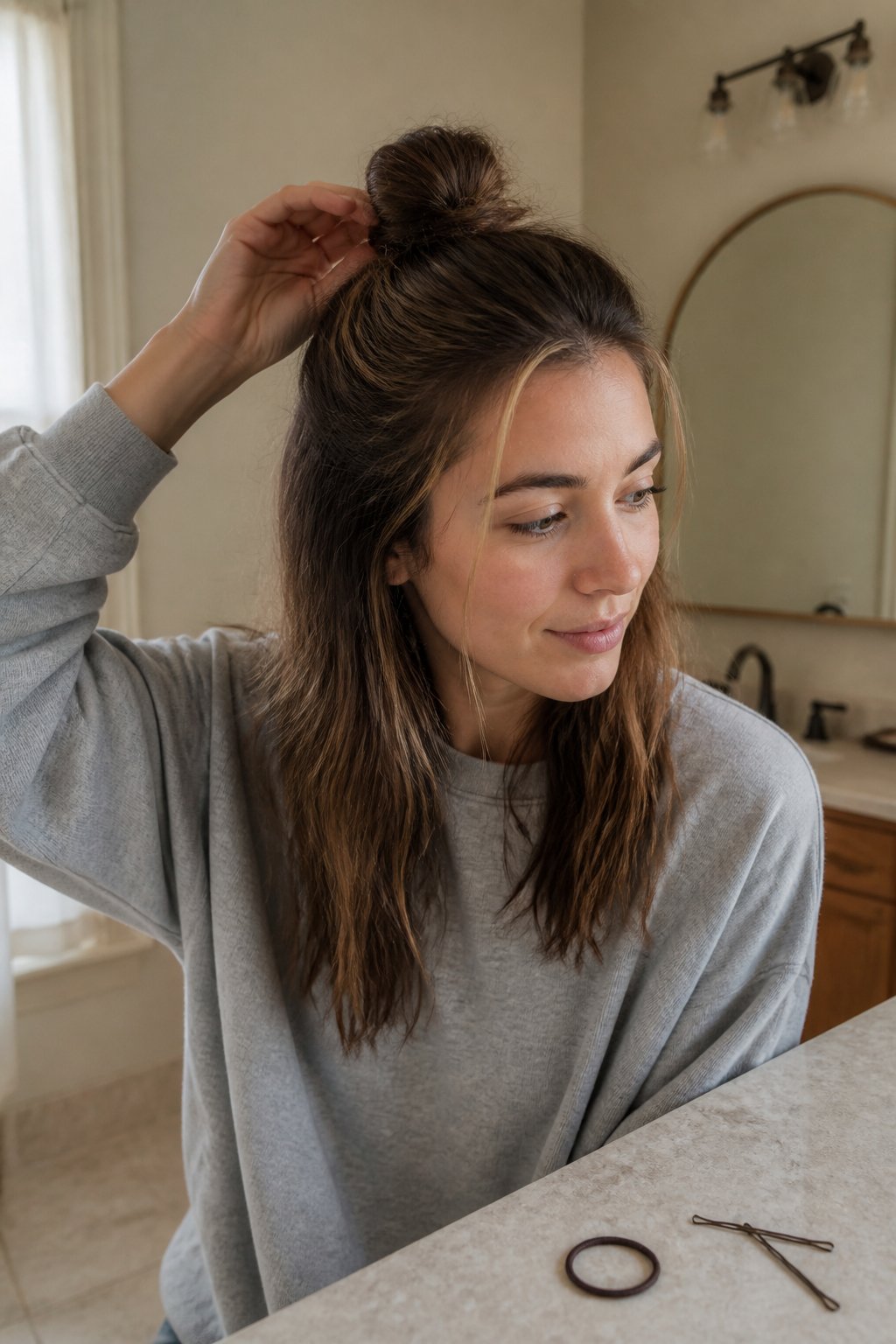
A half-up topknot gives you a neat, lifted style without heat or much effort. You can create it on straight, wavy, curly, or coily hair, and it works for casual days or special events.
Start with dry, detangled hair. Gather the top section from your temples to your crown, then secure it with a small elastic. Twist that section into a loose knot and pin it in place with bobby pins or a claw clip.
For a softer look, leave a few face-framing strands loose and gently pull at the crown for volume. Avoid making the top section too large, since the knot may feel heavy or lose its shape. You can also braid the gathered section before wrapping it for extra texture.
Use a fabric-covered elastic to reduce pulling, especially if your hair is fine or fragile. Secure loose ends with pins, then wear the style as it is or add a simple ribbon for detail.
10. Sock-bun waves
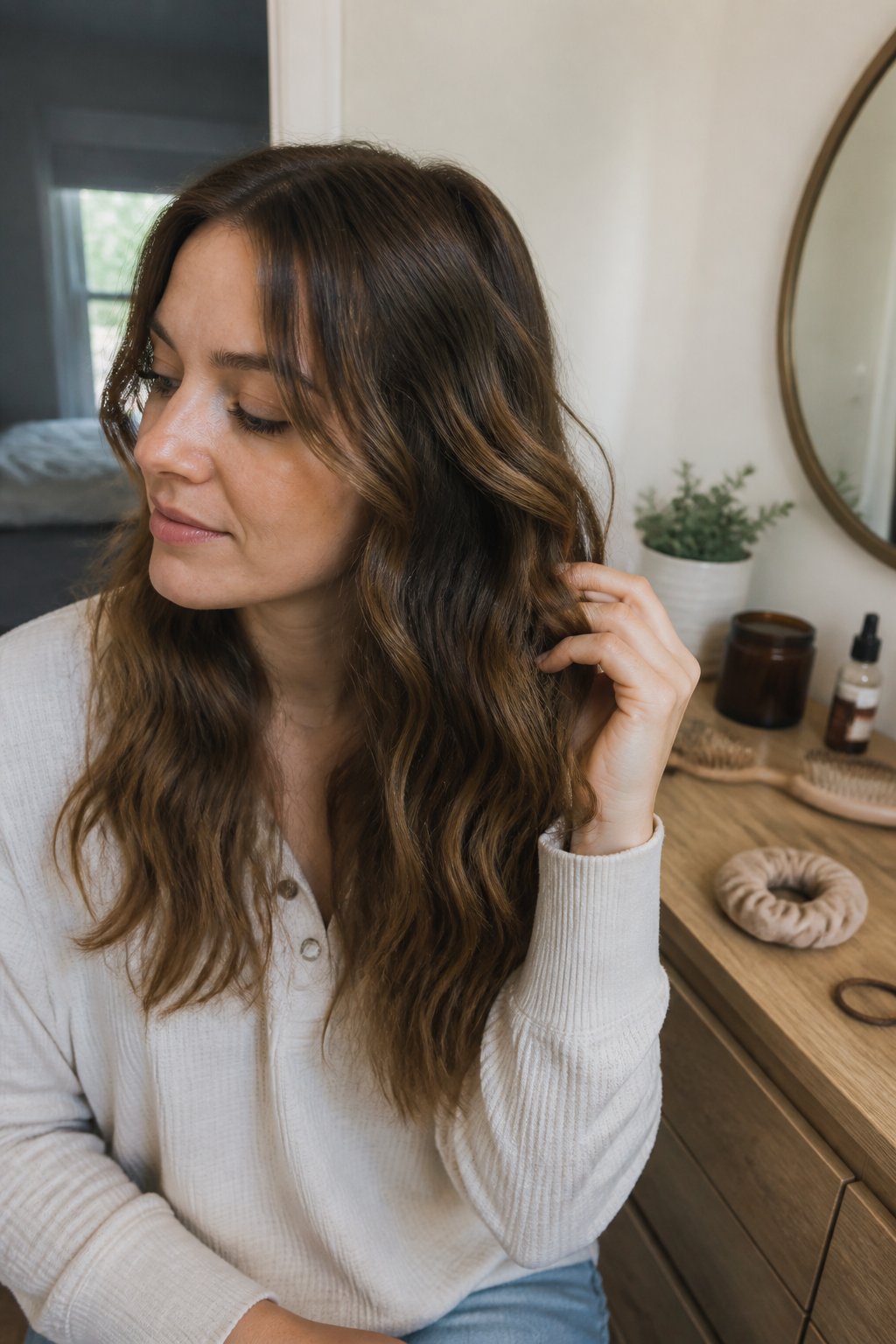
You can create soft, heatless waves with a clean, soft sock and a loose bun. Start with slightly damp hair, apply a small amount of leave-in conditioner, and brush through the lengths to remove tangles.
Roll the sock into a doughnut shape, or use a sock-bun tool. Make a high or low ponytail, place the sock over it, and wrap your hair evenly around the sock. Tuck the ends underneath and secure them with pins if needed.
Let your hair dry fully before removing the bun. Damp hair gives shape, but wet hair may stay wet inside the bun and create uneven waves. Avoid wrapping too tightly, since this can cause dents, tension, or discomfort while you sleep.
Unroll the bun gently, separate the waves with your fingers, and use a light spray if you need extra hold. Try a loose low bun for relaxed waves or a higher bun for more lift at the roots.
11. Legging curls
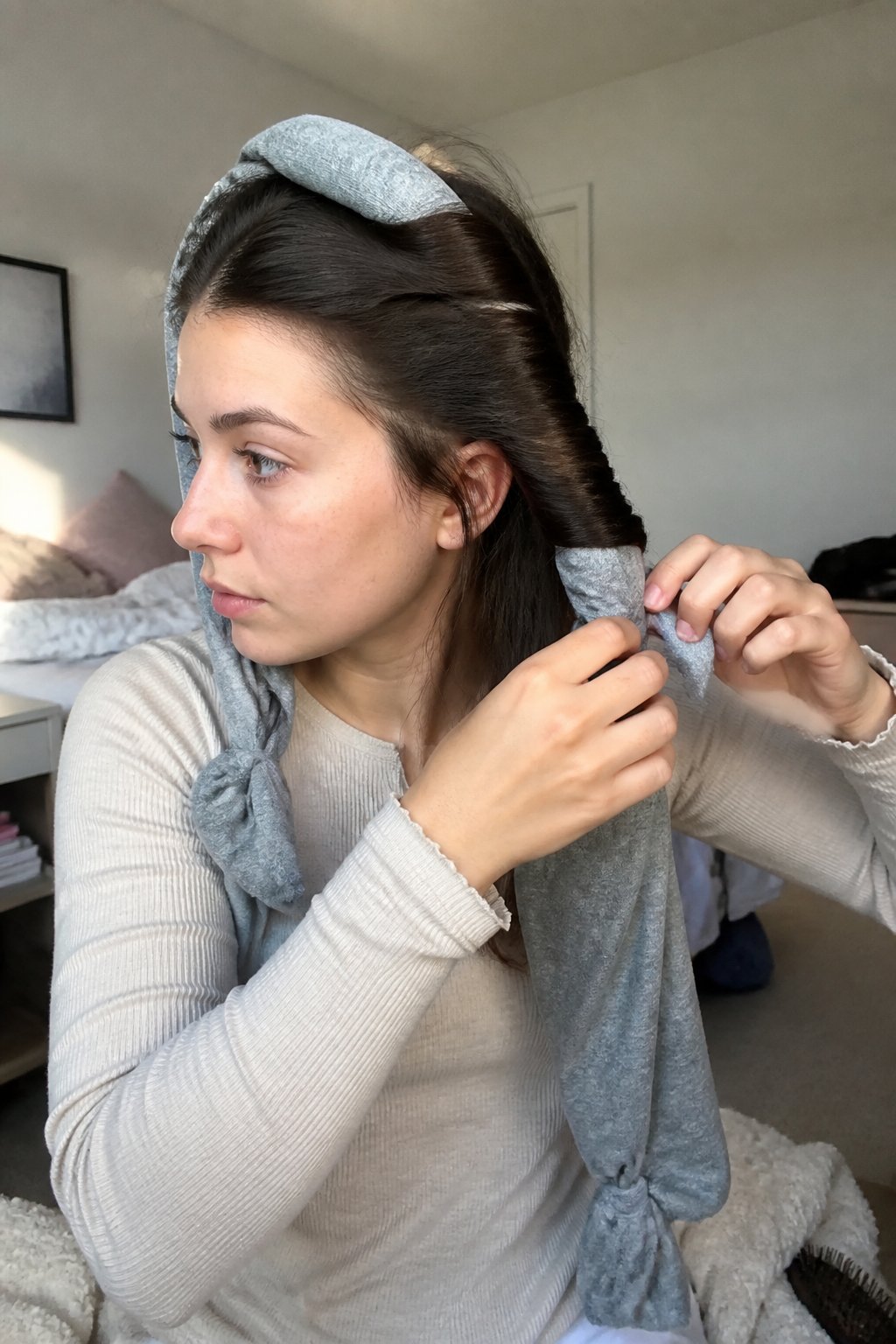
Create soft, heatless curls with a clean pair of leggings and two scrunchies. Start with dry or slightly damp hair, then part it down the middle. Place the leggings across the top of your head, letting each leg fall beside your face.
Wrap small sections of hair around the nearest leg, moving away from your face. Add more hair as you wrap, much like a loose French braid. Secure each end with a scrunchie, then sleep in the style overnight.
For looser waves, use larger sections and keep the wrapping relaxed. For tighter curls, take smaller sections and wrap them firmly. Avoid starting with soaking-wet hair, since it may stay damp and produce uneven results.
In the morning, remove the scrunchies and gently unwind your hair. Separate the curls with your fingers instead of brushing, then use a light styling product if needed. Try this method when you want curls without hot tools or extra hair damage.
12. Pin Curls for Soft, Heatless Waves
Pin curls give you defined waves without a curling iron. Start with clean, evenly damp hair, then towel-dry until it feels moist rather than wet. Very wet hair may stay damp overnight and create uneven curls.
Work with small sections for tighter curls or larger sections for loose waves. Wrap each section around your finger, flatten the loop against your scalp, and secure it with a bobby pin or duckbill clip. Place the curls in the direction you want your hair to fall, especially around your face.
Let your hair dry fully before removing the pins. Sleeping on a satin pillowcase or wearing a satin scarf can reduce frizz and keep the curls neat. Avoid brushing right away; separate them gently with your fingers and add a small amount of lightweight styling cream if needed.
If your ends look uneven, use less hair in each curl and smooth them before wrapping. Try pin curls on short, long, relaxed, natural, or transitioning hair for a flexible heatless style.
Hair Preparation and Product Choices for Heatless Hairstyles
Start with clean, gently detangled hair and choose products based on your hair’s texture, length, and moisture level. Small adjustments—such as using less water or changing the braid size—help create smoother waves, curls, or volume without excess product.
Working With Hair Texture And Length
Your hair should feel slightly damp, not wet, before you braid, twist, or wrap it. Hair that is too wet may stay damp overnight and form uneven waves. For most textures, aim for about 80–85% dry before styling.
Fine or straight hair often holds shape better with loose braids, small twists, or a light mousse. Use larger sections for soft bends and smaller sections for tighter waves. Thick or coarse hair may need several sections so the style dries evenly. Apply a small amount of leave-in conditioner first if your ends feel dry.
Short hair usually responds well to flat twists, pin curls, or small braids placed close to the scalp. For medium or long hair, robe-tie curls, loose overnight braids, and twisted buns can create more movement. Avoid pulling tightly, especially around your hairline, because tension can cause discomfort and breakage.
Using Products Without Creating Buildup
Use products sparingly and apply them where they provide the most benefit. A light mousse can add hold and volume, while a small amount of leave-in conditioner can soften dry ends. If you have frizz, smooth a pea-sized amount of lightweight cream over the surface after styling.
Avoid layering several heavy products before wrapping your hair. Too much oil, gel, or cream can make strands slippery, flatten volume, and leave buildup on your scalp. Apply styling products to damp lengths rather than directly at the roots unless you need extra lift.
If your hair loses its shape quickly, mist each section with a light setting spray before braiding or twisting. Let your hair dry fully before taking it down, then separate the waves with clean fingers instead of brushing. This keeps the style defined without adding more product.
Comfort, Hold, and Overnight Care for Heatless Hairstyles
You get better results when your hairstyle feels secure without pulling your hair or disturbing your sleep. Gentle tension, suitable products, and smooth sleep protection help preserve curls, waves, braids, and updos until morning.
Preventing Tension and Breakage
Start with slightly damp, not wet, hair. Hair stretches more when wet, so tight twists, buns, or braids can cause stress while you sleep. Let your hair dry until it feels about 80–90% dry before styling.
Keep the base loose, especially around your hairline and temples. Use soft scrunchies, fabric ties, or small claw clips instead of narrow rubber bands. If you feel pulling, loosen the style immediately. A comfortable style should stay in place without causing a headache or sore spots.
Apply a small amount of mousse or styling foam to help waves and curls hold. Avoid using too much product, which can make hair stiff and encourage rough handling in the morning. For fragile or fine hair, choose fewer, larger sections rather than many tight ones.
Common mistakes include wrapping hair too tightly, sleeping with dripping-wet strands, and removing ties by tugging. Unwrap each section slowly, then separate it with your fingers.
Protecting Styles While Sleeping
Your pillowcase affects how well a heatless hairstyle lasts. Satin or silk creates less friction than cotton, helping reduce frizz and preventing curls from flattening as quickly. A satin bonnet or loose scarf offers extra protection, but it should not feel tight around your head.
For long hair, place curls or twists loosely on top of your head before securing them. This keeps your weight from pressing directly onto the style. If you use a robe tie or curling ribbon, choose a soft material and leave the ends lightly secured.
Sleep with fully dry hair whenever possible. Damp hair can lose its shape and may feel rough after repeated friction. In the morning, remove accessories gently, shake out the roots, and separate curls with clean fingers instead of brushing through them. Add a small amount of lightweight serum only to dry ends if needed.
A few small changes at bedtime can help your heatless style stay comfortable, defined, and ready to wear.
About the Author — Lena Harper
Lena Harper is a fashion writer and content strategist at Fashion Pops, known for creating thoughtful, trend-aware articles that feel both stylish and relatable. With a strong background in fashion journalism, she specializes in turning seasonal trends, outfit ideas, and styling concepts into easy-to-follow inspiration for modern women.
Her writing focuses on practicality without losing creativity — helping readers build outfits that feel current, wearable, and confident. When she’s not working on new articles, Lena enjoys exploring street style trends, discovering unique fashion finds, and curating inspiration boards that shape upcoming content at Fashion Pops.