Pixie Haircuts for Women Over 40: 16 Chic, Youthful Styles
A pixie haircut can give you a polished, modern look while reducing daily styling time. Yet the wrong shape, length, or fringe can make short hair harder to manage, especially if you want to soften certain features or add volume.
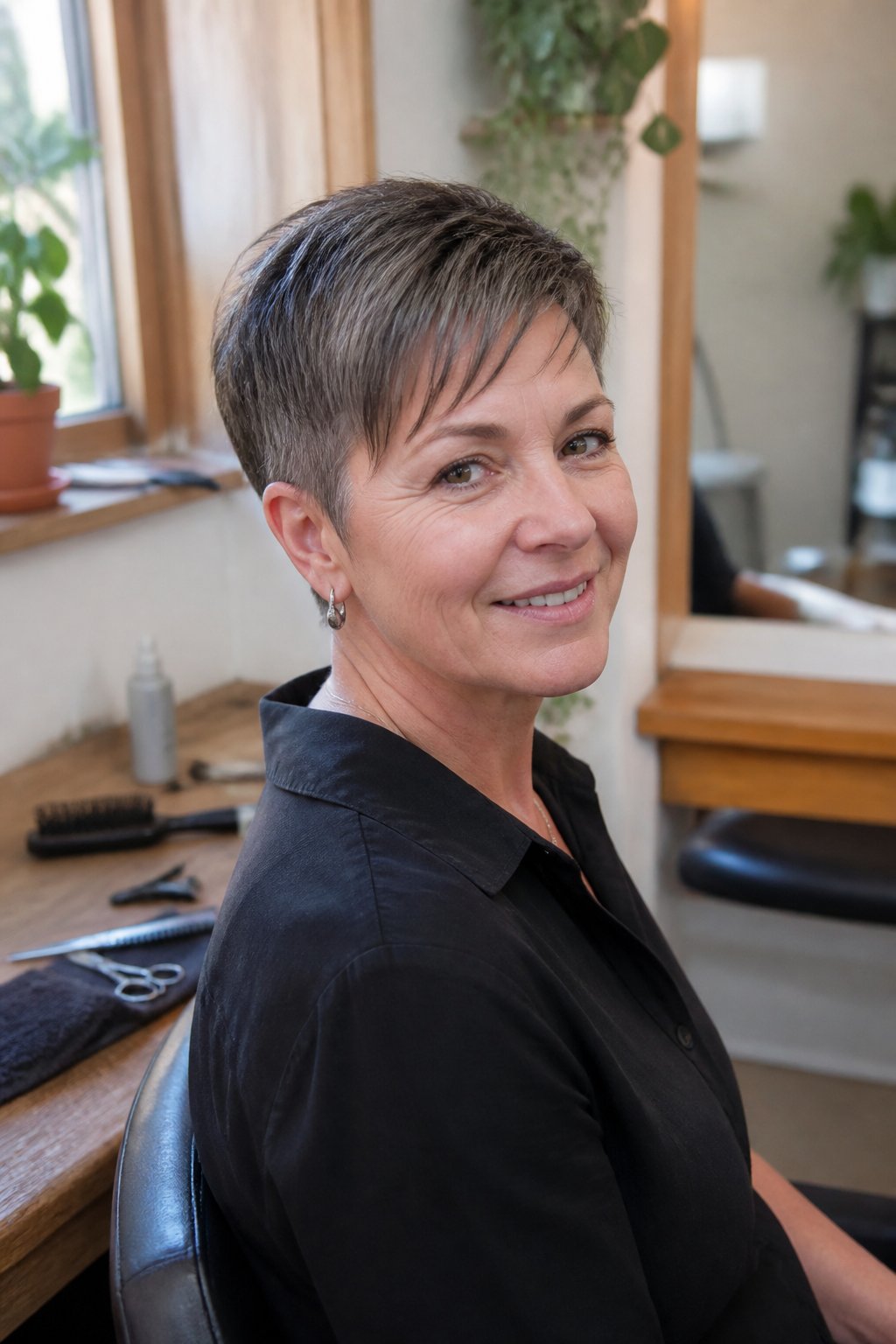
You can find a flattering pixie for your face shape, hair type, and lifestyle by choosing the right layers, fringe, and styling approach. Explore classic, textured, curly, sleek, silver, and longer pixie cuts, along with practical guidance for selecting and maintaining a style that feels like you.
1. Classic tapered pixie with side-swept fringe
This classic tapered pixie gives you a polished shape with little daily effort. Short sides and a neat, tapered nape keep the cut clean, while longer layers on top create movement and a soft side-swept fringe.
Ask your stylist to keep the fringe long enough to brush across your forehead or tuck behind one ear. This flexibility works well if you want a professional style during the week and a more relaxed look on weekends. Fine hair can benefit from light, choppy layers that add the appearance of fullness.
Avoid removing too much length from the top, especially if your hair is thin or naturally flat. Apply a small amount of lightweight styling cream, then guide the fringe into place with your fingers. Bring a photo to your appointment so you and your stylist can match the taper and fringe to your face shape.
2. Textured Pixie With Choppy Layers
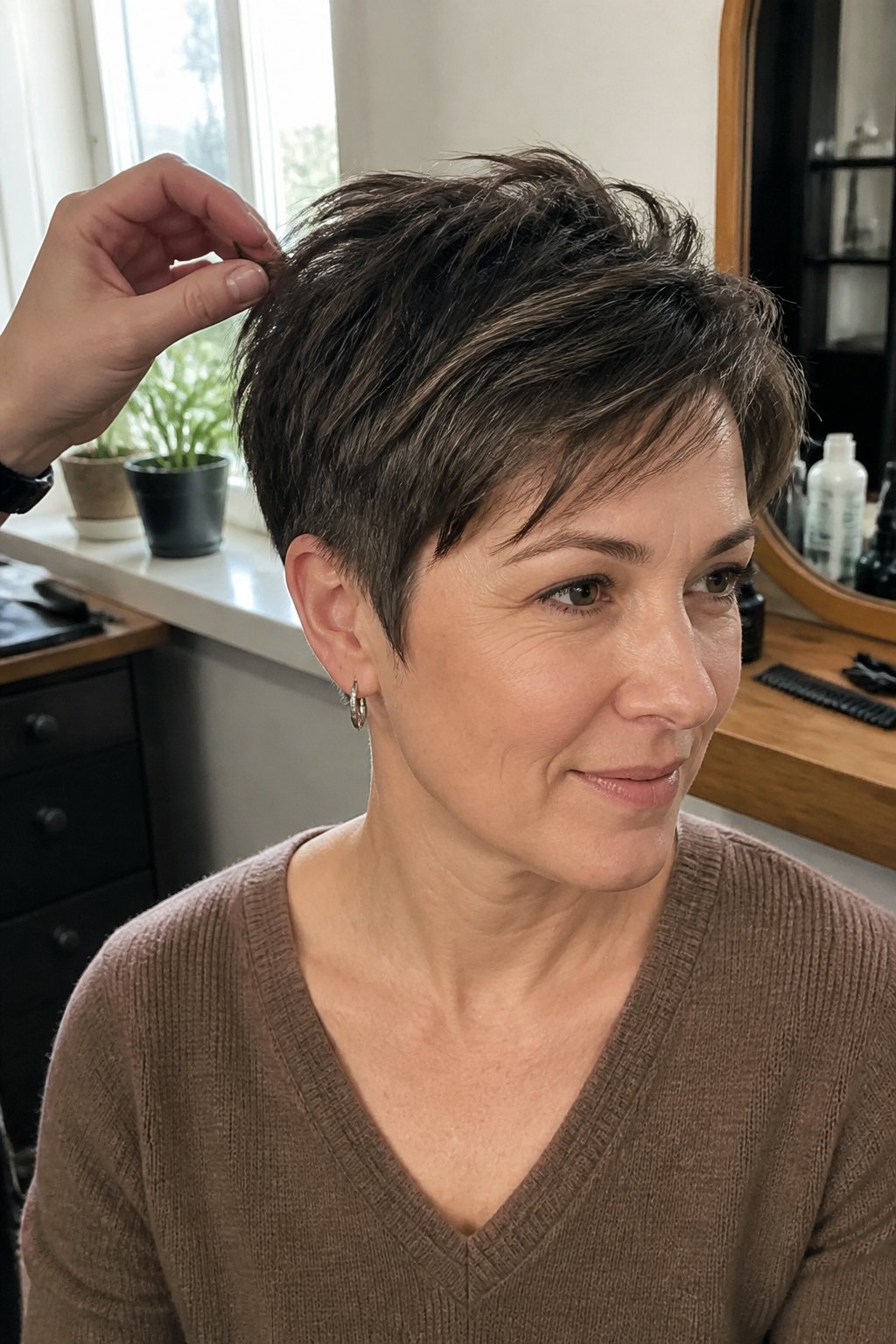
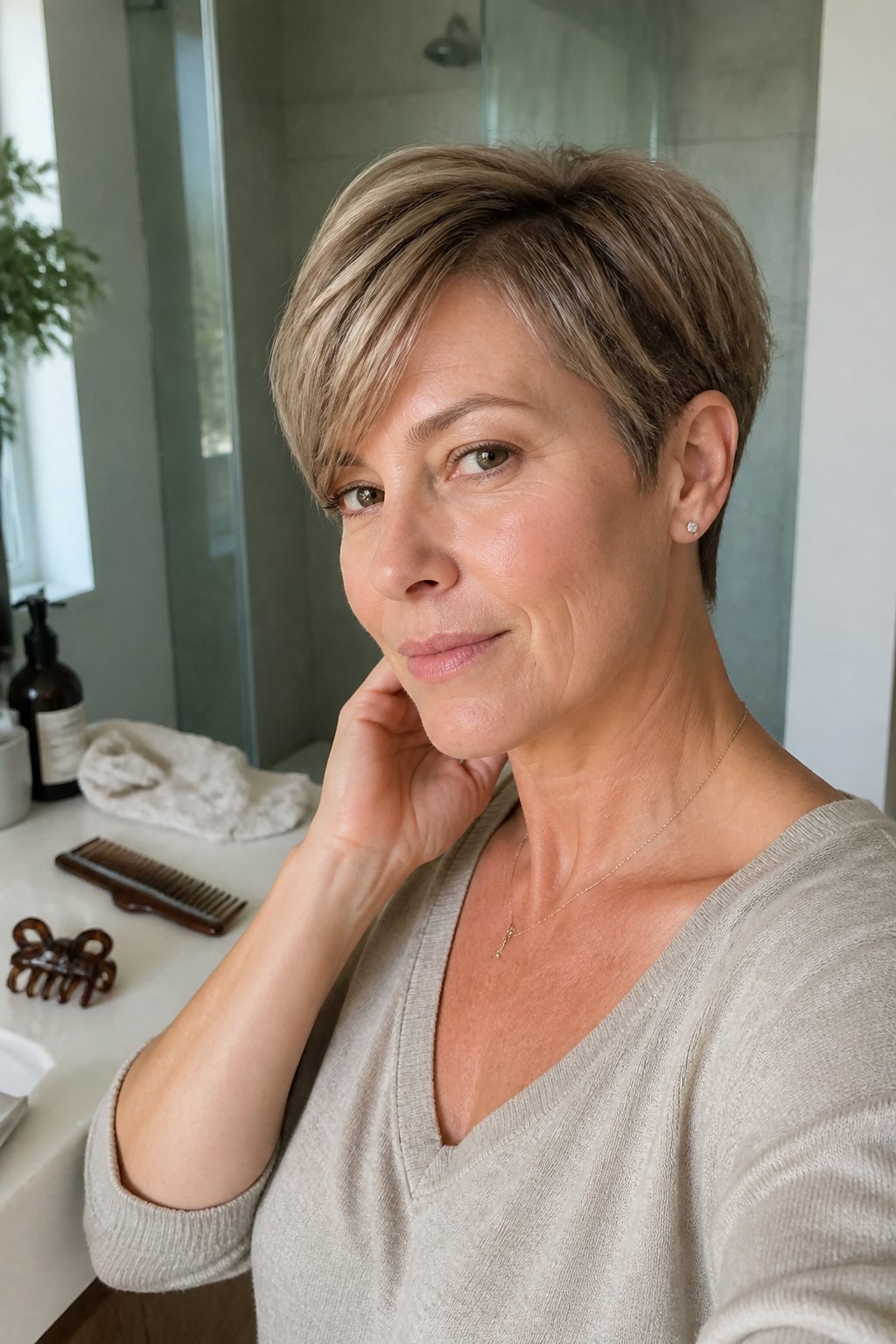
A textured pixie with choppy layers gives your hair movement, shape, and a fuller appearance without adding heavy bulk. Ask your stylist to keep extra length through the crown and fringe, then add uneven layers that create a soft, piece-y finish.
This cut works well for fine hair because the layers can make the top look more lifted. If your hair is thick or coarse, your stylist can remove weight carefully around the sides and back. Avoid asking for too many short layers, which may create unwanted width or make styling difficult.
Use a small amount of lightweight wax or styling cream on dry hair. Pinch a few ends between your fingers to define the texture, especially around the crown and fringe. Bring a reference photo to your appointment so your stylist can match the cut to your face shape and hair type.
3. Long Pixie With Feathered Bangs
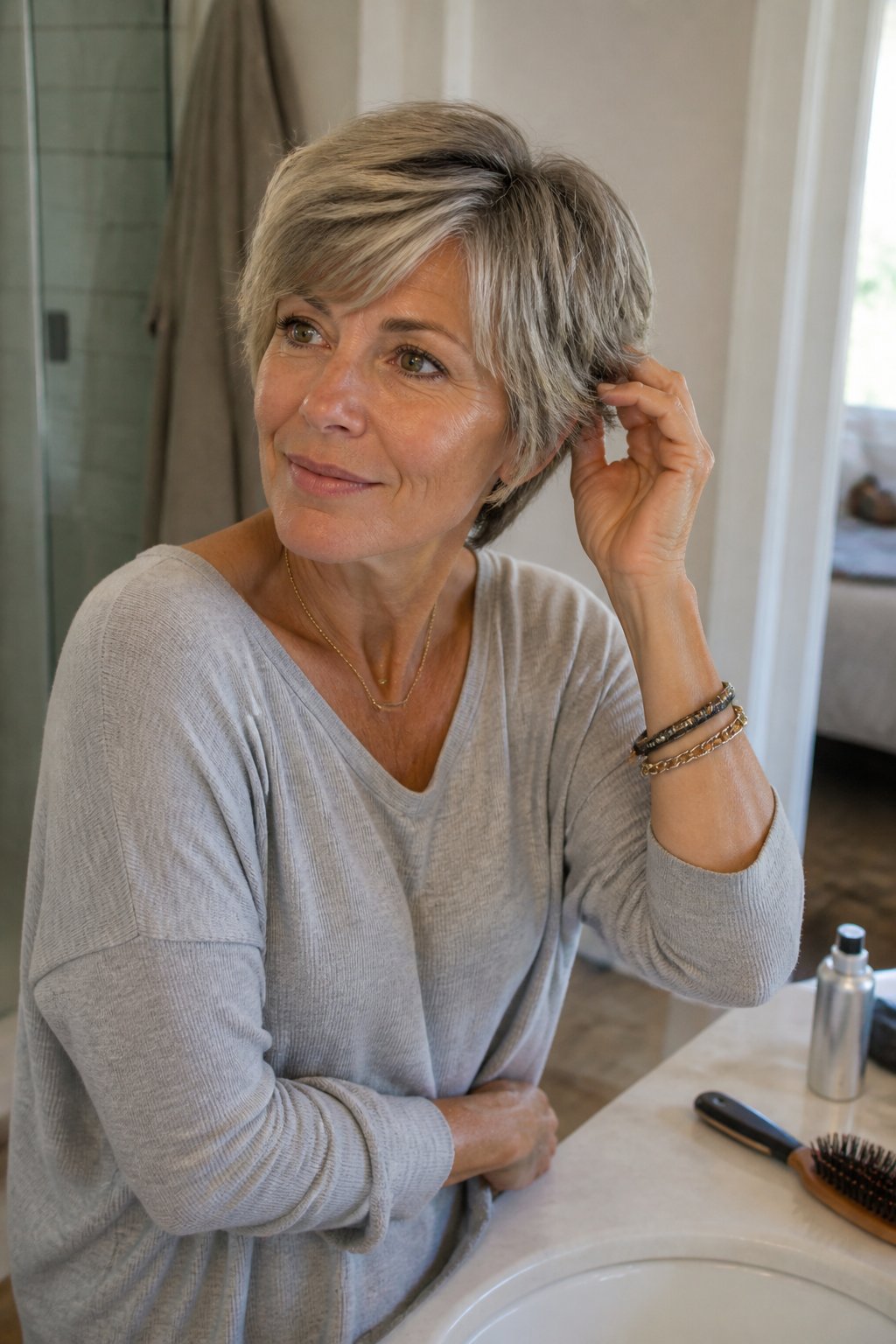
This long pixie haircut gives you short sides with extra length on top and soft, feathered bangs. The light layers create movement and can make fine hair look fuller without adding heavy bulk.
Ask your stylist to shape the bangs toward your cheekbones or sweep them gently to one side. This helps frame your face while giving you different styling options. You can wear the cut smooth for a polished look or add texture with a small amount of lightweight styling cream.
Avoid overly short, blunt bangs if you want a softer result. Feathered ends blend more easily as they grow and work well with straight, wavy, or lightly curly hair.
For everyday styling, lift the roots with a round brush while blow-drying, then direct the bangs away from your face. Bring a photo to your appointment and ask your stylist to adjust the layers to your hair’s thickness and natural texture.
4. Soft pixie bob with graduated layers
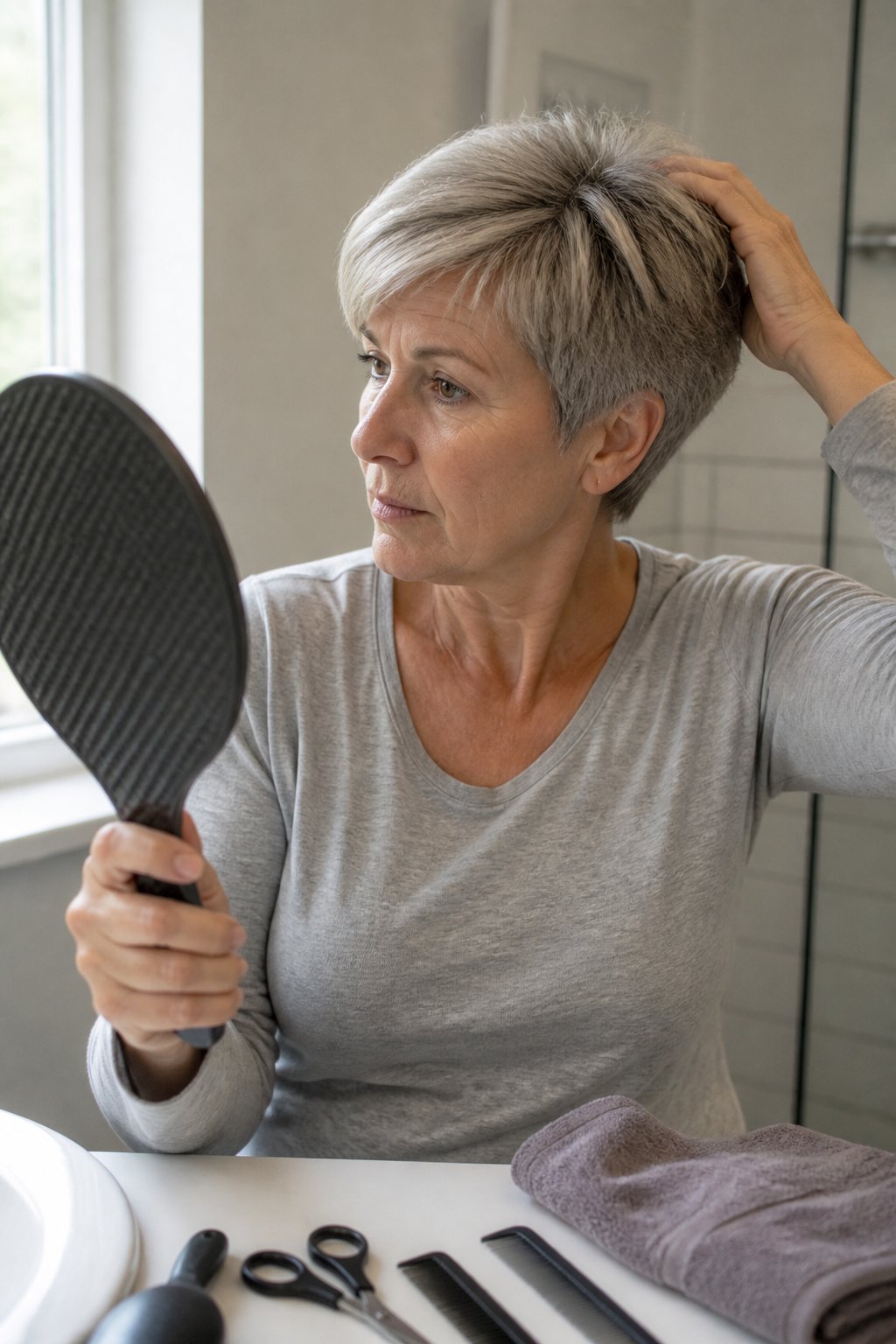
A soft pixie bob with graduated layers gives you the easy care of a pixie while keeping enough length to frame your face. Shorter layers at the back create a neat shape, while slightly longer layers on top add gentle movement and lift.
Ask your stylist to blend the layers instead of making sharp steps. This keeps the cut soft and helps fine hair look fuller without appearing stiff. A light side fringe can also soften the forehead and highlight your eyes.
For styling, apply a small amount of mousse to damp hair, then lift the roots with your fingers as you dry. Avoid heavy wax, which can flatten fine hair and make layered cuts look greasy. Bring a photo showing the length and shape you want before your appointment.
5. Sleek pixie with a deep side part
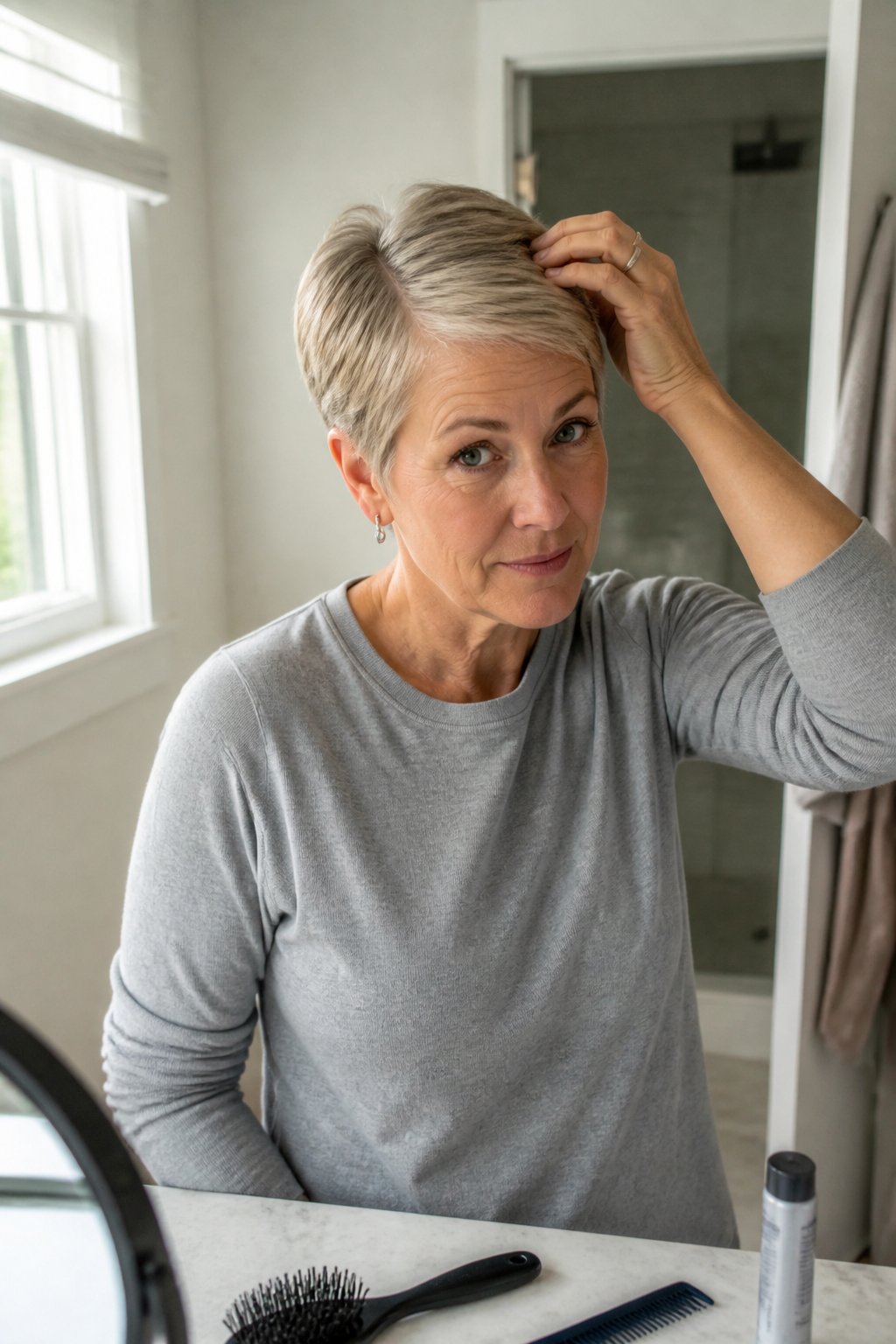
Choose a sleek pixie with a deep side part when you want a polished, structured look that stays easy to manage. The longer top creates shape, while the shorter sides keep the style neat and highlight your eyes, cheekbones, and jawline.
Ask your stylist to place the part where your hair naturally falls. A strong side part can add height to fine hair, but pressing the top too flat may make the style look severe. Use a small amount of smoothing cream, then guide the longer section across your forehead with a fine-tooth comb.
For a softer finish, leave the ends slightly tousled instead of using heavy gel. This cut works especially well on straight or lightly wavy hair and needs regular trims to maintain its clean lines. Bring a front and side photo to your appointment so your stylist can adjust the shape to your face and hair texture.
6. Spiky pixie with piece-y texture
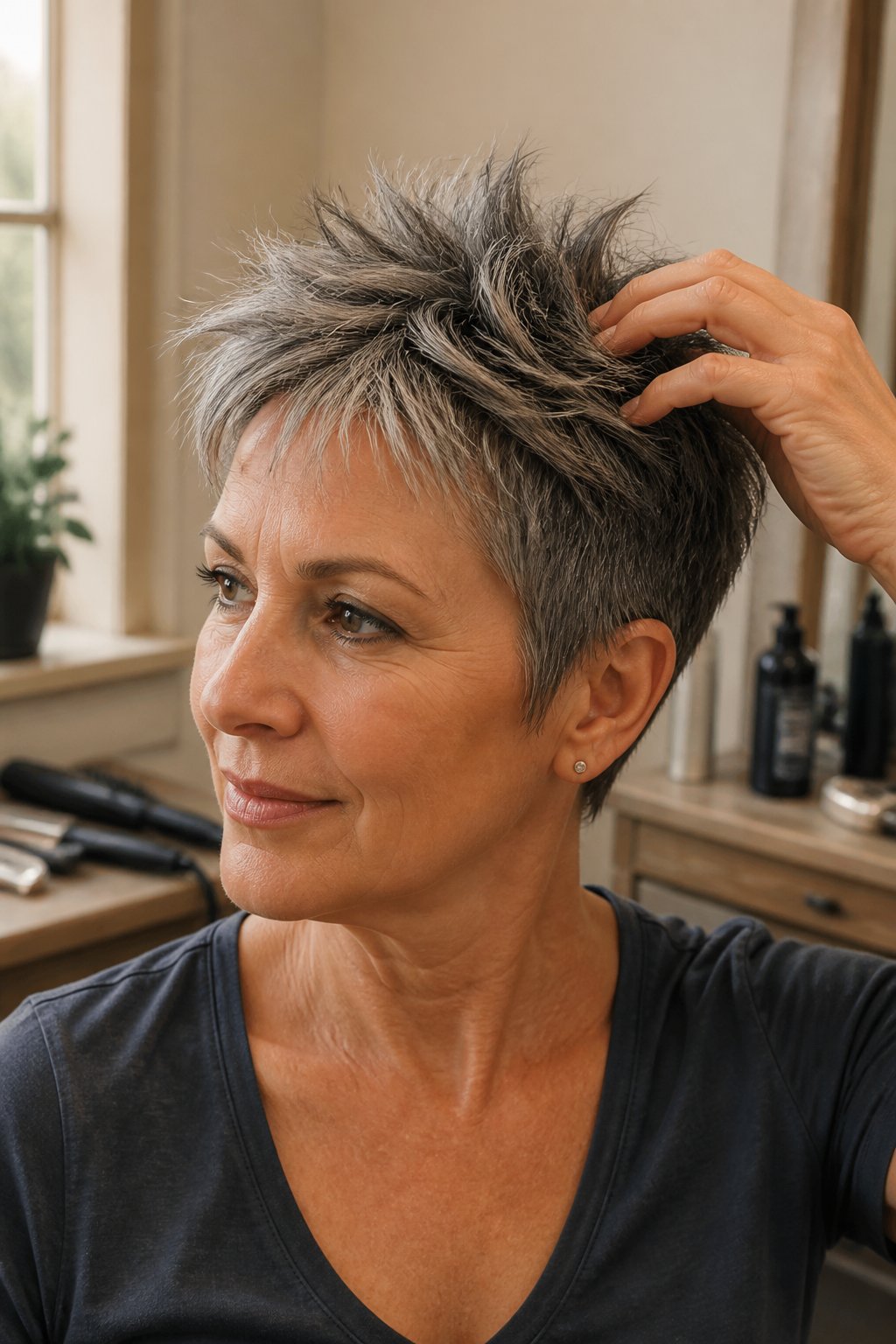
Choose a spiky pixie with piece-y texture when you want short hair that feels modern, light, and easy to shape. Ask your stylist to keep slightly more length on top, taper the sides and back, and add choppy layers that create separation without removing too much density.
This cut works well for fine hair because textured layers can add visible lift. If your hair is thick, your stylist may need to reduce bulk carefully so the spikes do not look heavy or stiff. A small amount of matte paste helps define individual pieces; warm it between your fingers, then twist the ends upward.
Avoid using too much product, which can flatten the style and make it look greasy. Refresh the shape by misting the roots with water and restyling with your fingertips. Bring a few saved photos to your appointment and ask your stylist to adjust the texture for your hair type.
7. Curly pixie with rounded volume
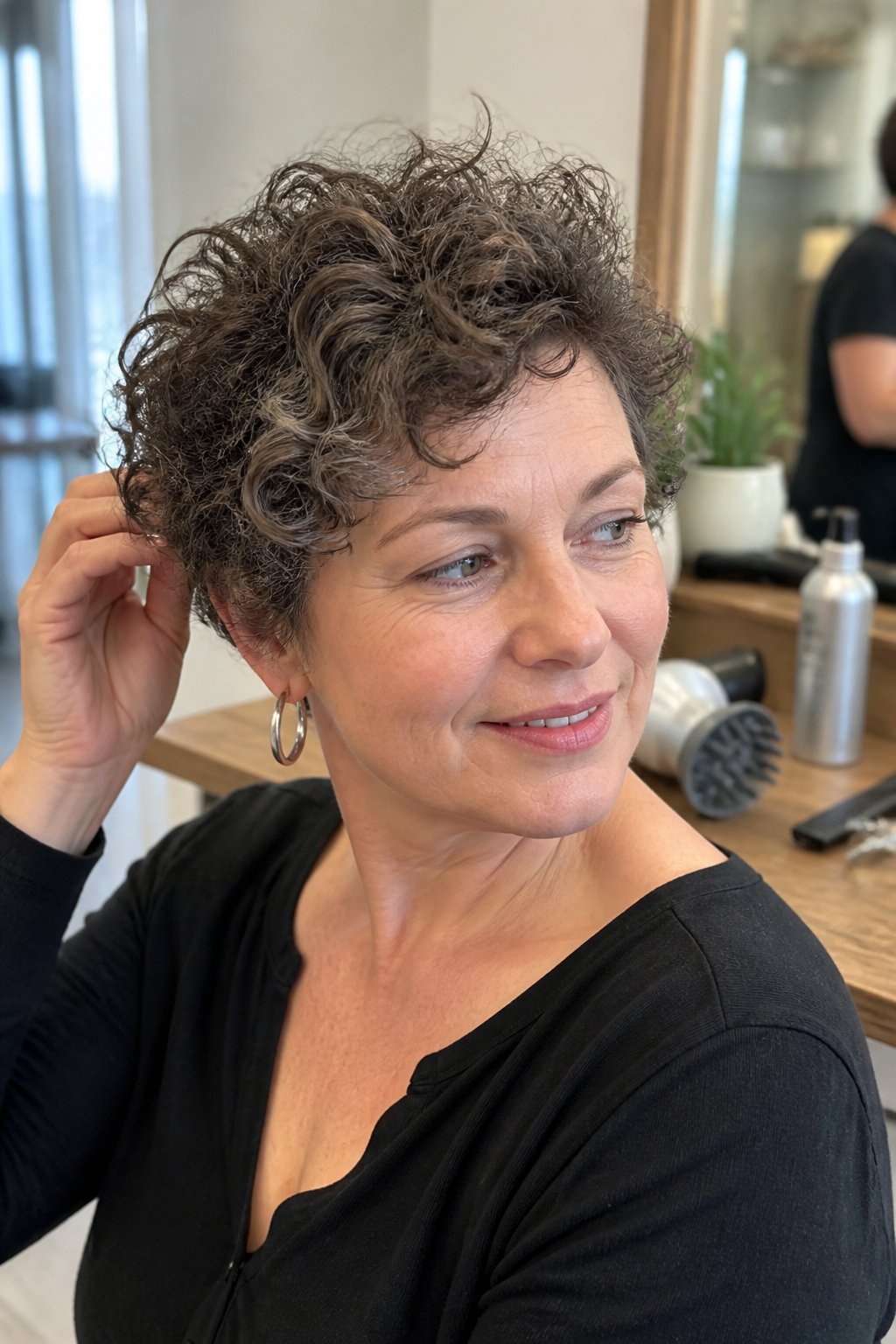
A curly pixie with rounded volume gives your hair a soft, polished shape while keeping the sides and back neat. Ask your stylist to leave more length through the crown so your natural curls can build height without looking stiff.
This cut works well when you want definition around your face. For example, longer curls at the top can soften a strong jawline, while shorter sides create a clean outline. Your stylist should shape the cut while considering your curl pattern, since curls often spring up after drying.
Use a lightweight curl cream or mousse to control frizz without flattening the crown. Scrunch damp hair, then air-dry or use a diffuser on low heat. Avoid heavy gels and thick oils, which can weigh down fine curls and make the shape look uneven.
Bring a few reference photos to your appointment and ask for a dry finish check before leaving the salon.
8. Wavy pixie with tousled layers
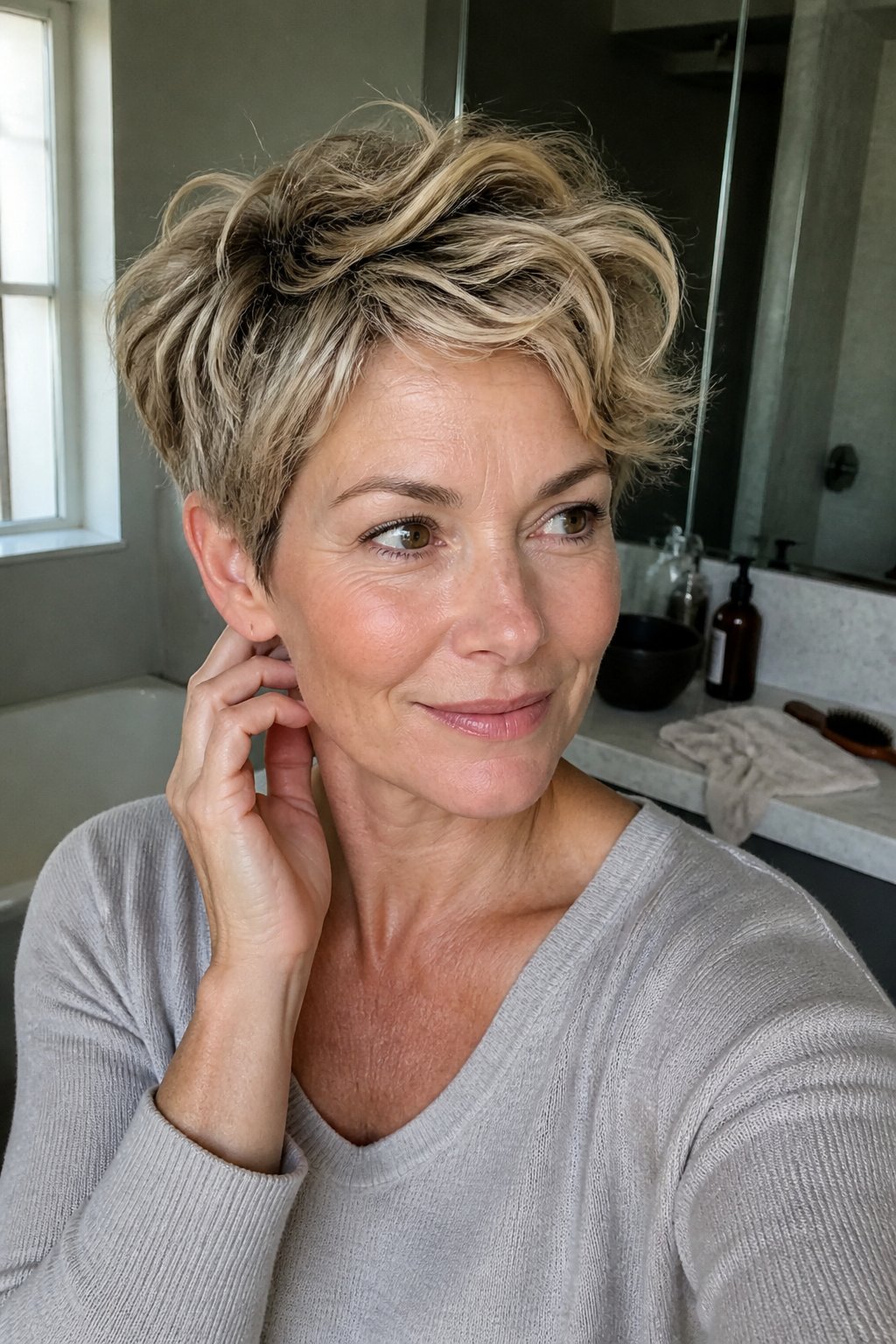
Choose a wavy pixie with tousled layers when you want movement without daily styling. Soft, uneven layers bring out your natural wave and add shape around the crown, while shorter sides keep the cut neat and modern.
Ask your stylist to work with your wave pattern instead of thinning the hair too much. Over-thinning can make wavy hair look frizzy or uneven, especially as it grows out. Keep a little length on top so you can sweep it forward, to the side, or away from your face.
After washing, apply a small amount of lightweight mousse or curl cream to damp hair. Scrunch gently, then let it air-dry or use a diffuser on low heat. A pea-sized amount of styling paste can define the ends without making them stiff.
Bring a photo that shows the texture you want, and ask your stylist to shape the cut around your natural wave.
9. Pixie with Long Curtain Fringe
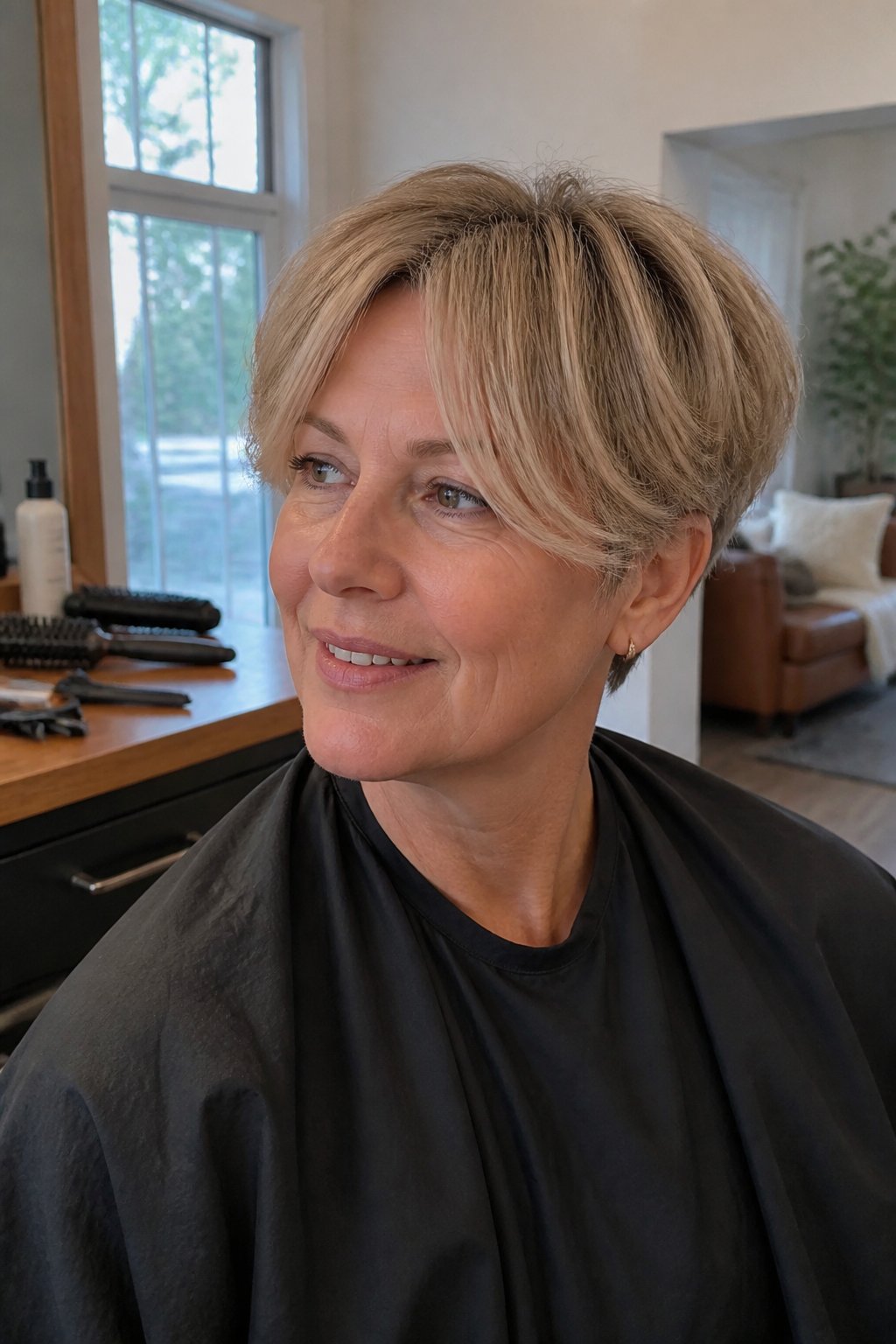
A pixie with long curtain fringe gives you short sides and back while keeping soft length around the face. The fringe parts near the center and falls toward both cheeks, creating movement without a harsh hairline.
Ask your stylist to blend the fringe into a longer top section. This shape works well with straight, wavy, or lightly curly hair, but the length should match your hair’s density. Fine hair may need light layers for lift, while thick hair may need careful thinning.
Style the fringe with a round brush or your fingers, directing each side away from your face. Avoid heavy products, which can flatten the part and make the cut look greasy. A small amount of lightweight mousse or texture spray usually gives better control.
Bring a photo showing your preferred fringe length, and ask for a shape that suits your daily styling routine.
10. Silver pixie with tapered sides
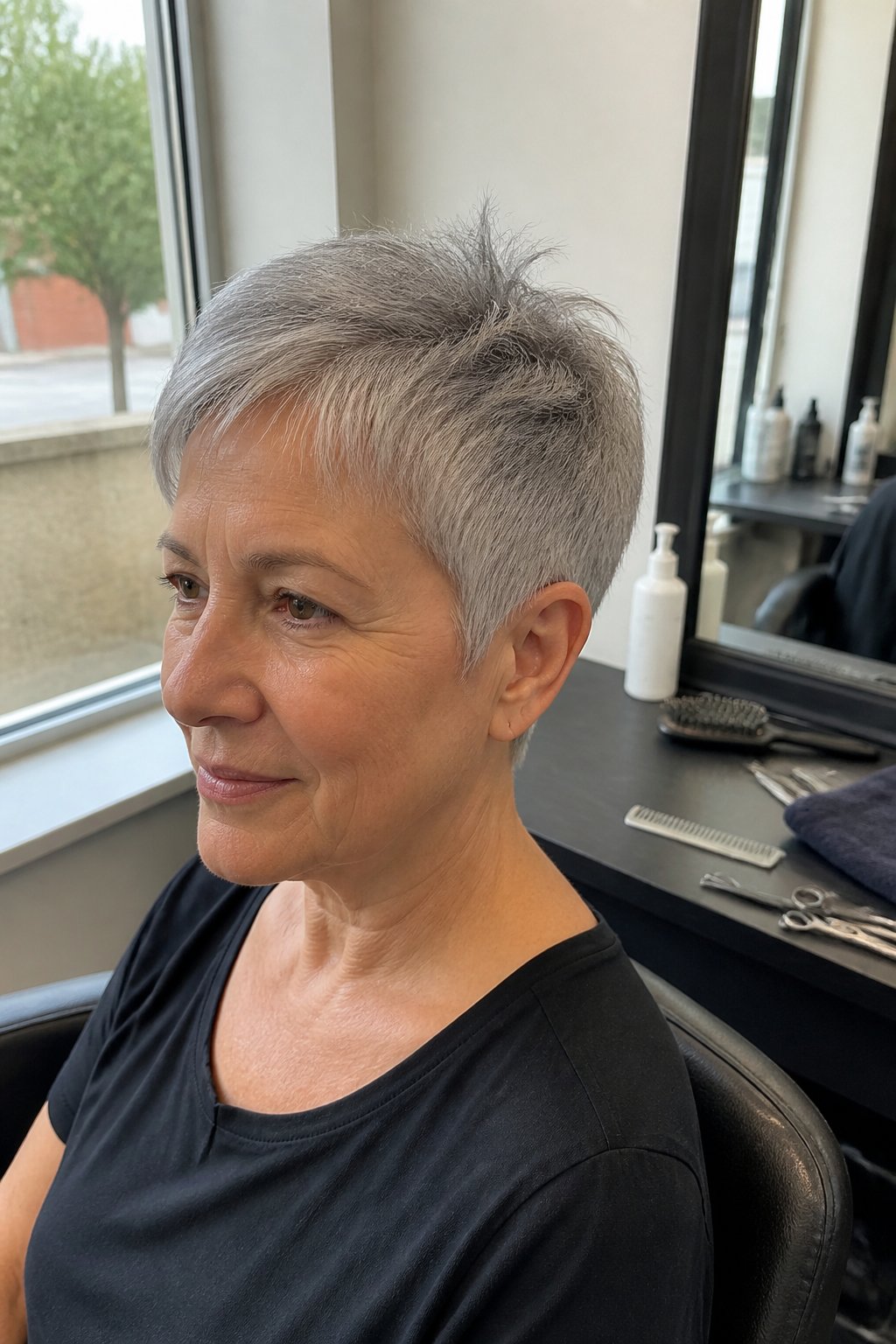
A silver pixie with tapered sides gives you a neat shape while keeping the top soft and touchable. Ask your stylist to leave extra length through the crown and add light layers, so your hair gains movement without looking bulky.
This cut works well with natural gray, silver highlights, or a blended salt-and-pepper color. A side-swept fringe can soften the forehead and frame your face, while a textured top adds height. Use a small amount of styling cream or matte paste to separate the layers.
Avoid tapering the sides too tightly if your face is round or fuller; a little width near the temples can create better balance. Bring a front and side photo to your appointment and discuss how often you want trims, since clean edges need regular upkeep.
Choose a silver pixie that follows your natural texture and feels easy to style each morning.
11. Layered pixie for fine hair
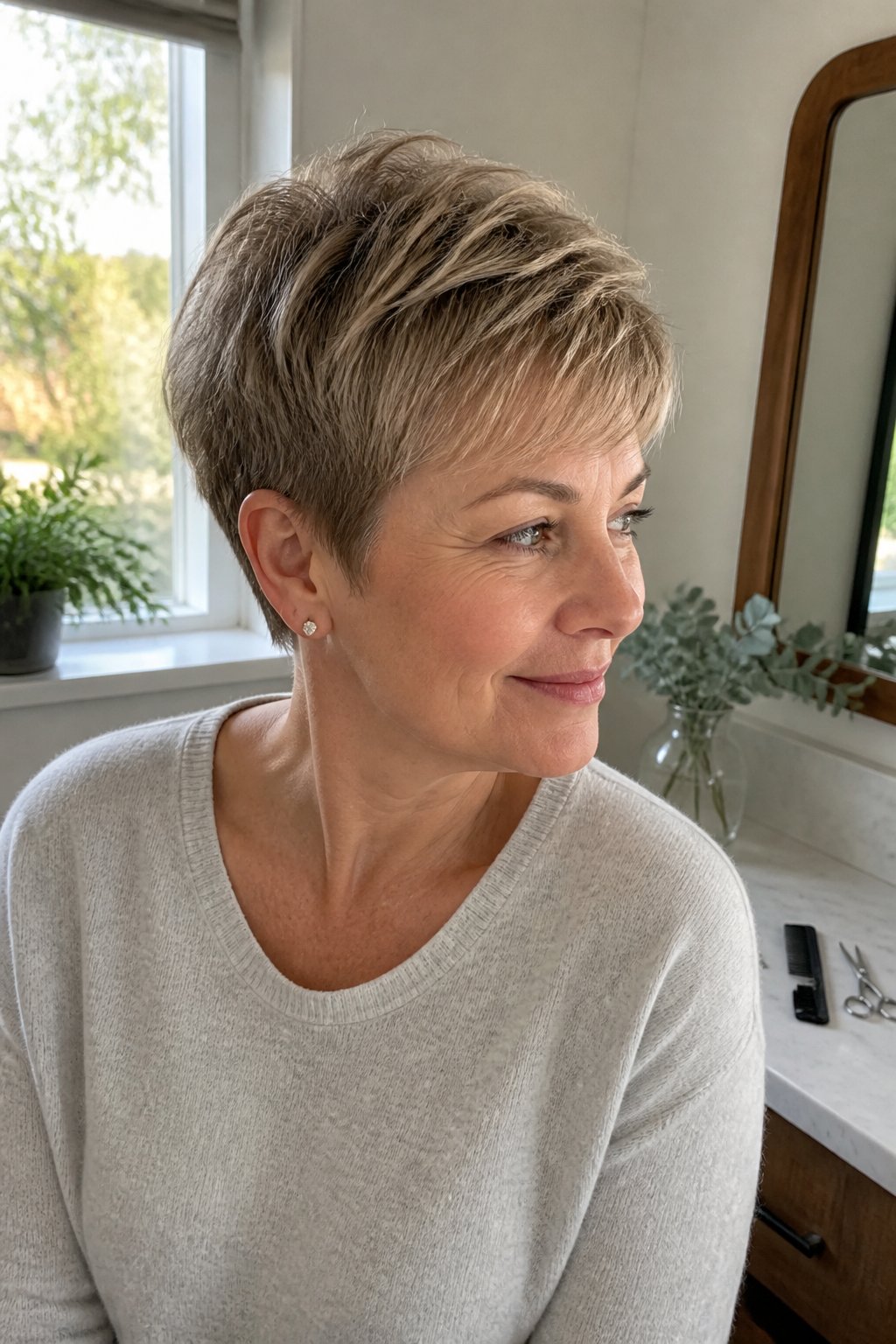
A layered pixie can make fine hair look fuller while keeping your style light and easy to manage. Ask your stylist to leave slightly more length through the crown and add soft, uneven layers for movement.
Shorter sides and a tapered back create a clean shape, while texture on top prevents the cut from appearing flat. You can style it with a small amount of lightweight mousse or texture paste. Work the product through dry hair with your fingertips rather than brushing everything smooth.
Avoid heavy waxes and thick creams, which can weigh down fine strands. Blunt, overly uniform layers may also make your hair look thinner instead of adding lift.
Bring a photo that shows the shape from several angles, and explain how much time you want to spend styling each morning. Ask your stylist to adjust the layers to your natural growth pattern for a polished, fuller-looking pixie.
12. Voluminous pixie with lifted crown
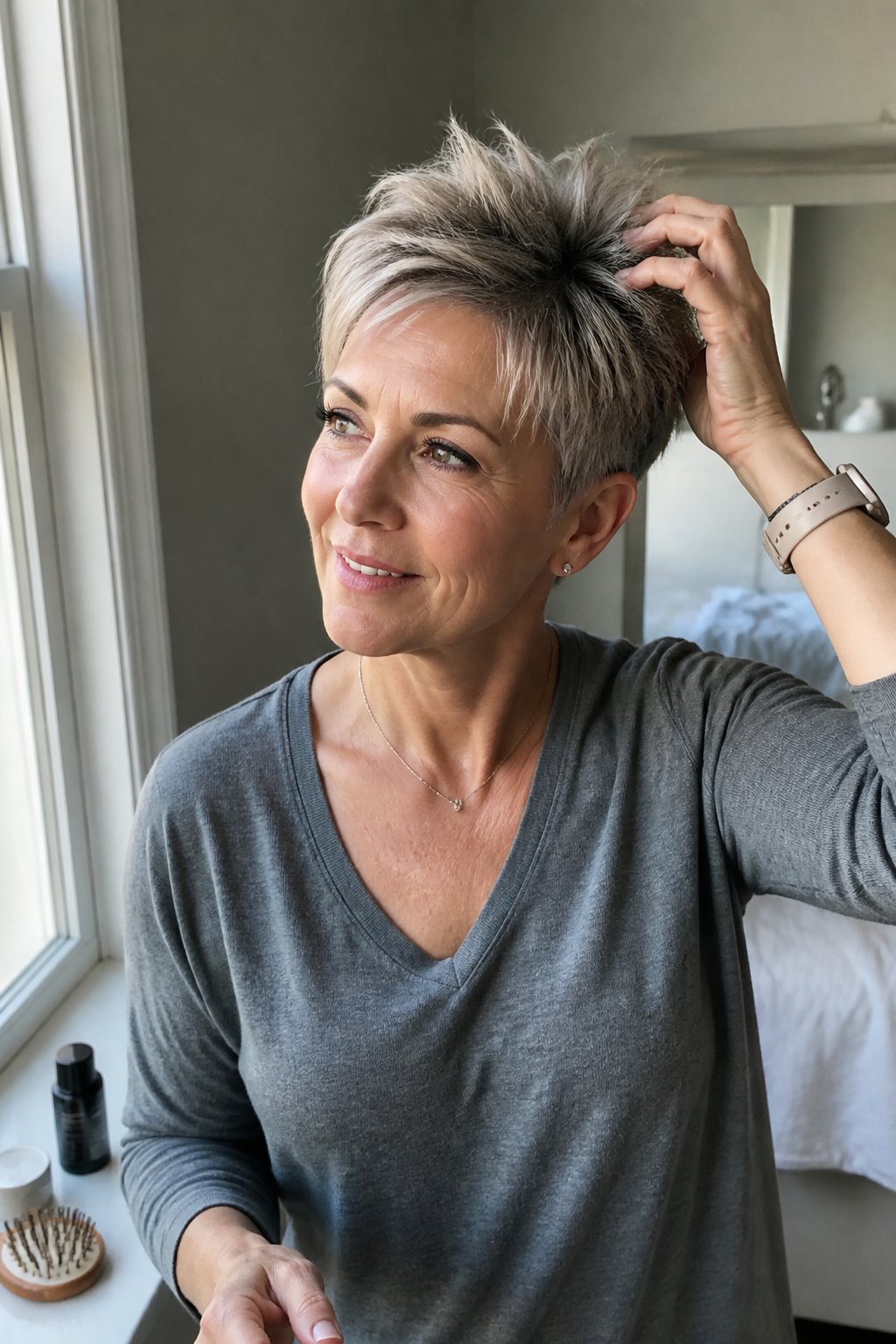
A voluminous pixie with a lifted crown gives your hair height, shape, and a polished finish without adding length. Ask your stylist to keep the sides and nape shorter while leaving extra layers through the crown. This structure creates natural lift and keeps the cut from looking flat.
For daily styling, apply a small amount of lightweight mousse to damp roots. Blow-dry the crown upward with your fingers or a small round brush, then finish with flexible hairspray. You can sweep the front to one side for a soft look or tousle it for more texture.
Avoid using too much heavy wax, which can pull the crown down and make fine hair appear greasy. If your hair feels thin, ask for careful layering rather than aggressive thinning. Your best result comes from controlled volume that follows your head shape.
13. Asymmetrical pixie with extended fringe
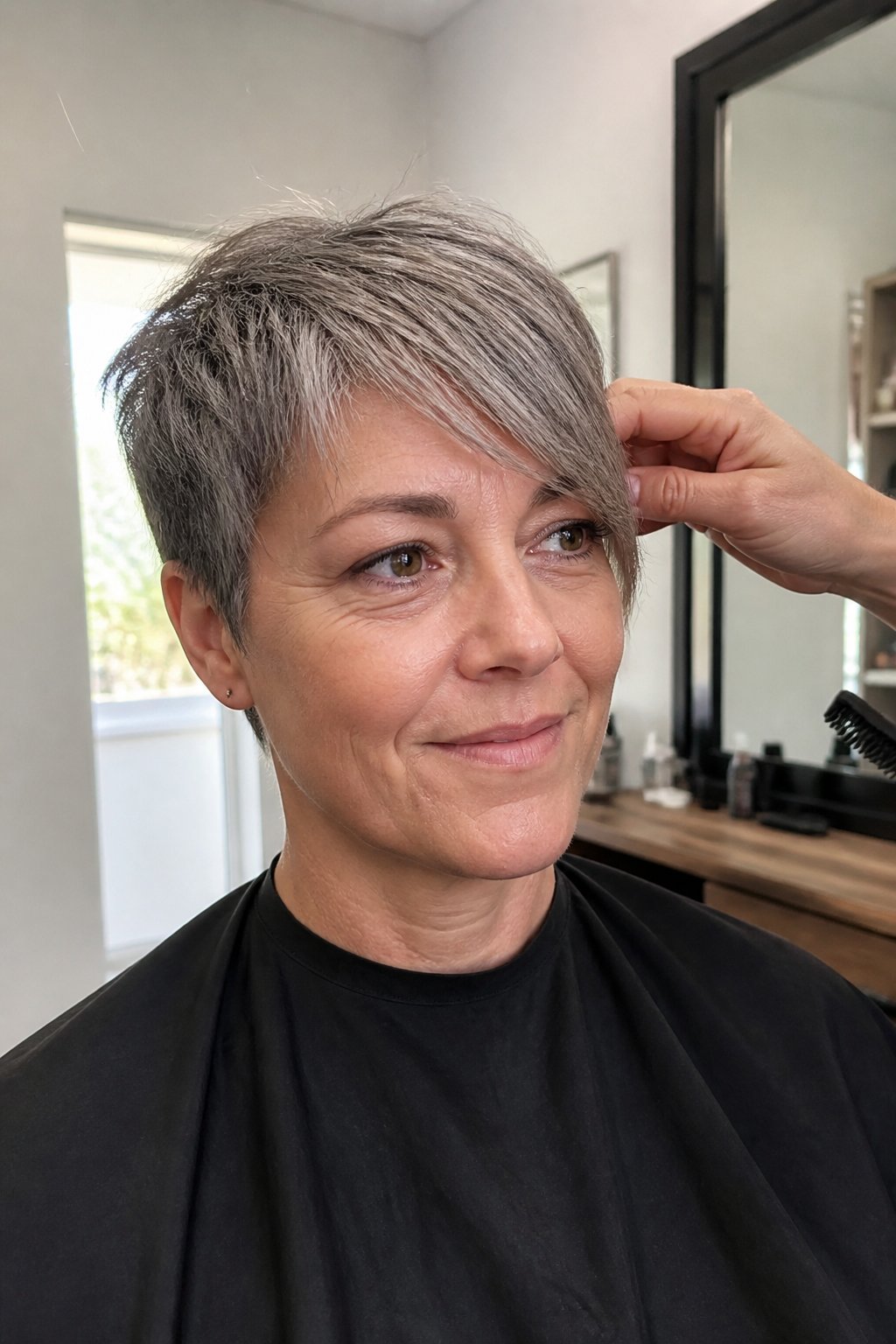
An asymmetrical pixie with an extended fringe gives you a short cut with a softer, longer front. One side stays noticeably longer, creating movement while the opposite side remains neat and close to the head. This shape works well when you want a modern style without exposing your entire forehead.
Ask your stylist to blend the fringe into the longer side rather than cutting a sharp, disconnected line. You can wear it swept across your face, tucked behind one ear, or lightly tousled for texture. Fine hair often benefits from gentle layers, while thick hair may need internal thinning to prevent bulk.
A common mistake involves keeping the fringe too heavy. Regular trims help maintain the intended angle and keep the style from falling into your eyes. Bring front and side photos to your appointment so your stylist can match the cut to your hair texture and daily routine.
14. Undercut Pixie With Textured Top
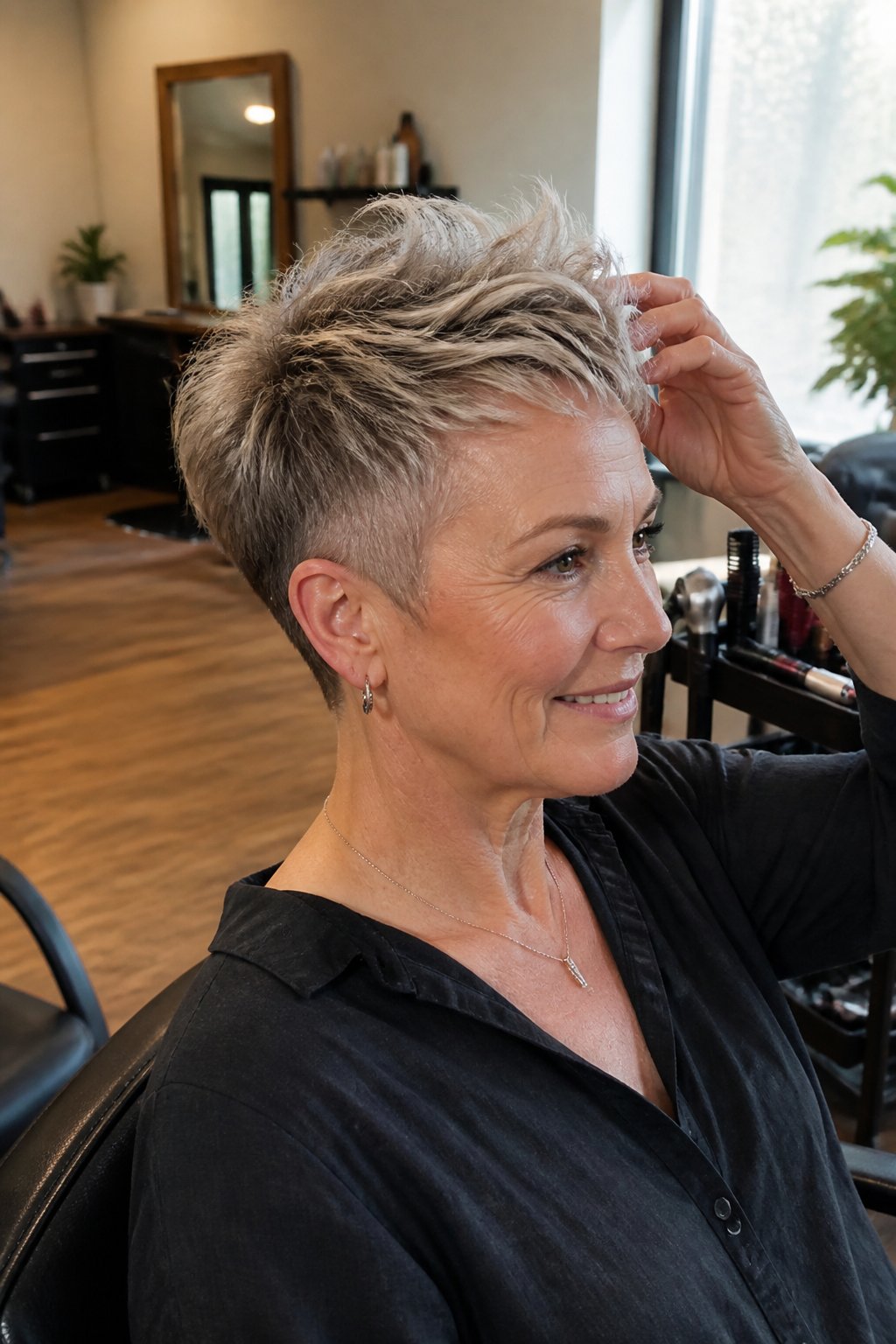
This bold pixie haircut keeps the sides and back short while leaving length on top for movement and shape. You can wear the textured top forward, swept to one side, or loosely tousled for a softer finish.
Ask your stylist to adjust the undercut to suit your hair’s thickness. A close shave can reduce bulk in dense hair, while a less dramatic taper works better if you want easier grow-out. Texture on top can also add lift to fine hair without heavy products.
Avoid asking for too many layers, which may make the top look thin or uneven. Use a small amount of lightweight styling cream or matte paste, then shape the ends with your fingers. Bring a clear reference photo to your appointment so your stylist can match the texture and undercut height to your face shape.
15. Bixie-inspired pixie with cheekbone-length layers
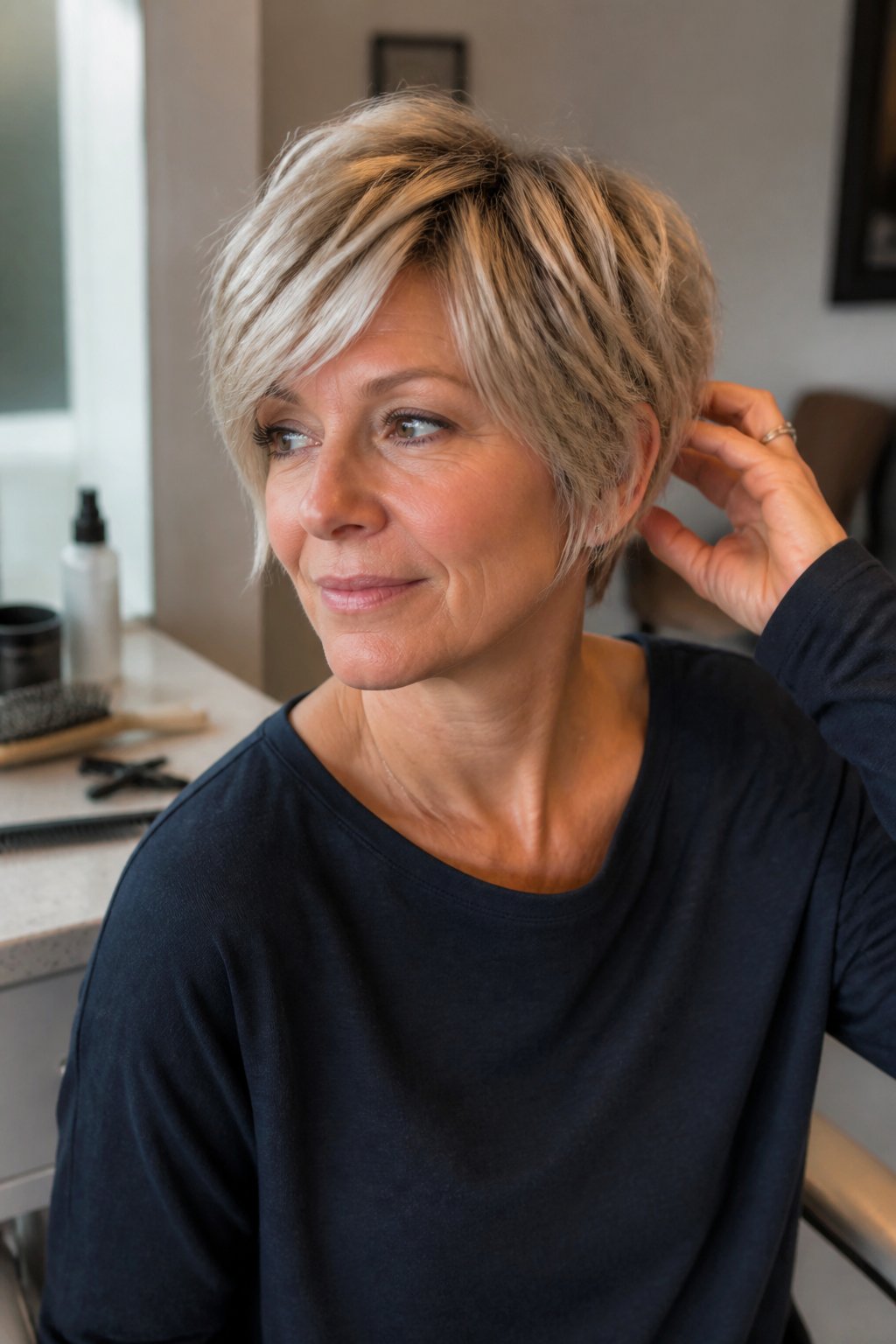
This bixie-inspired pixie gives you the lightness of a short cut while keeping enough length to frame your cheekbones. Ask your stylist for tapered sides, a softly cropped nape, and longer top layers that reach the cheekbone. The result feels polished without looking too severe.
This style suits fine to medium hair because the layers add movement without removing too much fullness. A side part can create a softer shape, while piecey bangs draw attention to the eyes. For a round face, keep the top slightly higher and avoid excess width at the sides.
Style it with a small amount of volumizing mousse, then use your fingers to direct the layers. Avoid heavy wax, which can flatten fine hair and make the cut look greasy. Bring a photo to your stylist and ask them to adjust the length around your cheekbones to suit your face shape.
16. Pixie with wispy side bangs
Wispy side bangs give a pixie haircut a soft, flattering finish without adding much styling time. You can sweep them across the forehead to frame your eyes and soften angular features. This style works especially well with fine or thinning hair because light layers can create movement without removing too much fullness.
Ask your stylist to keep the top slightly longer than the sides and blend the bangs into the crown. A razor may make the ends too thin, so request light scissor texturing if your hair lacks density. For daily styling, apply a small amount of lightweight mousse to damp hair, then guide the bangs sideways with your fingers as you dry them.
Avoid cutting the fringe too short, since wispy bangs need enough length to bend naturally. Bring a photo to your appointment and ask your stylist to adjust the bang angle to suit your face shape.
Choosing a Flattering Short Cut
The right pixie haircut should suit your face shape, hair texture, daily routine, and styling comfort. Small changes in length, layers, and fringe can make a short cut feel tailored rather than generic.
Face Shape and Hair Texture
Your face shape can guide the cut’s balance, but your hair texture often determines how it will look each day. If you have a round face, ask for height at the crown and softer, longer layers near the sides. A side-swept fringe can add angles. For a square face, feathered edges and a wispy fringe can soften the jaw. Longer top layers can help balance a long face.
Fine hair usually benefits from a compact shape, light layers, and texture at the crown. Too many layers can make it look thinner. Thick hair may need tapered sides and internal layers to remove bulk. Wavy hair works well with a longer top that lets the natural bend show. Ask your stylist to assess your hair while dry if it has strong waves or curls.
Lifestyle and Maintenance Needs
Consider how much time you want to spend styling your hair before choosing a pixie. A close crop with tapered sides may need frequent trims every four to six weeks. A longer pixie or bixie can grow out more smoothly and may suit you if salon visits are less frequent.
For quick styling, choose a shape that works with your natural texture. Fine hair may need a small amount of root-lifting mousse, while thick or wavy hair may respond better to a light styling cream. Avoid choosing a highly sculpted cut if you prefer air-drying. Bring photos of cuts you like, but also show your stylist a picture of your usual hair after washing so they can match the design to your routine.
Styling and Maintaining a Pixie Cut After 40
A few deliberate styling steps can keep your pixie polished without making it look stiff. The right trim schedule also preserves the shape, texture, and balance that make the cut easy to wear.
Everyday Styling Techniques
Start with damp, towel-dried hair and apply a small amount of lightweight mousse or volumizing spray at the roots. Use your fingers or a small brush to direct the top upward and slightly back while you dry. Keep the sides closer to the head for a clean shape.
For a softer finish, rub a pea-sized amount of styling cream between your palms and work it through the ends. Use matte clay for piecey texture, or choose a light pomade when you want more shine and control. Fine hair usually needs less product than thick hair.
If your hair feels flat the next morning, mist the roots with water and reshape them instead of adding more product. Avoid using too much wax, which can weigh down fine strands and make silver hair look dull. A small flat iron can smooth longer fringe, but always use heat protection first.
Salon Visit Scheduling
Most pixie cuts need a trim every four to six weeks to keep their outline neat. If your style has a short bang, tapered sides, or a closely clipped neckline, book maintenance closer to every three weeks. These areas show growth quickly.
Ask your stylist which parts need the most frequent attention. You may save time and money by scheduling a quick bang or neckline cleanup between full appointments. Bring a current photo if you want to adjust the length or texture.
Your hair’s growth rate, texture, and style determine the best schedule. Fine hair may lose its shape as it grows, while thick hair can become bulky around the sides. Book your next appointment before leaving the salon so your pixie keeps its intended shape.
About the Author — Lena Harper
Lena Harper is a fashion writer and content strategist at Fashion Pops, known for creating thoughtful, trend-aware articles that feel both stylish and relatable. With a strong background in fashion journalism, she specializes in turning seasonal trends, outfit ideas, and styling concepts into easy-to-follow inspiration for modern women.
Her writing focuses on practicality without losing creativity — helping readers build outfits that feel current, wearable, and confident. When she’s not working on new articles, Lena enjoys exploring street style trends, discovering unique fashion finds, and curating inspiration boards that shape upcoming content at Fashion Pops.