Asymmetrical Hairstyles for Women Over 40: 16 Bold, Stunning Looks
An uneven cut can give your style fresh shape without forcing you into a dramatic change. If your current haircut feels flat, dated, or difficult to manage, an asymmetrical look may offer the balance of polish and personality you want.
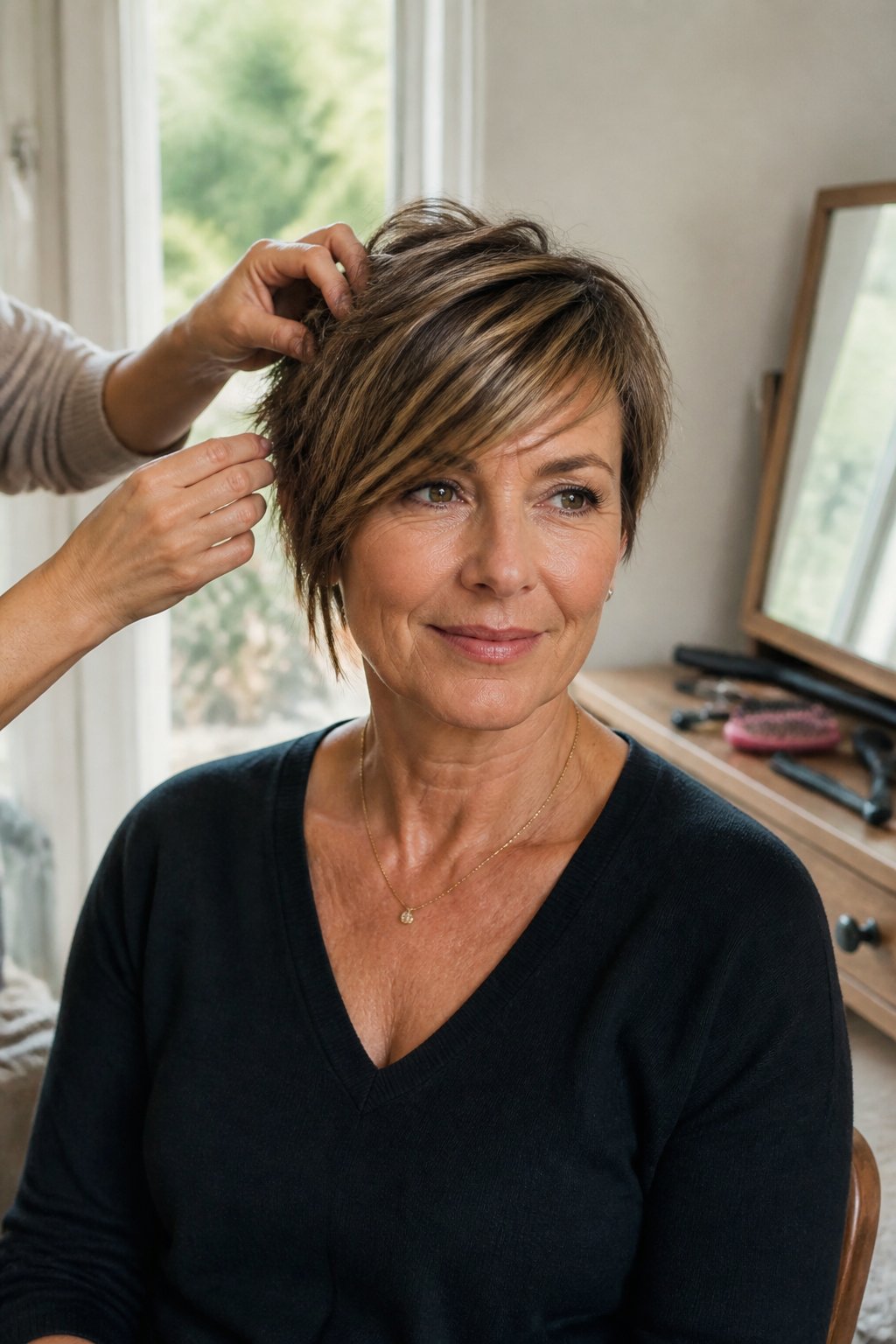
You can compare flattering bobs, lobs, pixies, shags, and layered cuts while learning how to match each shape to your face, hair texture, and daily routine. You’ll also find practical styling and maintenance guidance to help your chosen cut look intentional as it grows.
1. Angled Chin-Length Bob With a Deep Side Part
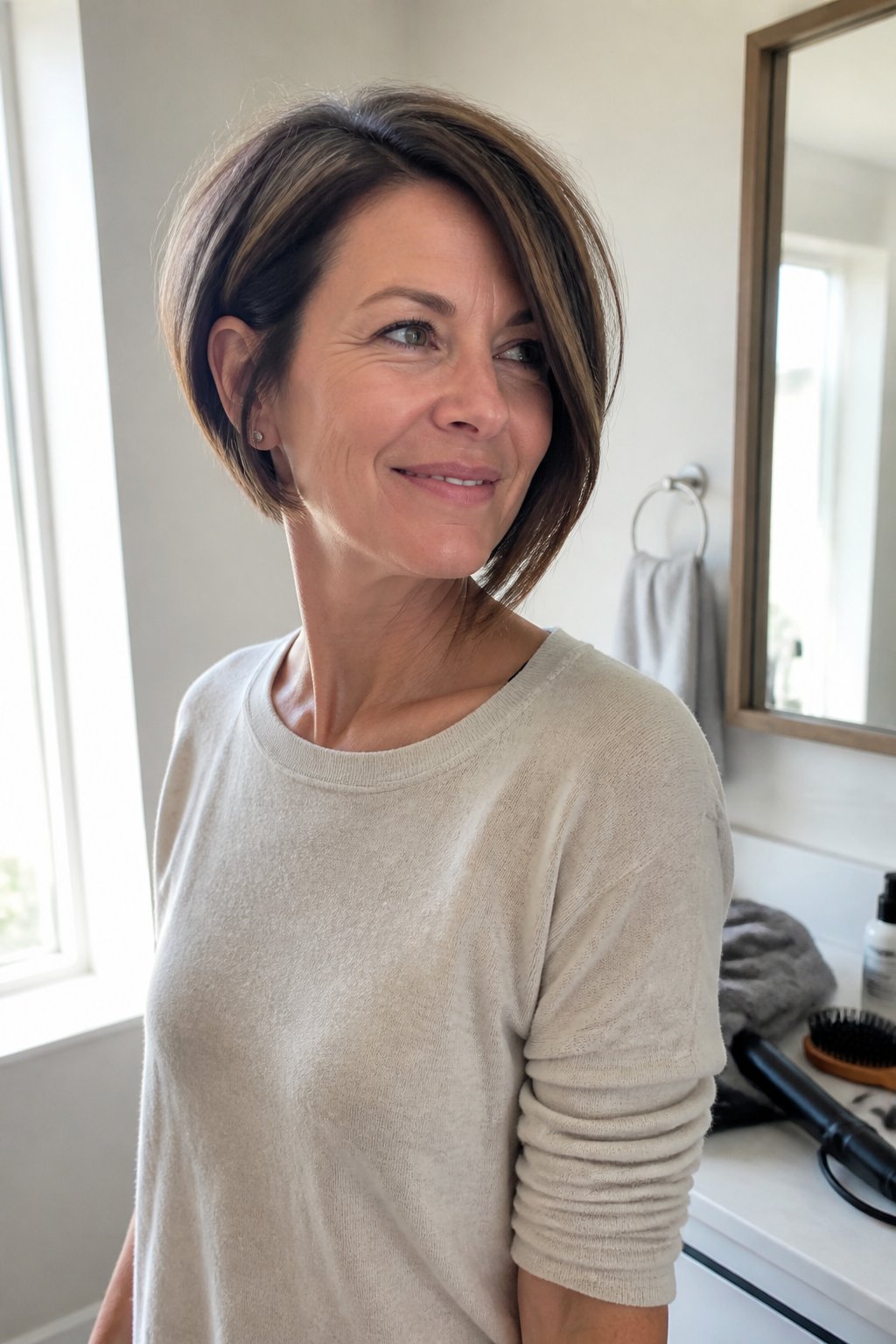
This angled chin-length bob gives you a polished shape with a modern asymmetrical edge. One side sits slightly shorter than the other, while the deep side part adds height and directs attention toward your eyes and cheekbones.
Ask your stylist to keep the shorter side near the chin and let the opposite side extend a little lower. A soft angle works well for a subtle look, while a sharper difference creates more definition. Fine hair can benefit from blunt ends, which make the shape appear fuller.
Avoid an overly steep angle if you want easy styling. A moderate cut usually needs only a round brush or flat iron, followed by a light smoothing cream. Show your stylist a side-view photo so they can match the angle to your face shape and hair texture.
2. Asymmetrical Layered Bob With Side-Swept Bangs
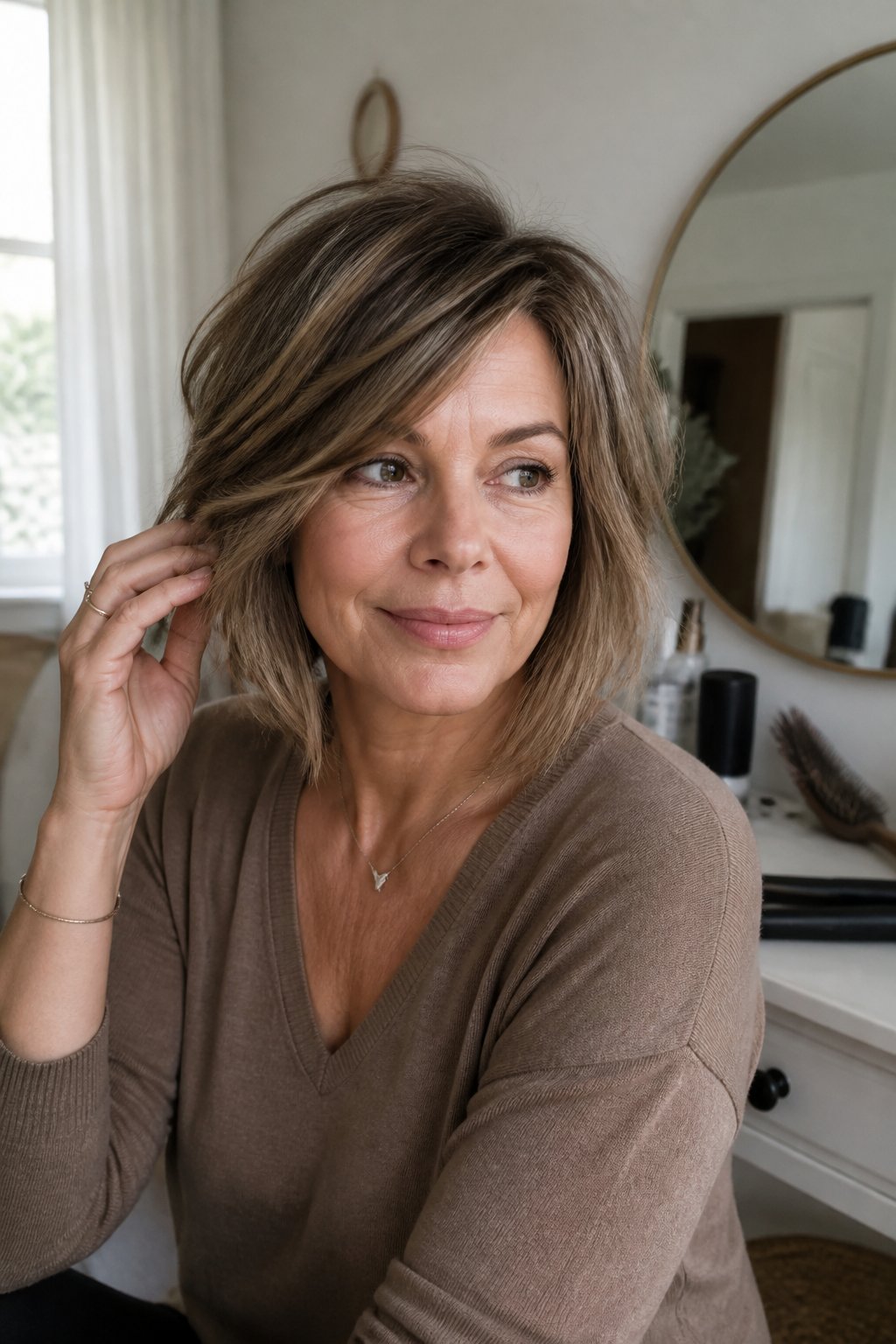
Choose this asymmetrical layered bob when you want shape, movement, and a polished finish. The cut keeps one side slightly longer, while soft layers remove weight and give straight or wavy hair more body. Side-swept bangs frame your eyes and can soften strong or angular features.
Ask your stylist to tailor the longer side to your face shape. A chin-length angle can add definition, while a slightly longer front creates a gentler look. Keep the layers blended rather than sharply stacked if you prefer easy styling.
To style, apply a light mousse to damp hair, then blow-dry with a round brush. Sweep the bangs across your forehead and turn the ends inward or slightly away from your face.
Avoid cutting the shorter side too close if you want versatility. Bring a reference photo and ask your stylist to show you how the shape will look when your hair grows.
3. Longer-front inverted bob with subtle graduation
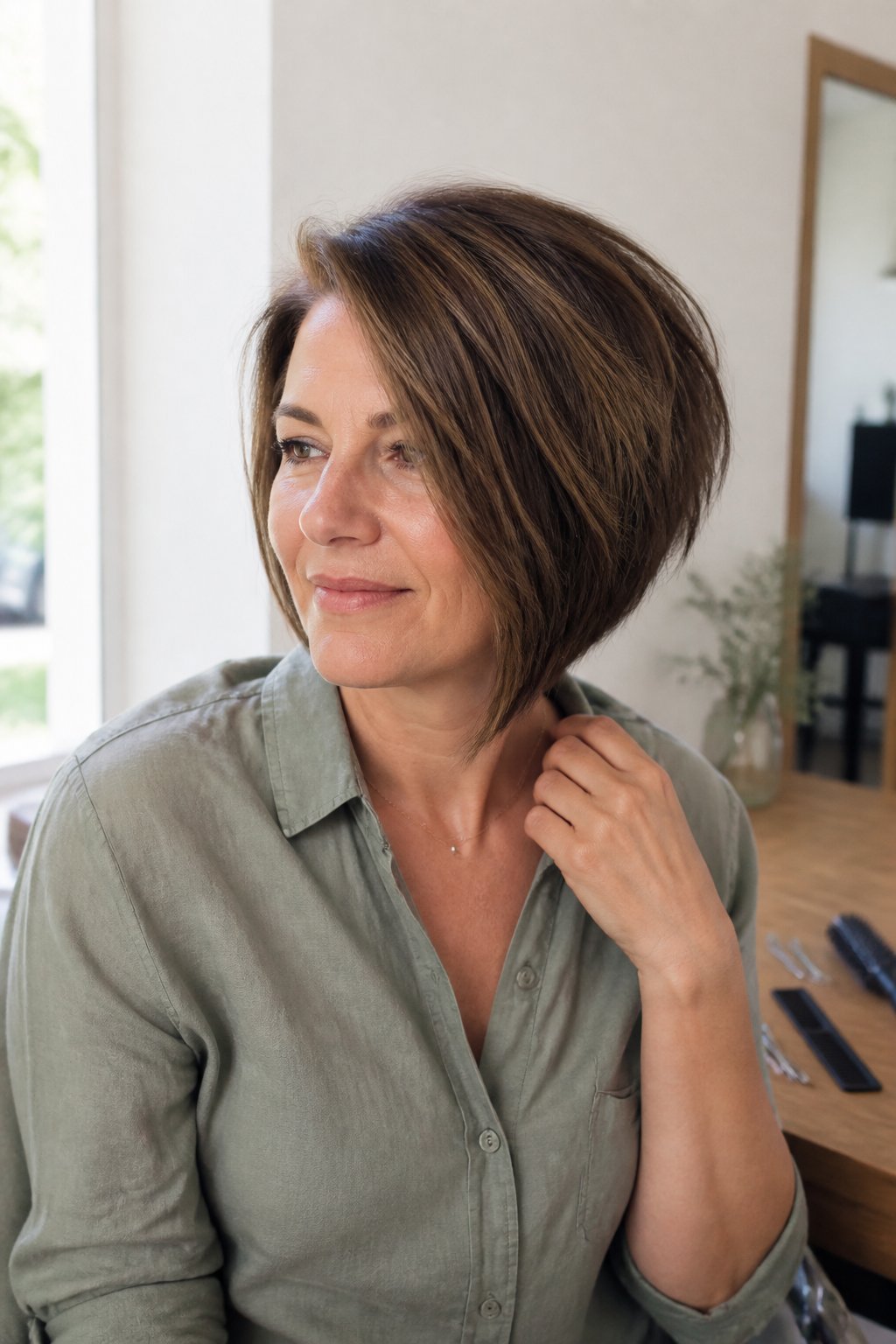
Choose this asymmetrical bob when you want noticeable shape without a dramatic angle. The cut stays shorter at the back and extends toward the front, while light graduation at the nape adds lift and keeps the outline smooth.
Ask your stylist to keep the front near your collarbone or shoulders, depending on your face shape and hair density. A soft side part can emphasize the longer side and frame your cheekbone. For fine hair, avoid too many layers, which can make the ends look thin.
This style works well with straight, wavy, or lightly curled hair. Blow-dry the back with a round brush, then direct the front forward or under for a polished finish. If your hair is thick, request internal weight removal rather than heavy thinning, which can create frizz. Bring a side-view photo so your stylist can match the angle to your features.
4. Textured asymmetrical pixie with a tapered side
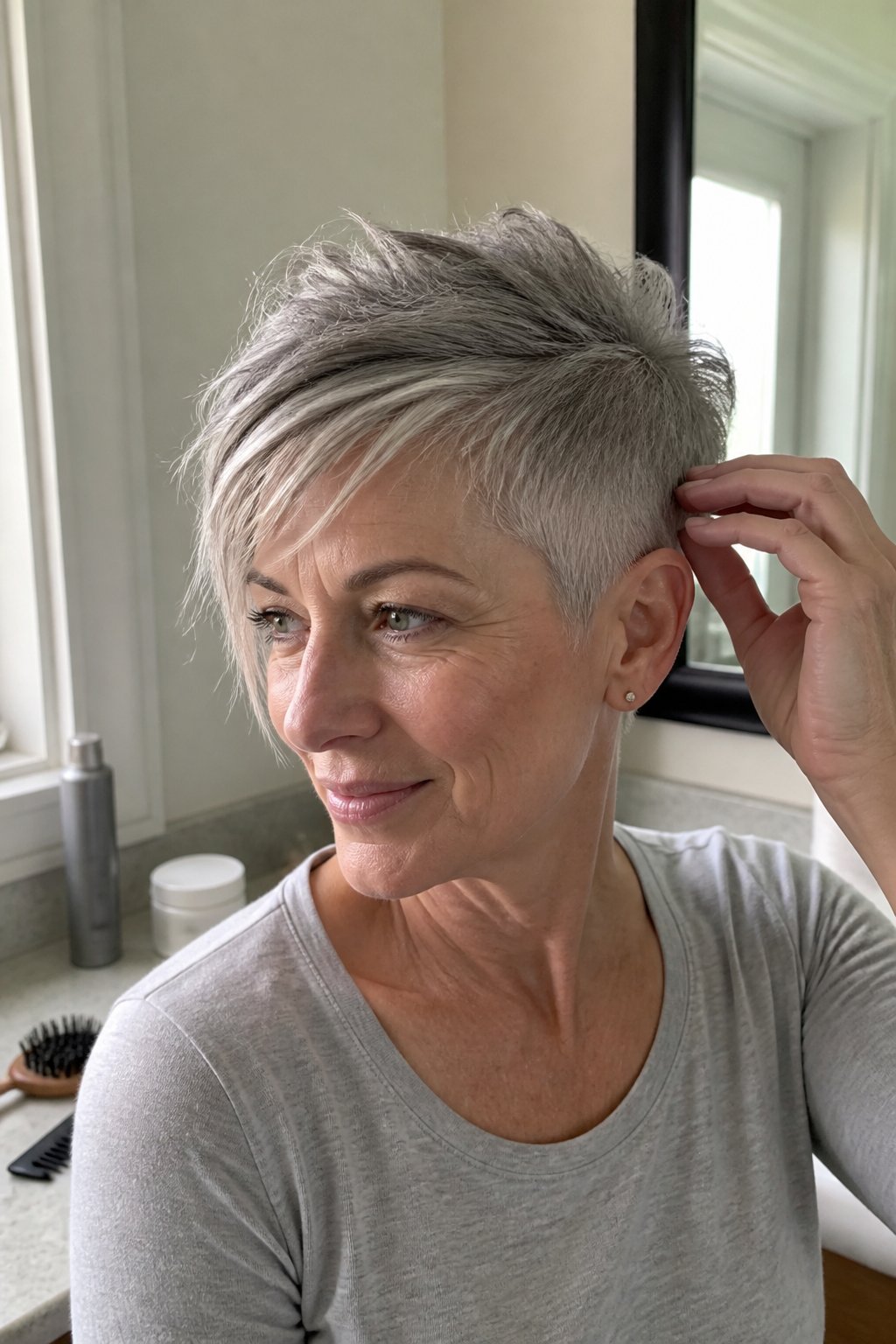
This textured asymmetrical pixie gives you shape, volume, and a clean finish without making your style look severe. Keep one side longer, with layered pieces sweeping across the forehead, while the shorter side tapers neatly around the ear and nape.
Ask your stylist to add texture through the crown rather than removing too much bulk. This helps fine hair look fuller and lets thick hair move more easily. A small amount of matte styling cream can separate the layers and define the uneven shape.
You can wear the longer fringe softly across your face or lift it for a sharper look. Avoid asking for identical sides, since the contrast creates the style’s character. Bring a photo that shows your preferred length, then work with your stylist to suit your face shape and hair texture.
5. Pixie Cut With an Extended Side Fringe
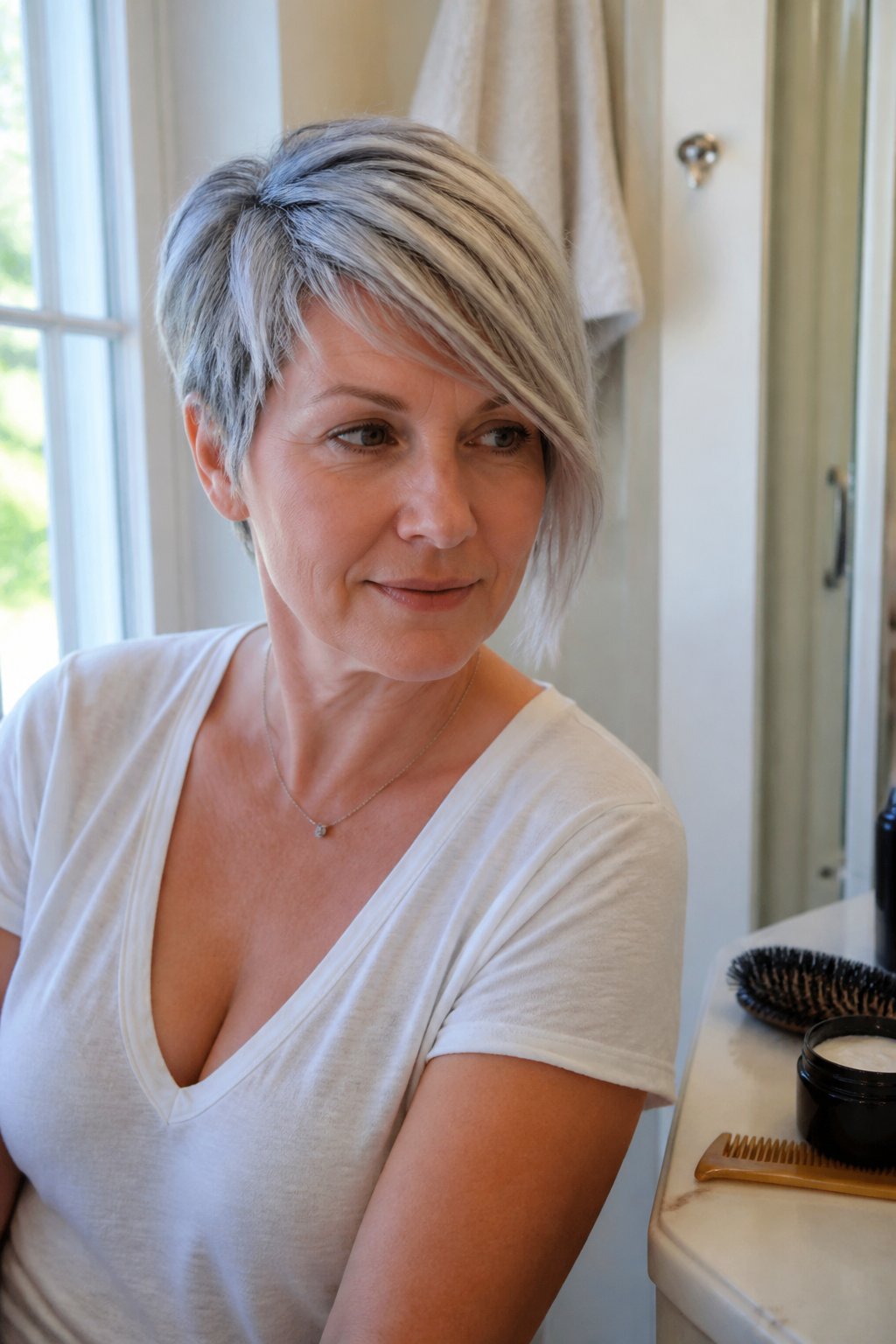
This asymmetrical pixie gives you a short, polished shape while keeping extra length across one side of your face. The extended fringe can soften strong features, frame your eyes, and add movement to fine or straight hair.
Ask your stylist to keep the top and fringe longer than the back and opposite side. Light layering prevents the fringe from looking heavy, while a clean taper keeps the cut easy to manage. You can sweep it across your forehead, tuck it behind one ear, or add texture with a small amount of styling cream.
Avoid cutting the longer side too thin, especially if your hair lacks volume. Bring a front and side photo to your appointment so your stylist can match the angle to your face shape and hair texture. Ask for a fringe length that you can style in more than one way.
6. Asymmetrical lob with soft beach waves
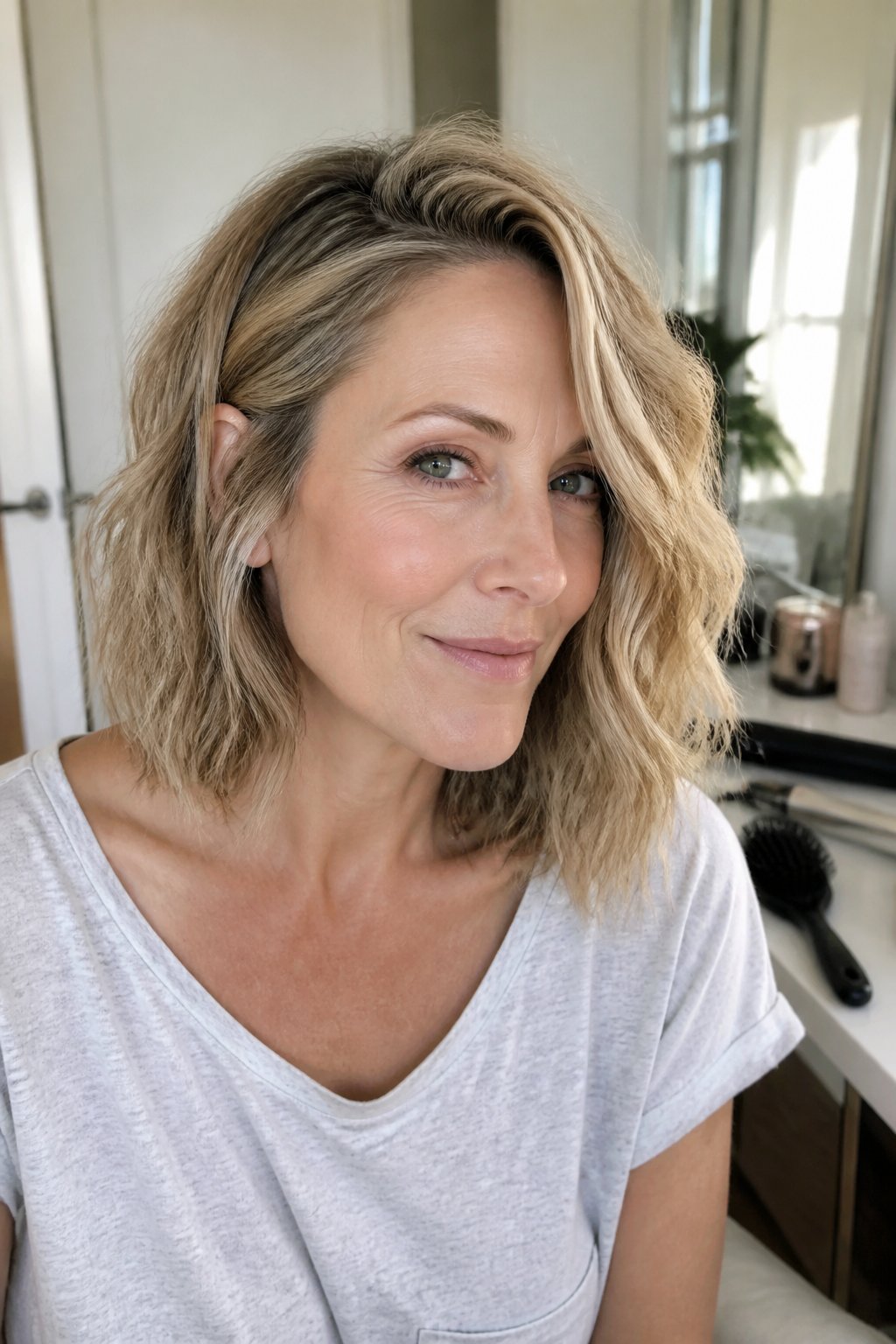
Choose an asymmetrical lob with soft beach waves when you want movement without losing a polished shape. Keep one side slightly longer, usually near the collarbone, and ask for light layers that support your natural texture. This cut works well on fine, medium, or thick hair when the stylist adjusts the layering to suit your density.
Style damp hair with a lightweight mousse, then use a diffuser or large-barrel iron to create loose waves. Alternate the wave direction and leave the ends straighter for a relaxed finish. Avoid heavy oils or firm hairspray, which can flatten the roots and make the waves look stiff.
A common mistake is asking for too many layers. Excess layering can make the longer side appear thin, especially on fine hair. Show your stylist how you normally part and wear your hair so the angle stays balanced during daily styling. Ask for soft beach waves that match your natural texture.
7. Sleek asymmetrical lob with a sharp angle
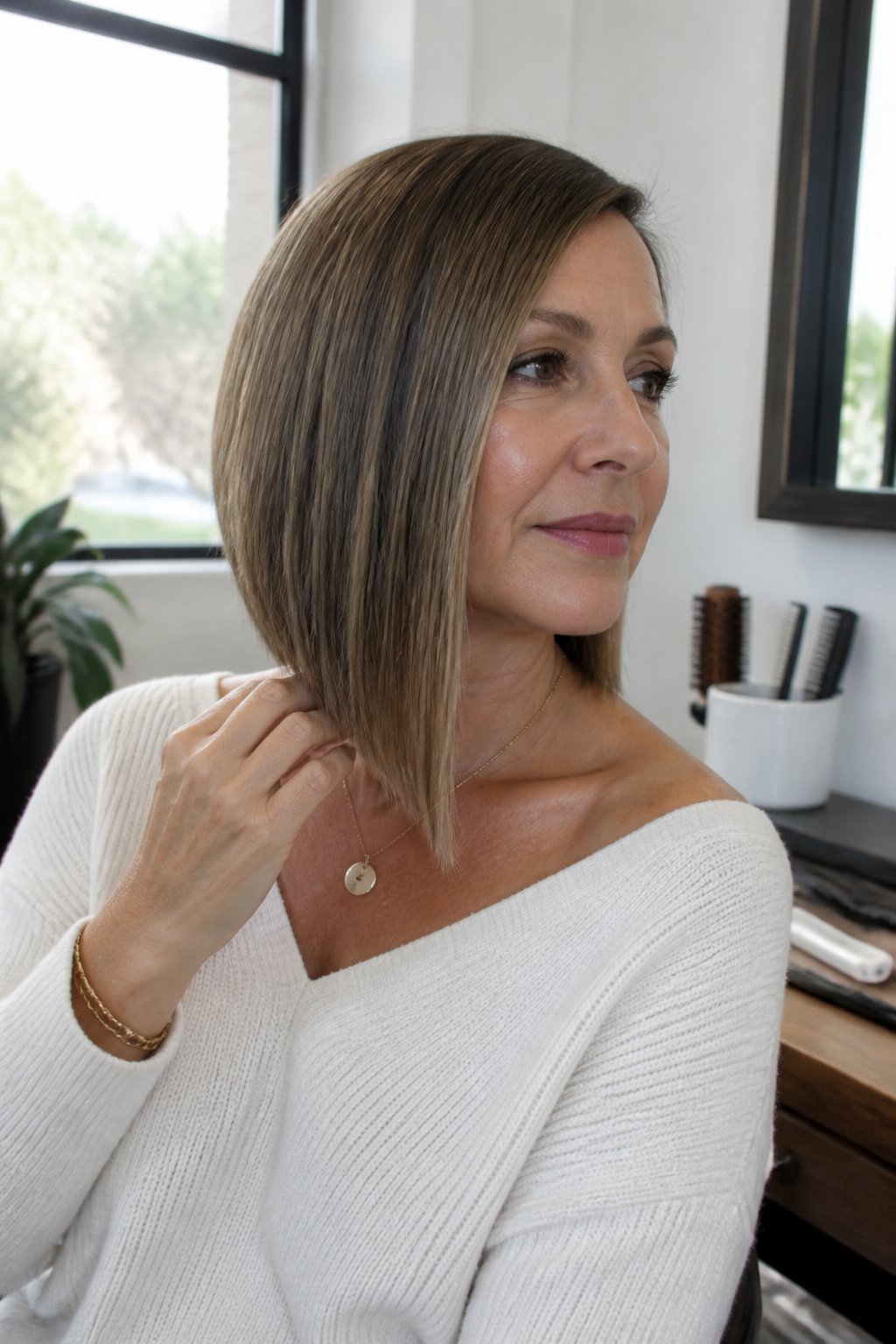
Choose a sleek asymmetrical lob when you want a polished cut with a modern edge. The style usually falls near the shoulders, with one side slightly longer than the other. A sharp angle can frame your jaw and draw attention to your neckline without requiring a very short haircut.
Ask your stylist to match the angle to your face shape and hair texture. Fine hair often looks fuller with a clean, blunt edge, while thick hair may need light internal shaping to prevent a bulky finish. Keep the longer side smooth with a round brush or flat iron, and use heat protectant first.
Avoid making the difference between sides too subtle, since the cut can lose its purpose. You should also plan regular trims to preserve the precise line and keep the ends looking neat. This sleek lob gives you a refined shape that still feels current and easy to personalize.
8. Chin-length bob with one side tucked behind the ear
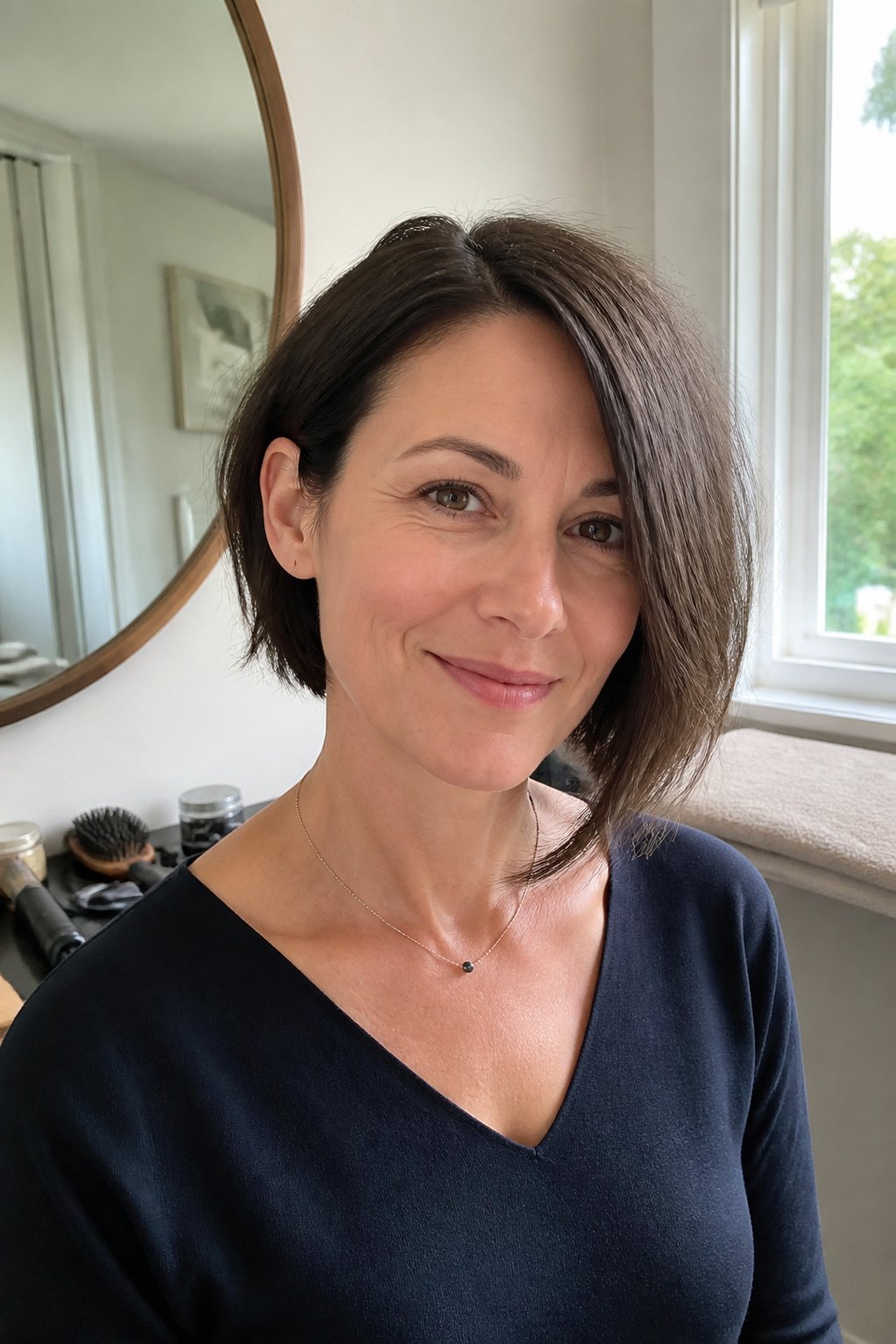
This chin-length asymmetrical bob gives you a polished shape with a simple styling detail: tuck the shorter side behind your ear. The longer side stays loose, framing your cheek and jaw while the exposed side adds clean definition.
Ask your stylist to keep the tucked side slightly shorter or lightly graduated. This creates a natural angle without making the cut look severe. A deep side part can add volume to the longer section, especially if your hair tends to lie flat.
For a soft, everyday finish, blow-dry with a small round brush and use a light styling cream. Avoid pressing the tucked side too tightly against your head, since that can make the style look uneven rather than intentional. Fine hair may benefit from subtle layers, while thick hair often needs internal weight removal.
Use a small flat iron only on the ends to keep them smooth, then tuck one side and let your natural texture show.
9. Stacked asymmetrical bob for fine hair
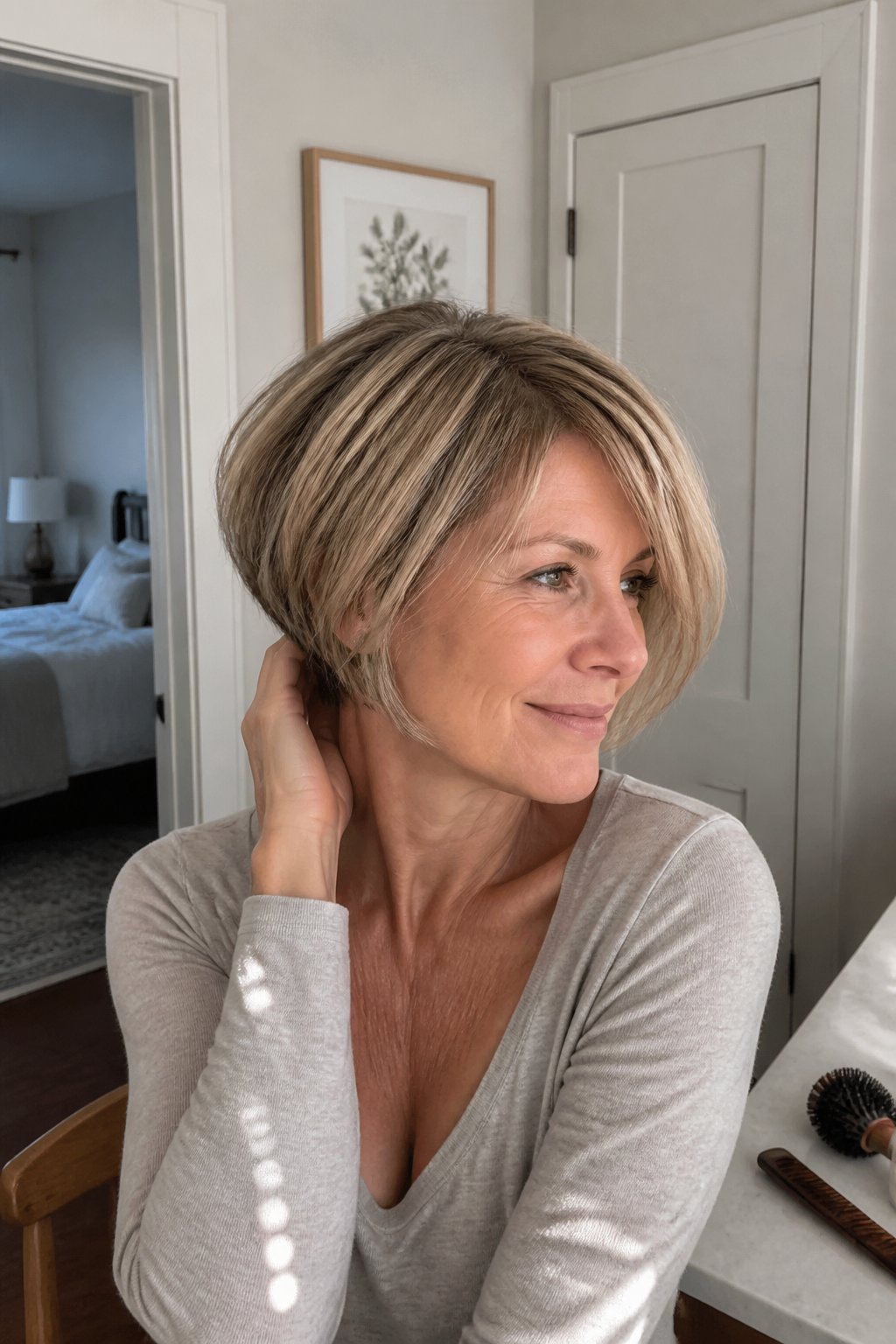
A stacked asymmetrical bob can give fine hair a fuller shape while adding a modern edge. Your stylist cuts the back shorter and slightly stacked, then leaves one front side longer than the other. This angled design creates movement without relying on heavy layers.
Ask for soft graduation at the nape and light texture through the ends. Too much thinning can make fine hair look sparse, so your stylist should remove weight carefully. A side part can also add lift and highlight the longer front section.
For easy styling, apply a lightweight volumizing mousse to damp roots. Blow-dry with a small round brush, lifting the crown and directing the longer side forward. A smooth finish suits a polished look, while gentle bends add casual texture.
Bring a side-profile photo to your appointment so you can discuss the angle and length. Choose a version that fits your daily routine and highlights your best features.
10. Curly asymmetrical bob with defined layers
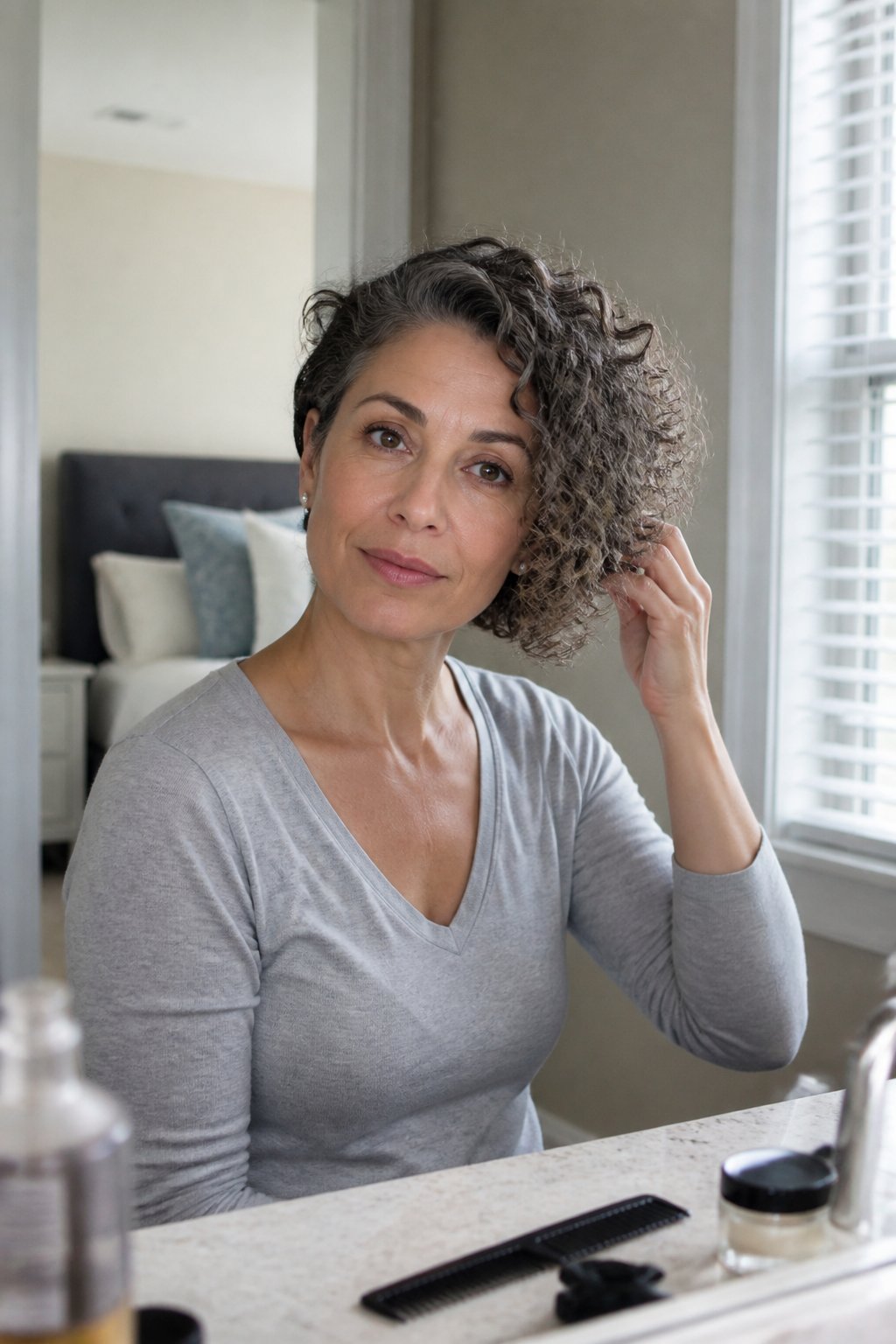
Choose a curly asymmetrical bob with defined layers when you want shape, movement, and a modern finish. Keep one side slightly longer, then add layers that follow your curl pattern instead of cutting straight across it. This approach helps your curls sit neatly while preserving natural volume.
Ask your stylist to cut your hair dry or nearly dry if your curls shrink noticeably. A dry cut makes it easier to judge the final length and avoid an uneven result. For example, you might keep the longer side near your jaw and the shorter side around your cheekbone.
Use a lightweight curl cream and scrunch your hair while damp. Avoid heavy products, which can flatten layered curls and make the shorter side look bulky. Define each section with your fingers, then let it air-dry or use a diffuser on low heat.
Bring a photo that shows both the curl pattern and the angle you want before your appointment.
11. Wavy asymmetrical bob with face-framing pieces

Choose a wavy asymmetrical bob when you want movement without losing a polished shape. Keep one side slightly longer, then add soft pieces around your cheekbones and jaw to guide attention toward your eyes. This cut works well with natural waves and can add fullness to fine hair.
Ask your stylist to avoid heavy, blunt layers around the face. They can make waves look bulky or create gaps as your hair dries. Instead, request blended layers and a gentle angle that suits your face shape.
Style the bob with a lightweight mousse or wave cream. Scrunch damp hair, let it air-dry, or use a diffuser on low heat. For a neat finish, smooth only the ends with a small amount of serum. Bring a photo that shows the cut’s angle and how the waves fall.
12. Side-swept asymmetrical crop with tapered sides
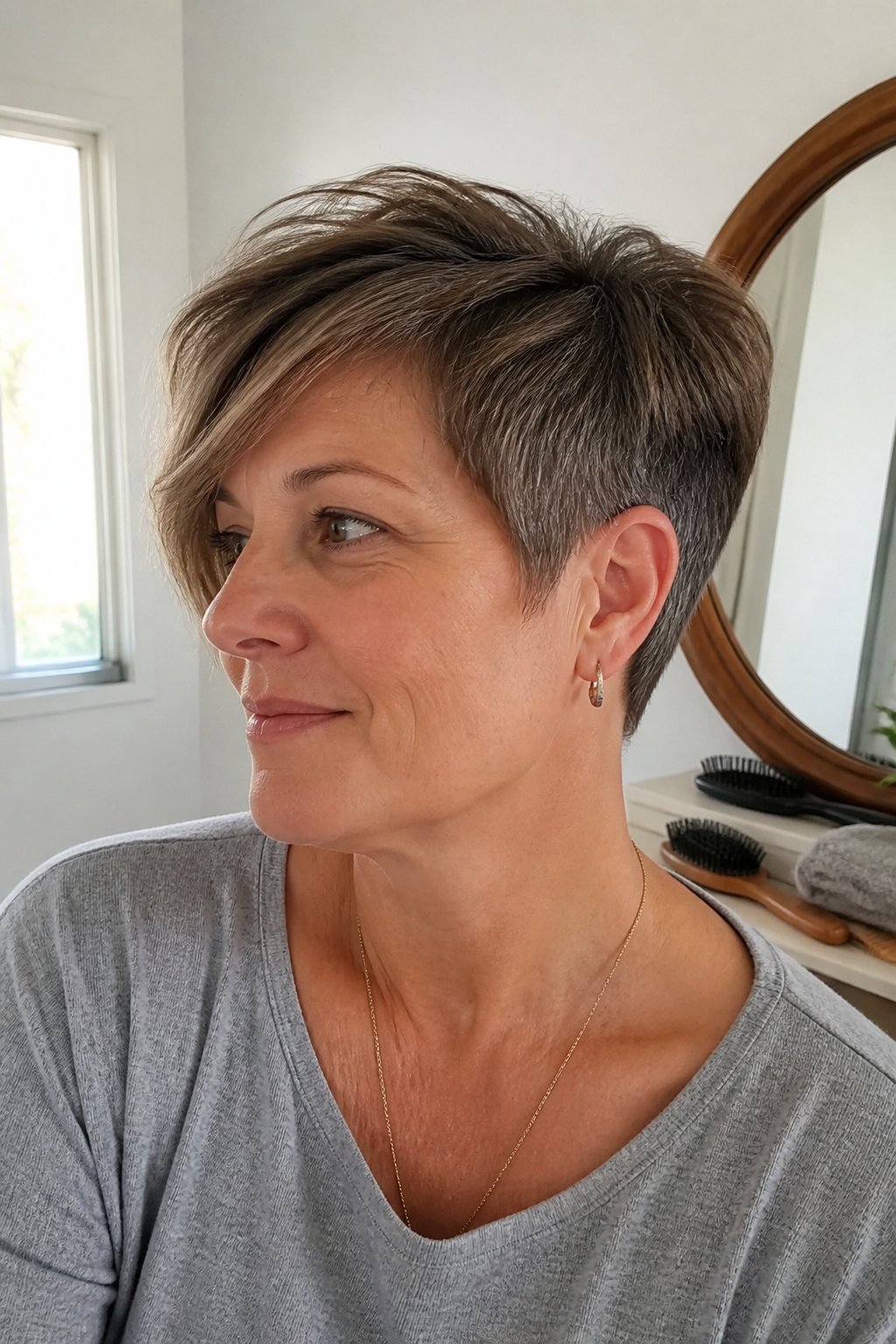
This side-swept asymmetrical crop gives you a polished short hairstyle with a modern edge. Ask your stylist to taper the sides and back while leaving extra length on top and through one side of the fringe. You can sweep the longer section across your forehead to soften angular features or add shape to a round face.
This cut works well for straight, fine, or lightly wavy hair. Ask for light texture at the crown if your hair looks flat, but avoid heavy thinning if your strands are delicate. Too much thinning can make the ends appear sparse.
Use a small amount of styling cream or matte paste to guide the fringe without making it stiff. A trim every four to six weeks will keep the tapered sides neat and the uneven shape balanced. Bring a clear photo to your appointment so your stylist can adjust the length to your face shape and hair texture.
13. Asymmetrical Shag With Feathered Layers
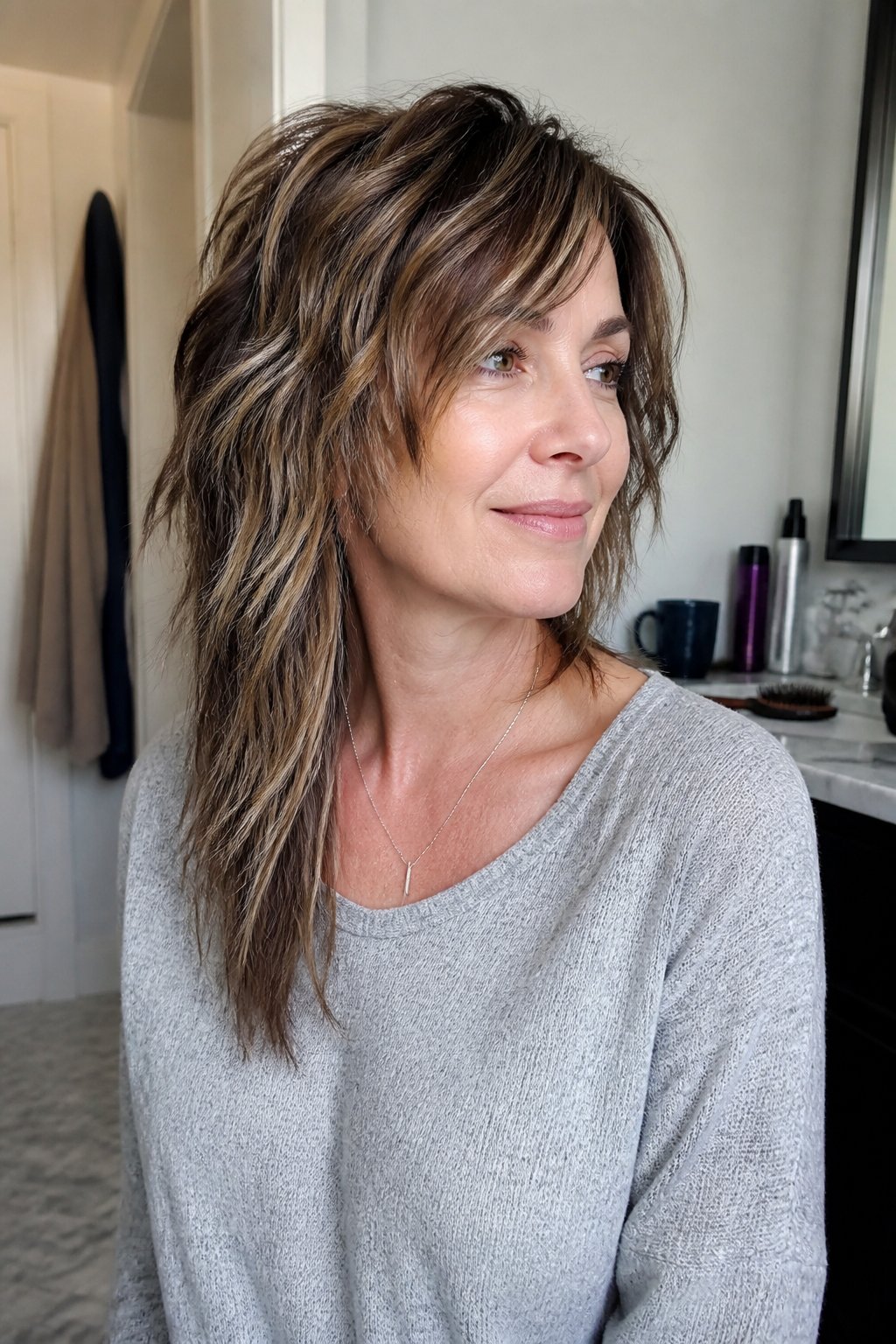
Choose an asymmetrical shag with feathered layers when you want movement without losing shape. One side can sit slightly longer than the other, while feathered ends create a soft, lifted finish. This cut works well for fine or straight hair because the layers add texture and the uneven outline creates visual interest.
Ask your stylist to keep the shortest layers near the crown and blend the sides gradually. If the layers become too choppy, your hair may look thin or difficult to style. Bring a photo and explain how much time you want to spend using a round brush, diffuser, or styling cream.
A side part can highlight the uneven length, while curtain or side-swept bangs can soften the forehead. Use a light mousse at the roots and a flexible spray on the ends to preserve movement without stiffness. Ask your stylist to tailor the feathered layers to your face shape and hair density.
14. Shoulder-Length Asymmetrical Cut With Curtain Bangs
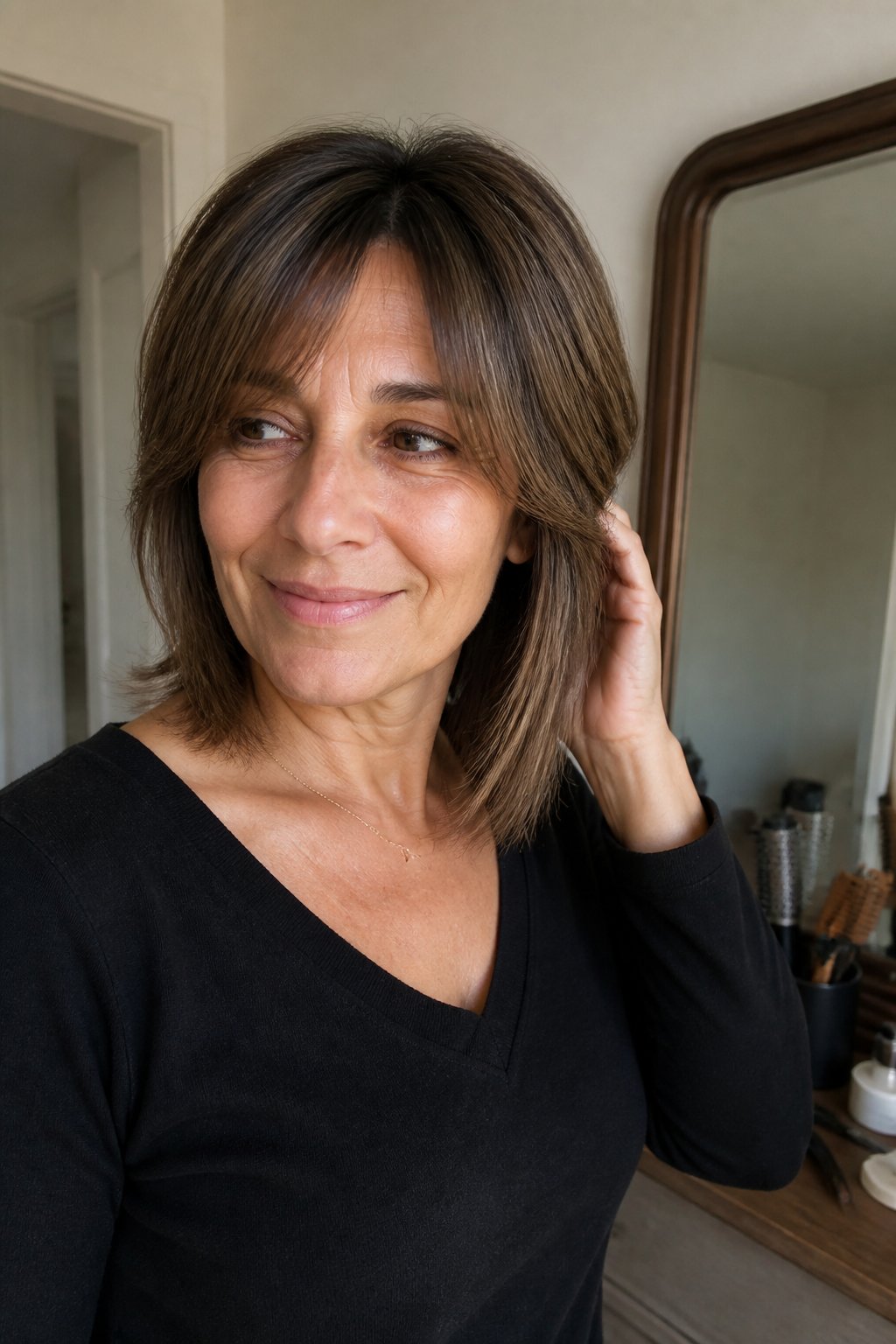
This shoulder-length asymmetrical cut gives you movement without requiring a major length change. Keep one side slightly longer than the other, then add curtain bangs that part at the center and blend into the front layers.
Ask your stylist to make the longer side fall near the collarbone while the shorter side rests around the shoulder. This subtle difference creates shape while remaining easy to style. Soft waves can highlight the uneven hem, while a smooth blowout gives the cut a polished finish.
Curtain bangs suit many face shapes, but they need regular trimming to keep their shape. Avoid adding too many layers if your ends are fine, since excessive thinning can make the hair look sparse. Use a round brush to direct the bangs away from your face, then finish with a light styling cream for control.
15. Asymmetrical bob with silver-gray highlights
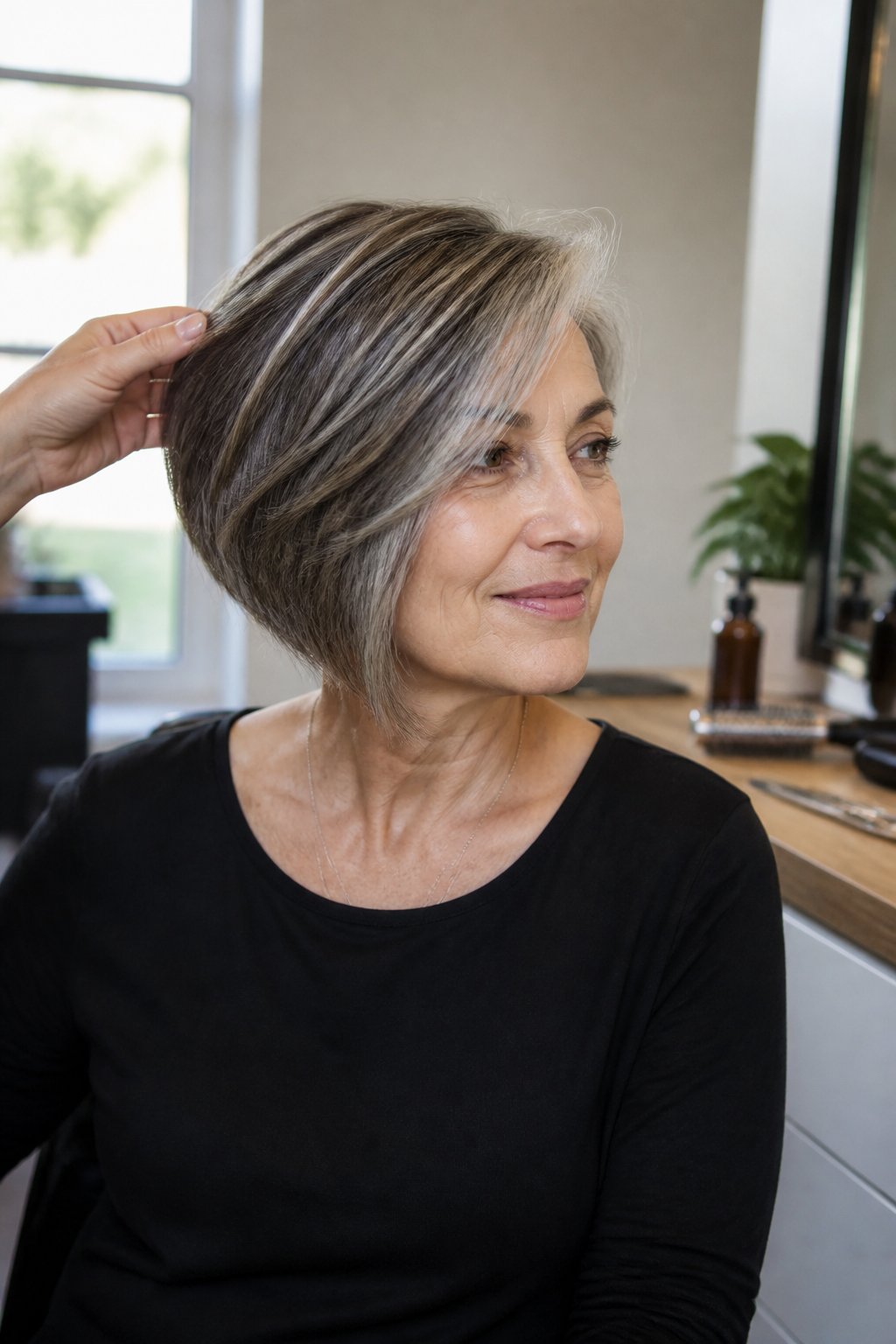
This asymmetrical bob gives you a polished shape while letting silver-gray highlights add natural dimension. Keep one side slightly longer than the other, with the shorter side ending near the jaw and the longer side reaching the chin or collarbone.
Ask your stylist to place highlights around the face and through the longer layers. A soft blend works well with salt-and-pepper hair, while brighter silver pieces create more contrast against a darker base. Your stylist can adjust the tone to suit your skin tone and natural gray pattern.
Style the cut with a side part and light smoothing cream. Avoid heavy products, which can flatten the shorter side and make the shape look uneven. Trim it every six to eight weeks to keep the angles sharp and the highlights fresh. Bring a side-profile photo to your appointment so your stylist can match the balance to your face.
16. Edgy Undercut Pixie With a Longer Top
This edgy undercut pixie gives you sharp contrast without sacrificing styling options. Keep the sides and back closely tapered, while the top stays longer and slightly asymmetrical. You can sweep the top to one side for a polished look, add texture for a casual finish, or style it forward as soft fringe.
Ask your stylist to blend the undercut carefully around your ears and neckline. A harsh line can make the shape look uneven, especially as it grows out. This style suits fine hair because the longer top adds visible height and movement, while the shorter sides reduce bulk.
Use a small amount of matte styling paste or lightweight wax. Work it through dry hair with your fingers, focusing on the top. Plan a trim about every four weeks to keep the undercut clean and the asymmetrical shape defined. Ask your stylist to adjust the top length to suit your face shape and daily routine.
Choosing a Flattering Asymmetrical Cut
A flattering asymmetrical haircut should suit your face shape, work with your natural hair texture, and fit your daily routine. Small changes in the part, angle, layering, and length can make the style easier to wear and maintain.
Matching the Shape to Face Structure
Choose the shorter side and front angle to balance your facial proportions. If you have a round face, a side part, longer front pieces, and height at the crown can create a more lengthened appearance. Avoid a blunt line that ends at the widest part of your cheeks.
For a square face, try soft layers and a gently angled bob that falls below the jaw. These details reduce harsh lines without hiding your features. A heart-shaped face often suits a longer side that adds fullness near the jaw, while a long face may benefit from fringe or chin-level volume.
Ask your stylist to view the cut from the front, side, and back. A dramatic difference between the two sides can look striking, but a softer angle usually offers more styling flexibility.
Considering Hair Texture and Density
Your natural texture determines how the asymmetry will fall. Straight, fine hair often suits a clean asymmetrical bob with a solid perimeter, which can make the ends appear fuller. Light internal layers add movement without removing too much weight.
If your hair is thick, ask for controlled layers or subtle texturing to prevent the longer side from feeling heavy. Wavy hair can support an uneven lob or softly layered cut, but your stylist should account for shrinkage when dry. Curly hair needs careful shaping because the shorter side may spring up more than expected.
Avoid copying a sleek reference photo if your hair has a different texture. Bring examples that resemble your density and curl pattern, then discuss how the cut will look without daily heat styling.
Balancing Length With Lifestyle
Your ideal cut should match the time you want to spend styling. A short asymmetrical pixie may need regular trims every four to six weeks, especially when the shorter side frames your ear or temple. An angled bob or lob gives you more time between appointments and still creates a clear difference in length.
Consider how you wear your hair during work, exercise, and travel. If you often tie it back, keep the longer side long enough to reach a small ponytail or tuck behind your ear. If you prefer air-drying, choose gentle layers that follow your natural movement instead of sharp, high-contrast angles.
Before cutting, show your stylist how you usually part and style your hair. Bring a photo taken in natural light, and choose a length you can manage on ordinary mornings.
Styling and Maintenance Essentials
A well-shaped asymmetrical cut depends on controlled volume, regular trims, and color placement that supports the uneven lines. Use styling products and salon timing to keep the shape polished without making your routine difficult.
Creating Definition and Volume
Start with damp hair and apply a lightweight volumizing mousse at the roots. Use a round brush to lift the shorter side, then direct the longer side across your face or behind your ear. This contrast makes the asymmetrical shape easier to see.
For waves or curls, work with your natural texture instead of forcing both sides to match. Apply curl cream through the longer section, twist a few pieces, and let the shorter side stay slightly tousled. A small amount of matte paste can define layers, but too much product may flatten fine hair.
Avoid brushing dry waves, which can create frizz and weaken the clean angle of the cut. If your hair lacks fullness, ask your stylist for internal layers rather than heavy thinning. This keeps the ends looking thicker while adding movement.
Scheduling Trims for Shape Retention
Book a trim every six to eight weeks to keep the difference in length clear. Short bobs, pixies, and sharp side-swept fringes may need attention closer to every four to six weeks, especially around the ears and neckline.
Bring a photo of your current haircut to each appointment. Your stylist can see how the shape grew out and adjust the shorter side without removing too much length from the longer side. Mention whether you usually air-dry, blow-dry, or wear your hair tucked behind one ear.
Do not wait until the cut loses its balance. Uneven growth can make the style look accidental rather than intentional, while frequent small trims preserve the original outline with less hair removed at each visit.
Adapting Color to Enhance the Cut
Color can make the angle of an asymmetrical haircut easier to notice. A slightly lighter face-framing section can draw attention to the longer side, while subtle lowlights can give layered bobs and shags more depth.
Ask for color placement that follows your haircut rather than a uniform result. For example, soft highlights through the sweeping fringe can emphasize movement, while darker tones near the shorter side can add definition. Your stylist should consider your natural color, skin tone, and hair condition before choosing a formula.
Avoid excessive lightening on fragile ends, particularly if your hair has become drier or finer. Gloss treatments, root blending, and gray-friendly lowlights can refresh the style while keeping maintenance manageable. Keep a clear record of your color formula so future appointments produce an even result.
About the Author — Lena Harper
Lena Harper is a fashion writer and content strategist at Fashion Pops, known for creating thoughtful, trend-aware articles that feel both stylish and relatable. With a strong background in fashion journalism, she specializes in turning seasonal trends, outfit ideas, and styling concepts into easy-to-follow inspiration for modern women.
Her writing focuses on practicality without losing creativity — helping readers build outfits that feel current, wearable, and confident. When she’s not working on new articles, Lena enjoys exploring street style trends, discovering unique fashion finds, and curating inspiration boards that shape upcoming content at Fashion Pops.