Short Wolf Haircuts: 17 Bold Styles That Turn Heads
A short wolf haircut can refresh your style without demanding a major change in length. If your current cut feels flat, heavy, or hard to shape, this layered look offers a modern way to add movement and personality.
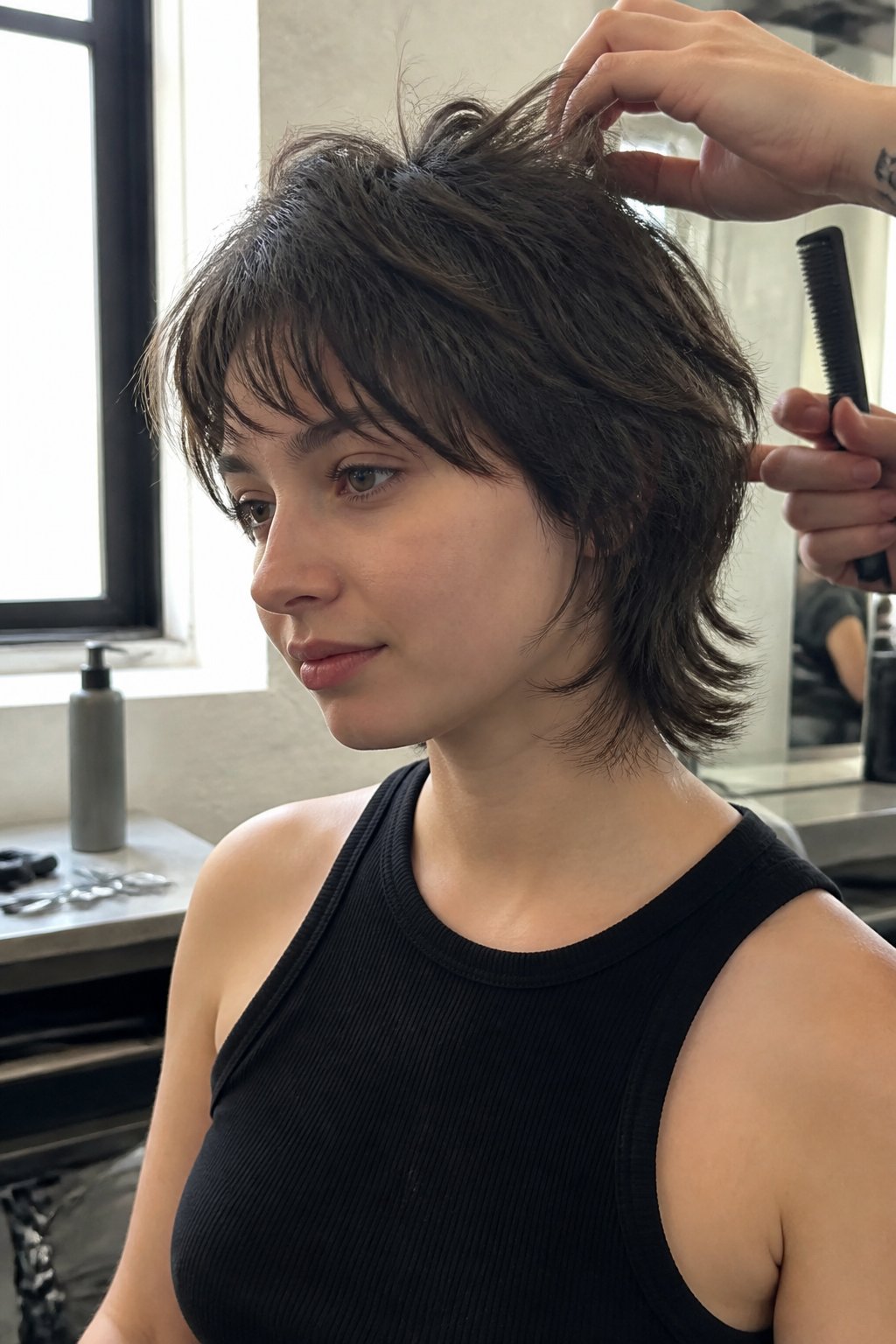
You’ll discover short wolf cut options for different hair textures, face shapes, and style preferences, along with practical tips to choose, style, and maintain the right cut for you. From soft layers and waves to bold bangs and tapered sides, you can find an approach that fits your features and daily routine.
1. Classic Short Wolf Cut
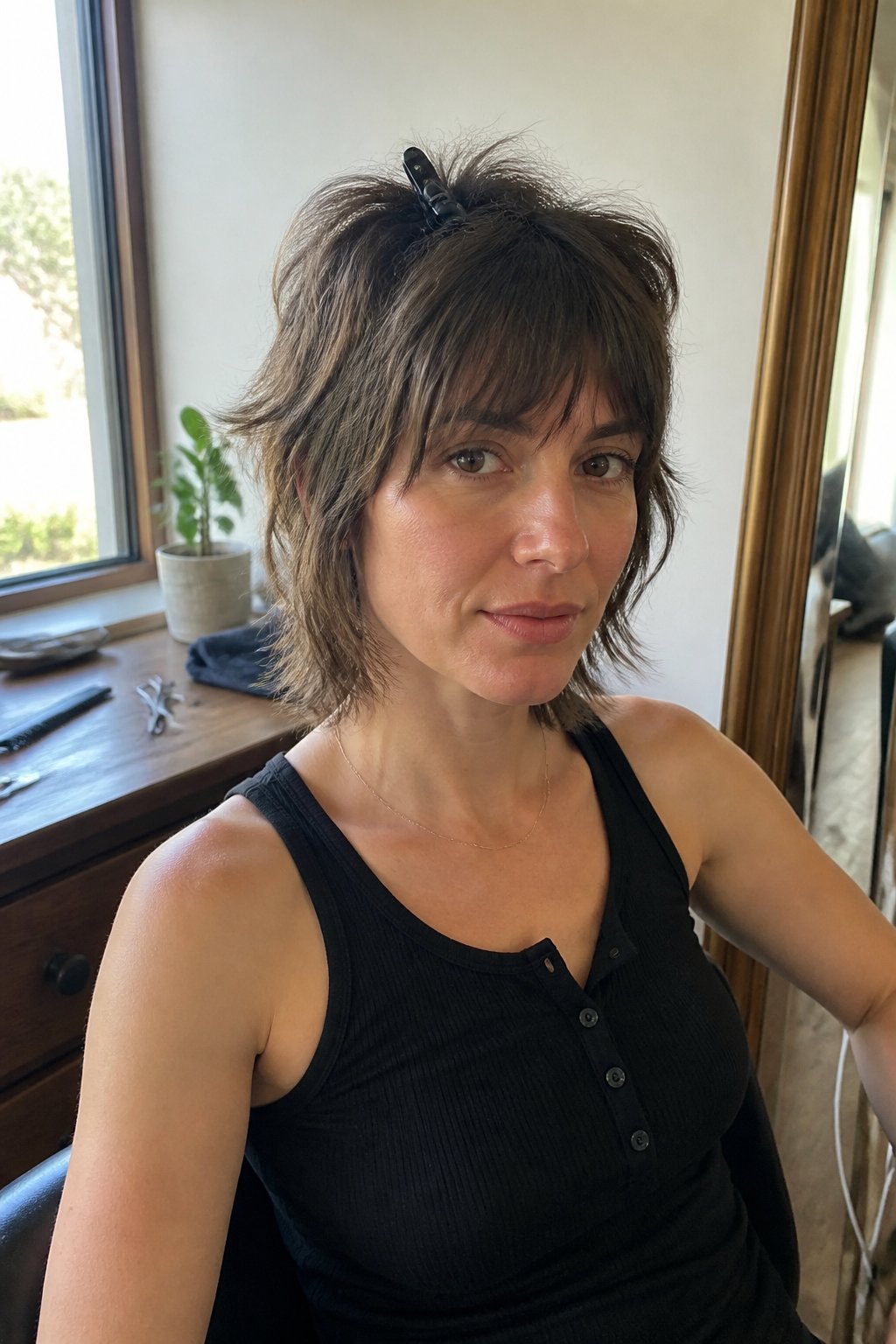
The classic short wolf cut gives you the texture of a shag with the shape of a short mullet. Choppy layers add movement around the crown, while shorter sides frame your face and longer back layers create a soft, tapered finish.
Ask your stylist to keep enough length at the nape for a balanced shape. If the layers become too short, the cut may look more like a pixie than a wolf cut. Bring a photo and explain how much styling time you can manage.
This style works well on straight, wavy, and thick hair. Use a small amount of texturizing cream or mousse, then let your hair air-dry or shape it with your fingers. Trim it every six to eight weeks to maintain the layers and outline.
2. Textured Pixie Wolf Cut
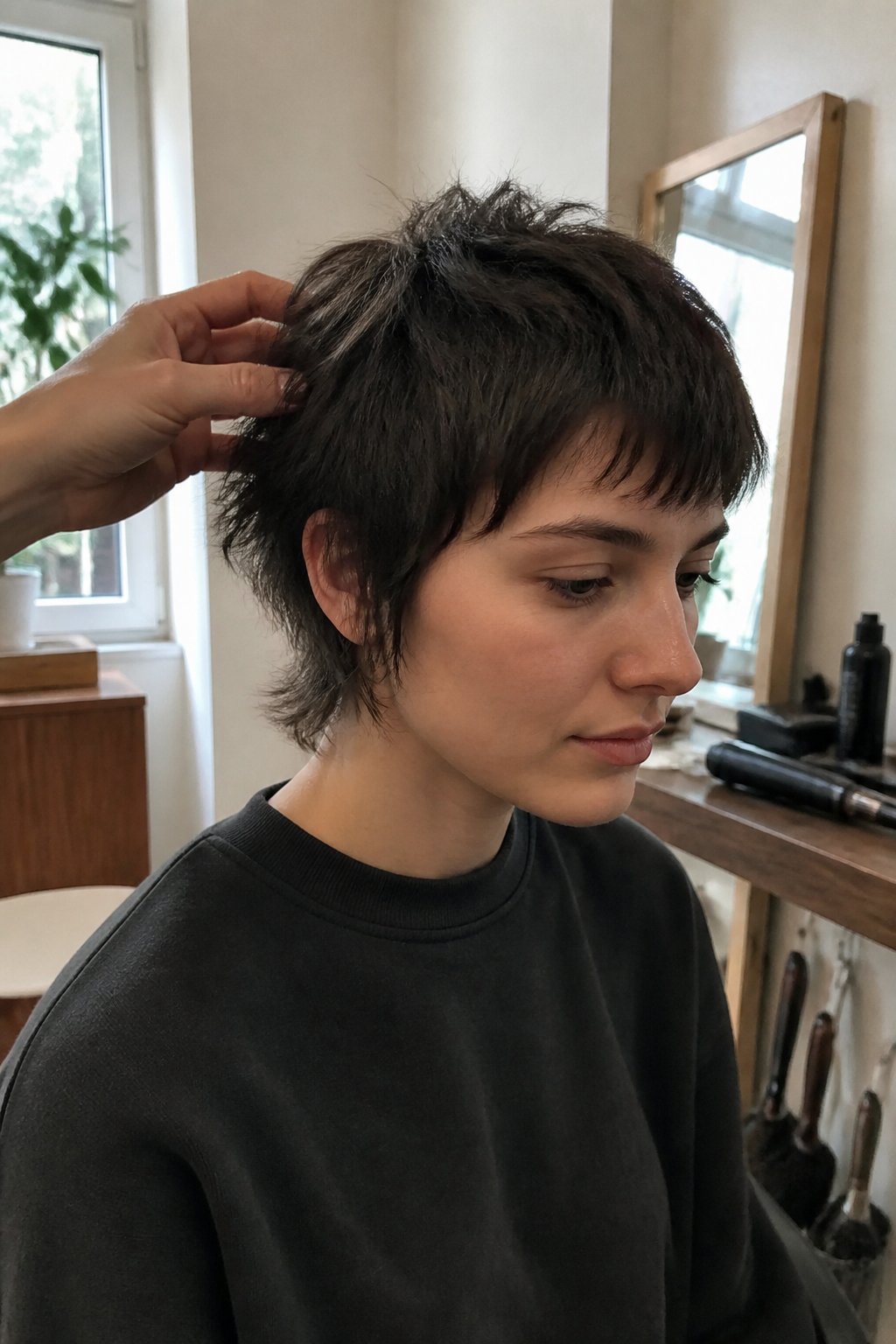
Choose a textured pixie wolf cut when you want short hair with visible movement and a relaxed finish. This style combines the neat shape of a pixie with choppy, shag-inspired layers that create volume and separation.
Ask your stylist to keep the crown layered and the ends lightly tapered. You can leave the fringe soft, sweep it to one side, or add longer pieces around your ears and neck for a less traditional pixie shape. A razor or point-cut finish can add texture, but too much thinning may make fine hair look sparse.
Style the cut with a small amount of mousse or texturizing cream. Work it through damp hair, then air-dry or use your fingers while blow-drying to shape the layers. Refresh the look with a light spray instead of heavy wax, which can flatten the crown.
Show your stylist photos that match your hair type, then adjust the layers to suit your natural texture.
3. Short Wolf Cut with Curtain Bangs
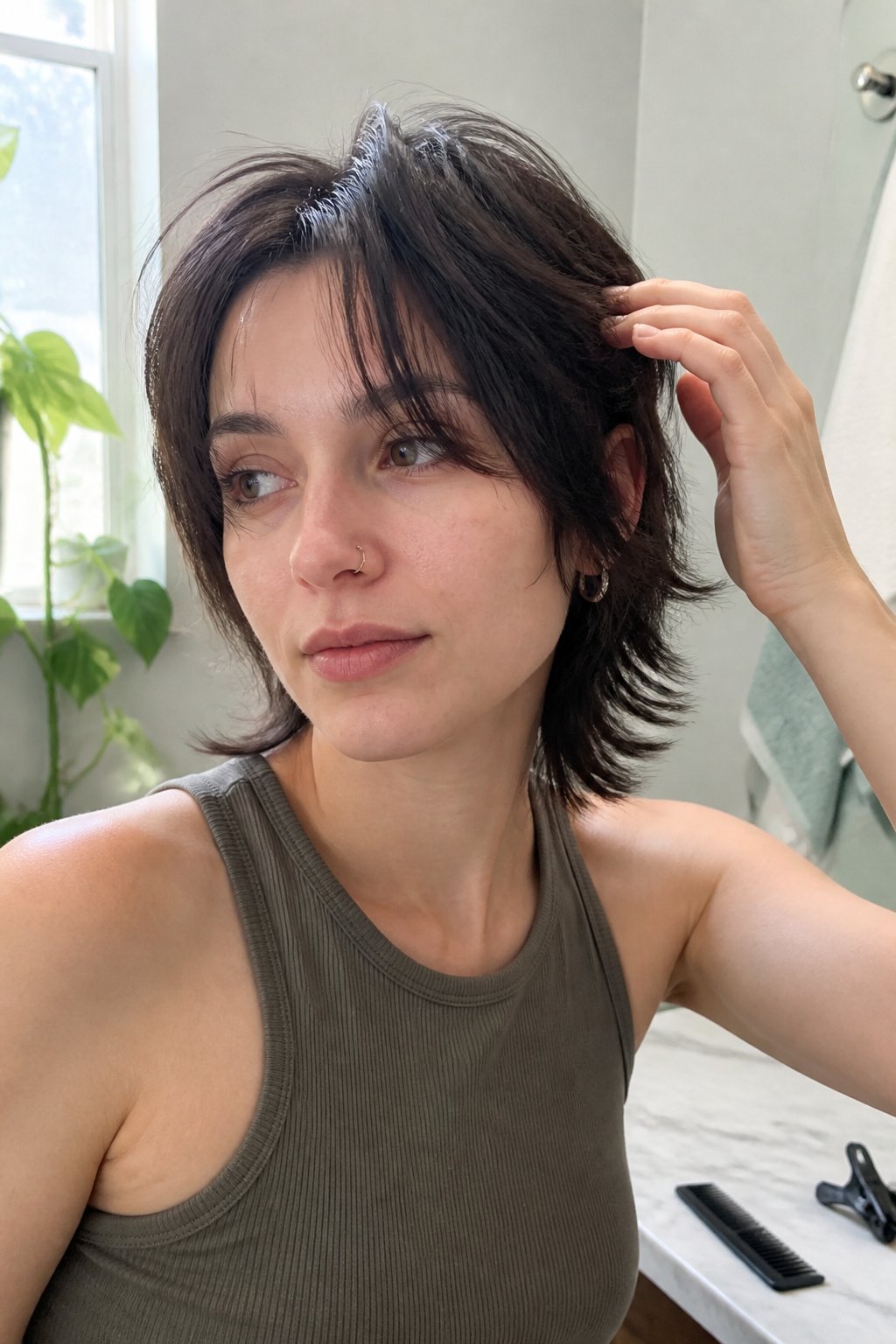
Choose a short wolf cut with curtain bangs when you want layered texture with a softer frame around your face. The shorter crown adds lift, while the parted fringe draws attention to your eyes and cheekbones. This style works especially well with straight, wavy, or lightly curly hair.
Ask your stylist to blend the curtain bangs into the cheek-length layers. For fine hair, keep the ends light but avoid removing too much weight. Thick hair may need careful internal layering to prevent a bulky shape.
Style the bangs with a round brush, directing each side away from your face. Let wavy hair air-dry with a light curl cream, then add texture spray only where needed. Avoid cutting the fringe too short, since it can lose its soft, face-framing effect as it grows.
Bring a reference photo and show how you usually wear your part before your appointment.
4. Choppy Chin-Length Wolf Cut
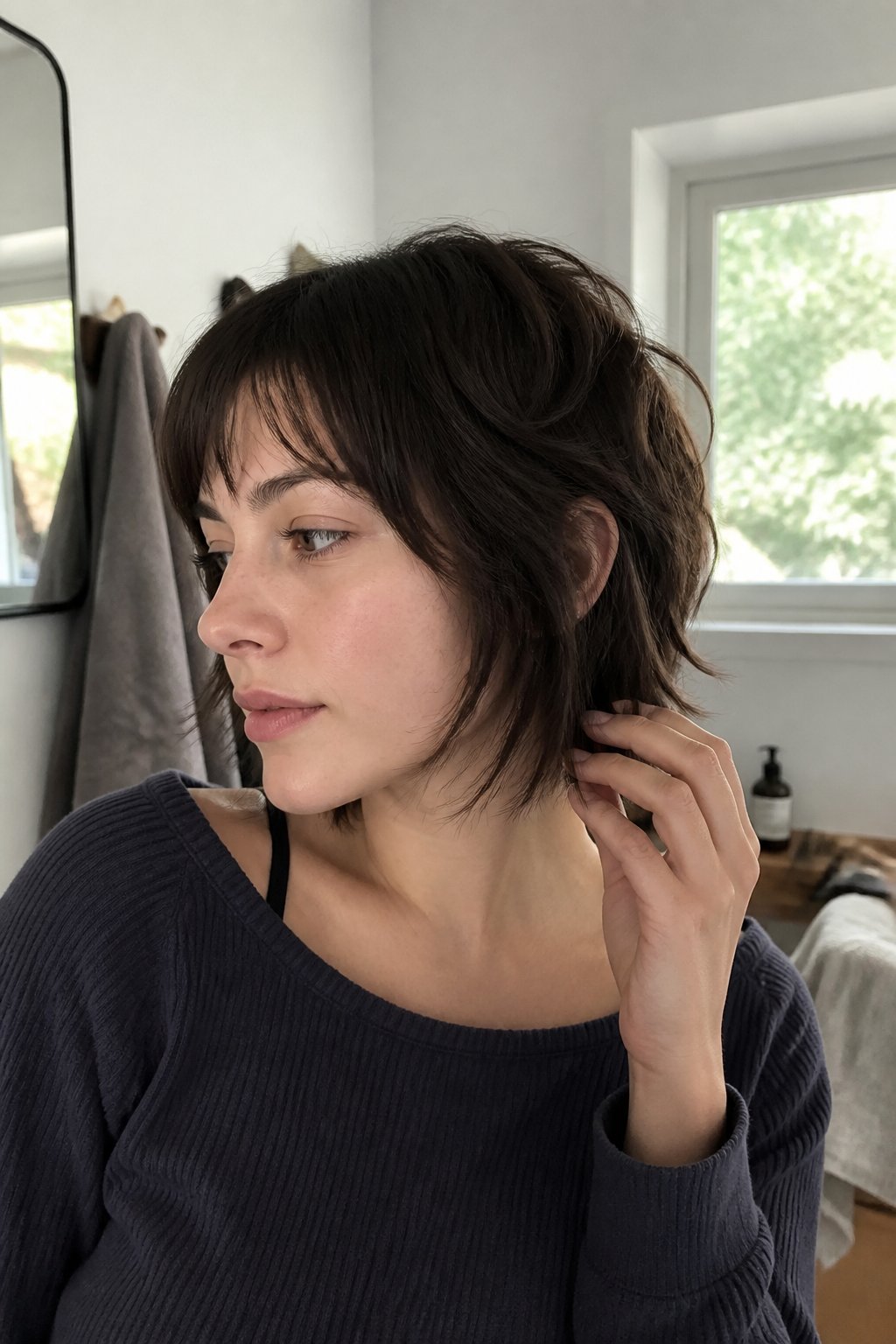
This chin-length wolf cut gives you short, layered texture with a clear, face-framing shape. Choppy layers add lift at the crown, while tapered ends keep the haircut light instead of bulky.
You can wear it with a soft fringe, side-swept bangs, or an open forehead. Straight hair shows the cut’s sharp texture, while wavy hair creates a softer, tousled finish. A small amount of styling cream helps define the layers without making them stiff.
Ask your stylist to keep the shortest layers blended around your cheeks. Cutting them too bluntly can make the sides look wide, especially if your hair is thick. If you have fine hair, ask for fewer layers through the ends to preserve fullness.
This short wolf cut works best when you want movement without a long styling routine. Use your natural texture, then adjust the fringe and crown with your fingers for a polished finish.
5. Short Curly Wolf Cut
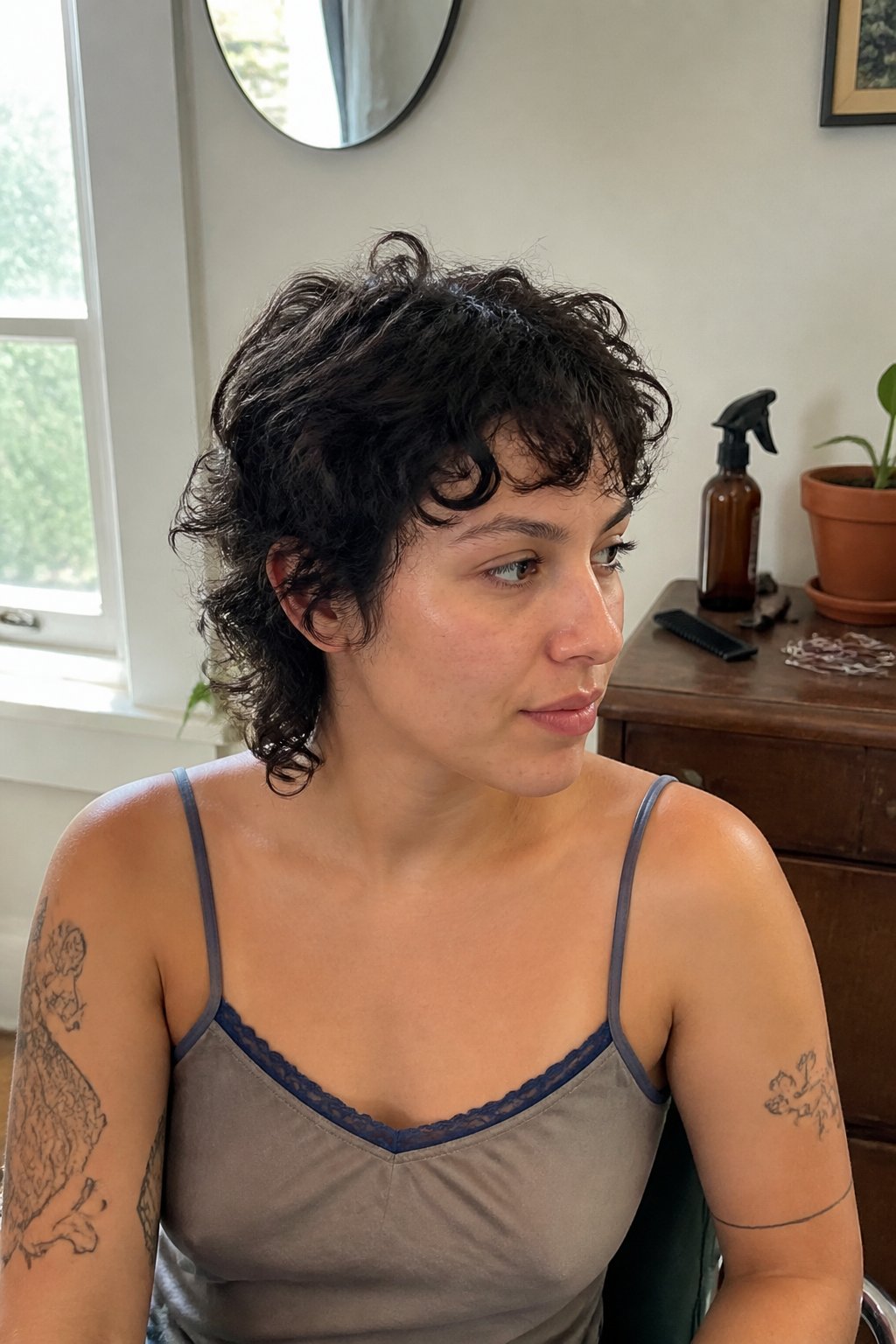
A short curly wolf cut gives your curls shape, lift, and movement without removing all their weight. This style blends shaggy layers around the crown with shorter sides and lighter ends, creating a modern look that suits waves, curls, and coils.
Ask your stylist to cut your hair dry or account for shrinkage, especially if your curls tighten as they dry. A curl that reaches your chin when wet may sit much higher when dry. Bring a reference photo with a similar curl pattern and hair density.
For styling, apply a lightweight leave-in conditioner and curl cream to wet hair. Scrunch gently, then air-dry or use a diffuser on low heat. Avoid brushing the finished style, since it can cause frizz and weaken the curl pattern.
Your main mistake to avoid is asking for too many short layers without discussing volume. Start with moderate layering, then add more texture at your next trim if needed.
6. Short Wolf Cut for Thick Hair
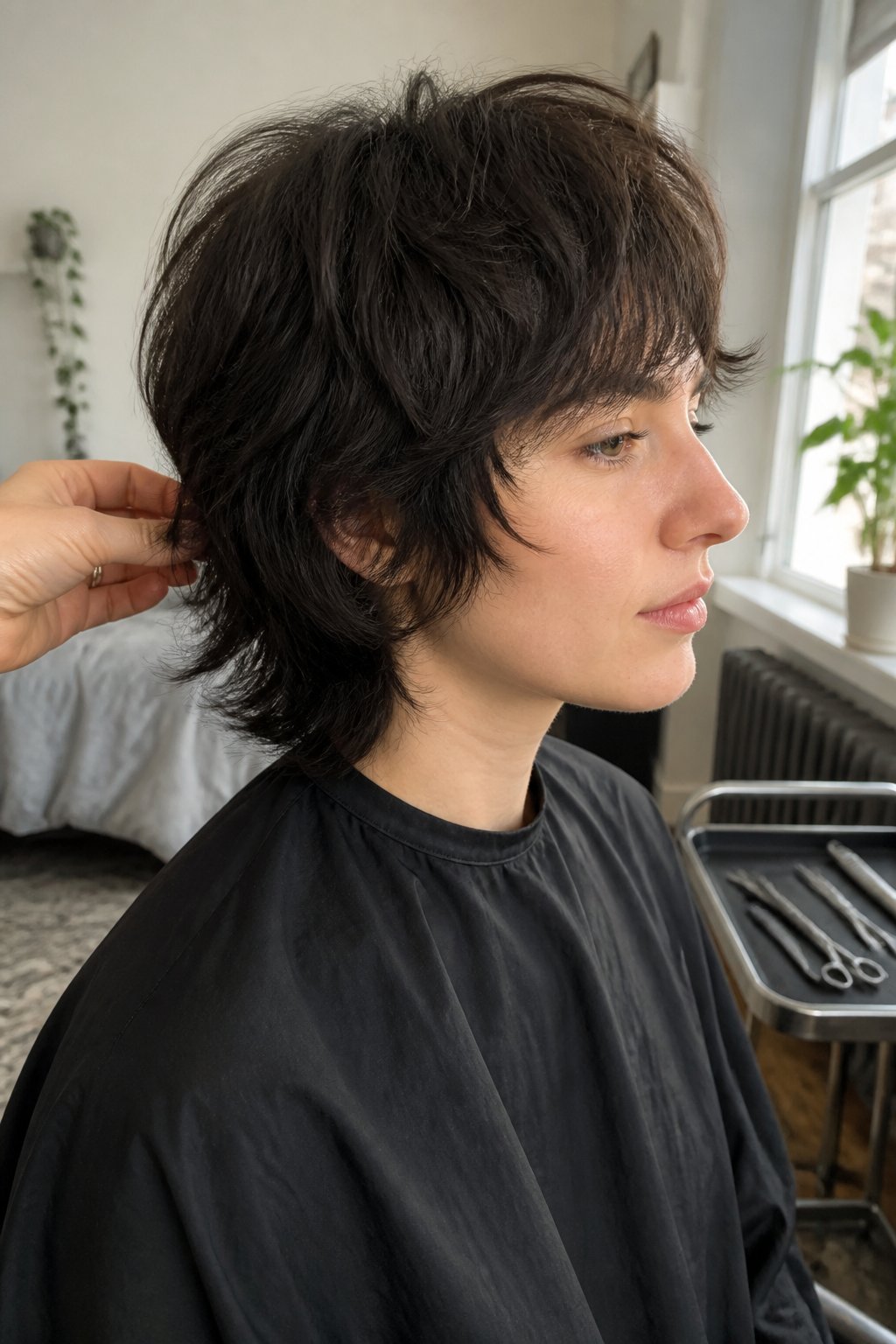
A short wolf cut can remove excess weight from thick hair while keeping its natural fullness. Ask your stylist for layered shaping at the crown, shorter sides, and slightly longer pieces at the back. This creates movement without making your hair look bulky.
For a softer finish, choose face-framing layers that begin near the cheekbones or jaw. Choppy ends add texture, but too many short layers can make dense hair expand around the sides. Your stylist should adjust the layer length to match your hair’s thickness and growth pattern.
Style your cut with a lightweight mousse or salt spray, then air-dry or use a diffuser. Avoid heavy creams, which can flatten the crown and make the ends look greasy. Bring a reference photo and explain how much daily styling you want before the cut begins.
7. Short Wolf Cut for Fine Hair
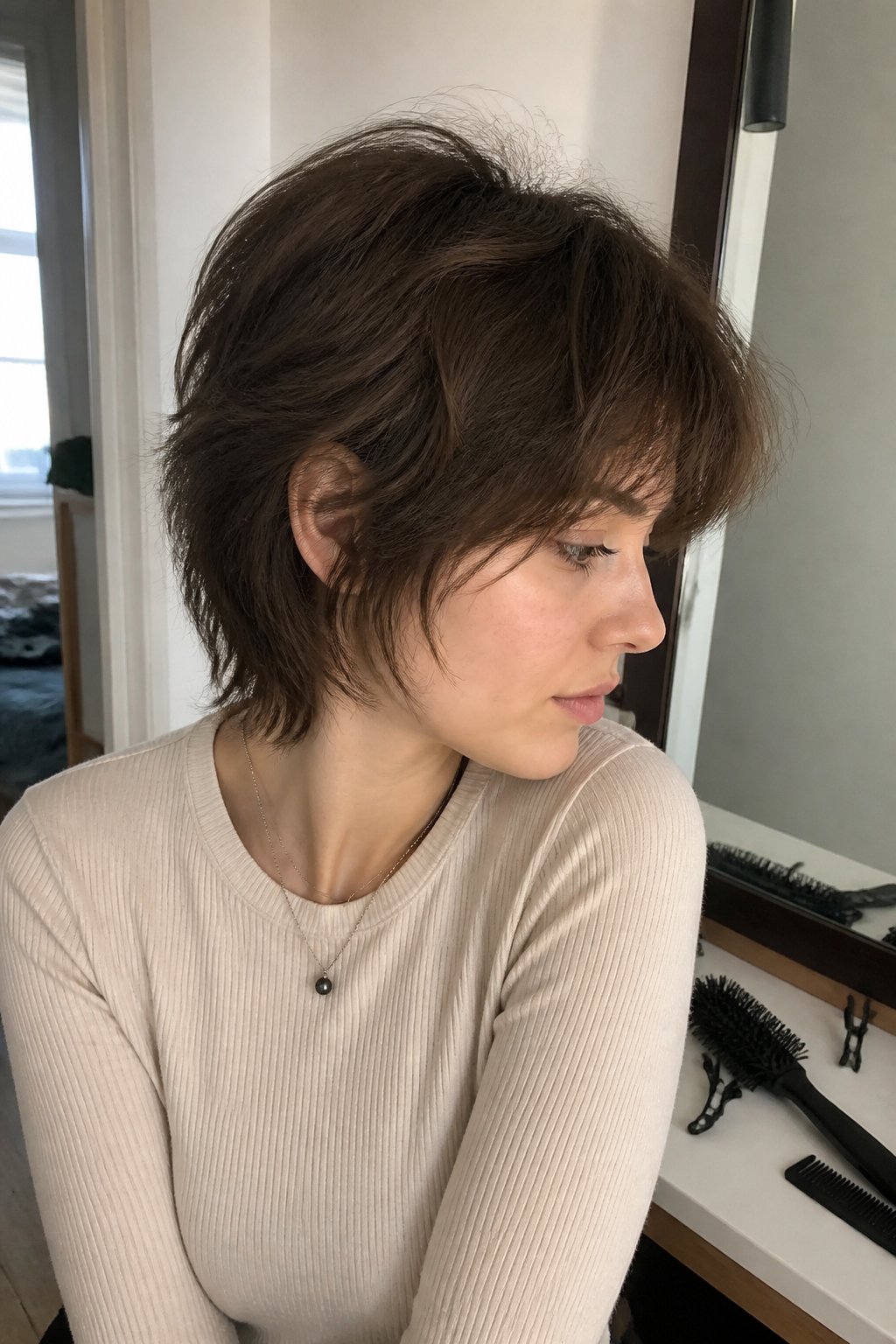
A short wolf cut can make fine hair look fuller by adding light layers, crown lift, and movement without removing too much weight. Ask your stylist for soft, blended layers rather than heavily thinned ends, which can make delicate hair look sparse.
A chin-length wolf bob works well when you want a neat shape with texture. Wispy bangs or face-framing pieces can add volume around the front, while a slightly longer back keeps the cut balanced. For straight hair, choppy layers create structure; for wavy hair, they help define your natural bend.
Style your cut with a lightweight mousse or texture spray. Lift the roots while blow-drying, then shape the ends with your fingers. Avoid heavy oils and thick creams, which can flatten fine strands and hide the haircut’s texture. Ask for a trim every six to eight weeks to maintain the shape.
8. Layered Short Wolf Cut
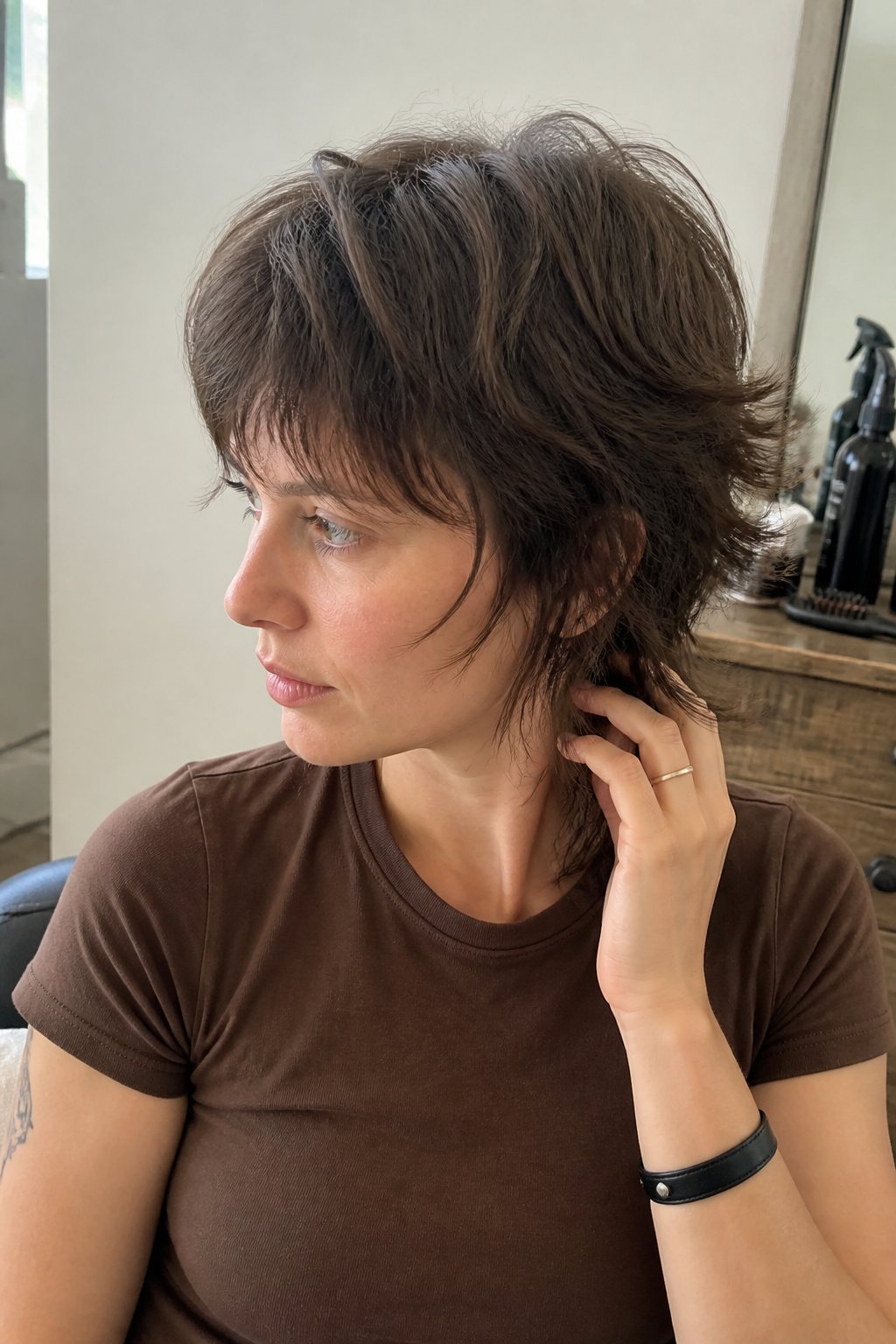
A layered short wolf cut gives you volume, movement, and a defined shape without heavy styling. Your stylist combines shorter crown layers with longer, wispy pieces near the nape and sides, creating a look that blends shag and mullet details.
Ask for face-framing layers that suit your features. If your hair is fine, keep the ends slightly fuller so the cut does not look thin. For thick or wavy hair, careful texturizing can remove bulk while preserving natural movement.
Style this cut with a small amount of mousse or texturizing cream. Scrunch damp hair, then let it air-dry or use a diffuser on low heat. Avoid adding too many layers at once, since excessive removal can make short hair difficult to shape as it grows.
Bring a few reference photos and tell your stylist how much daily styling you want to do.
9. Short Wolf Cut with Micro Bangs
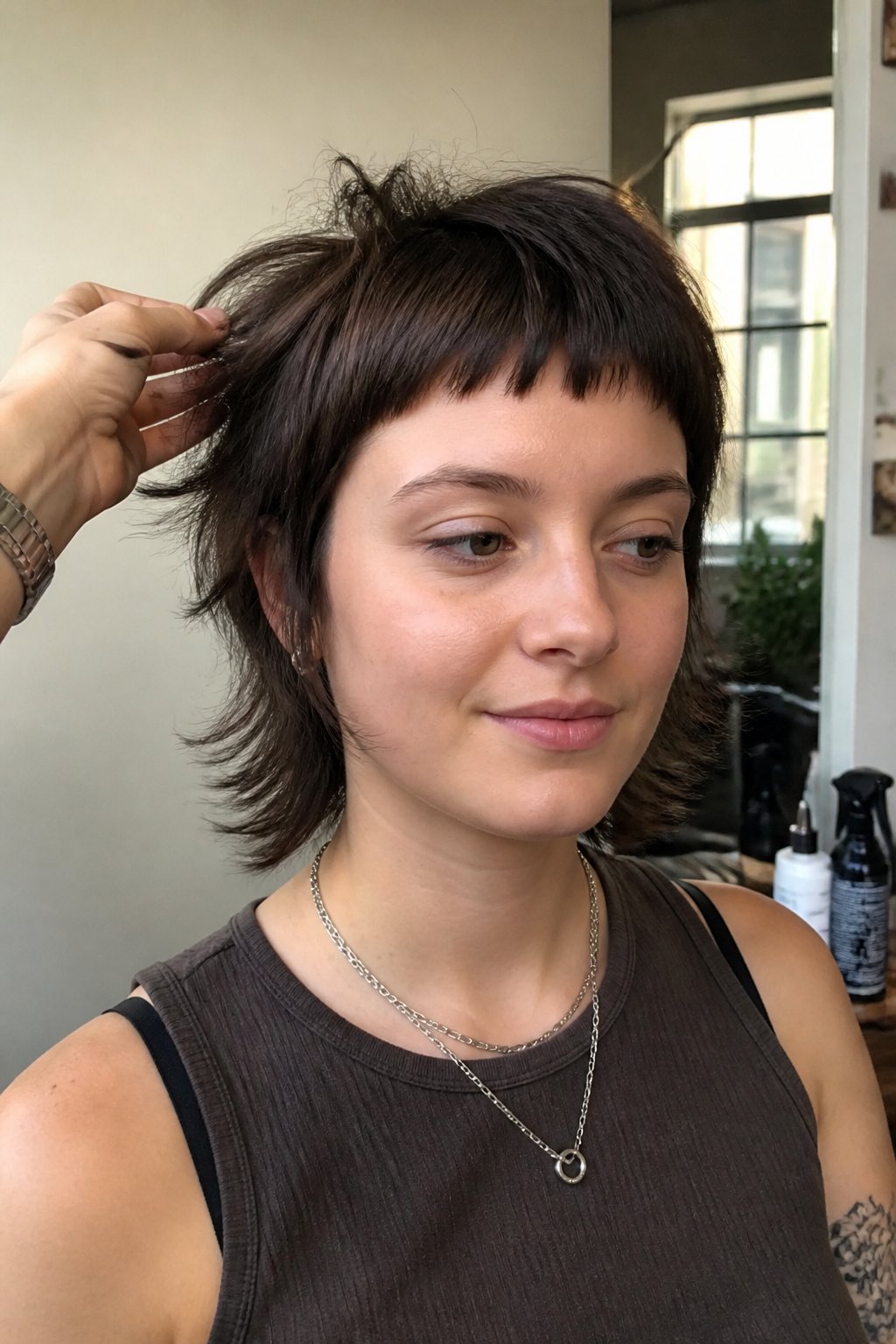
Choose a short wolf cut with micro bangs when you want a sharp, textured style that frames your eyes. The cropped fringe sits above the brows, while choppy layers add lift around the crown and movement through the sides.
Ask your stylist to keep the bangs light and slightly uneven rather than cutting one thick block. This helps the fringe blend with the undone texture of the wolf cut. On fine hair, use fewer layers to protect fullness; on thick hair, careful thinning can reduce bulk without flattening the shape.
Style your hair with a small amount of matte paste or texturizing cream. Work it through dry ends, then separate a few pieces with your fingers. Avoid heavy products, which can make the layers look greasy and cause micro bangs to clump.
Bring a reference photo and discuss how often you can trim the fringe, since short bangs need regular upkeep.
10. Shaggy Bob Wolf Cut
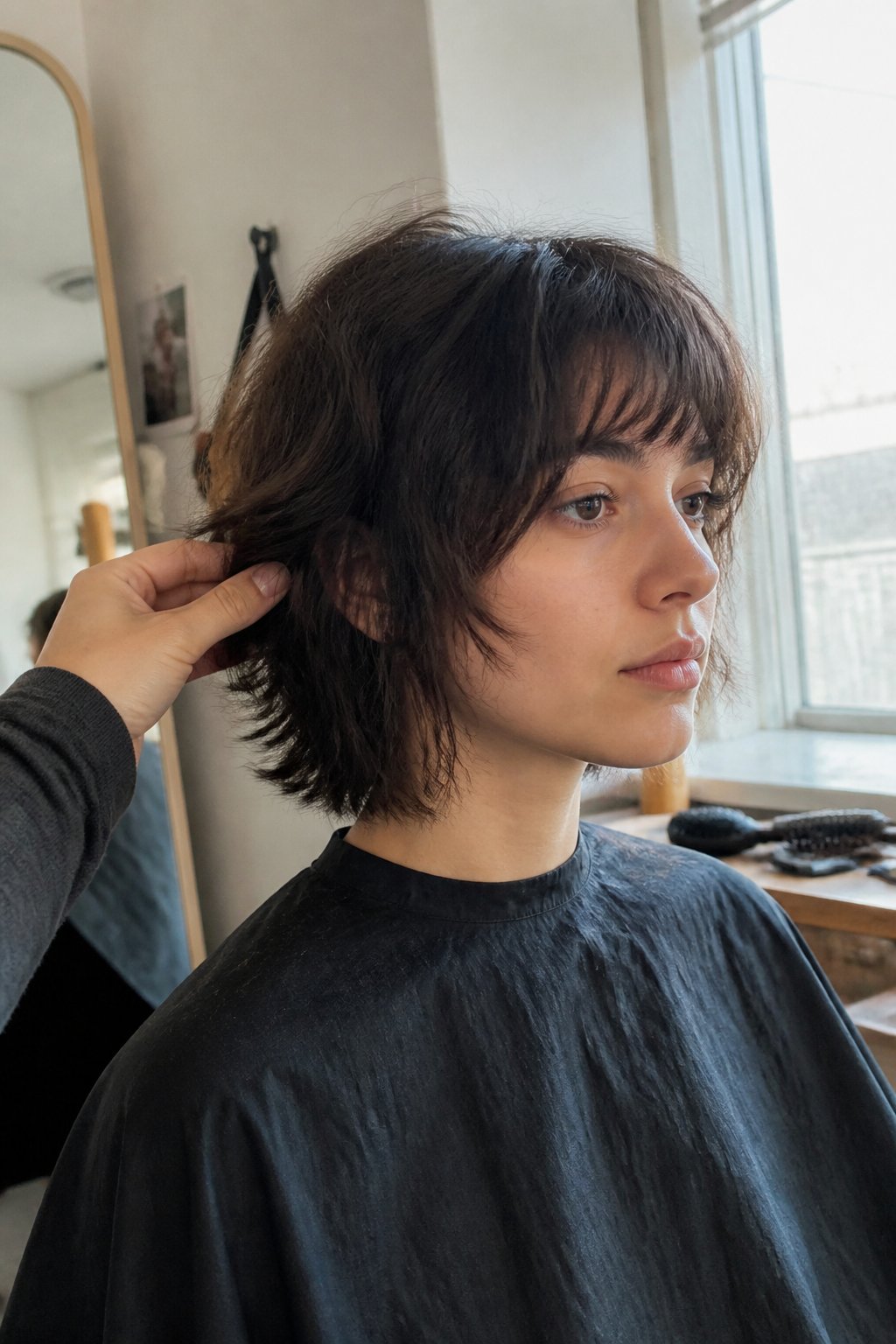
Choose a shaggy bob wolf cut when you want short hair with visible texture and a soft, modern shape. This style blends a chin-length bob with choppy layers, face-framing pieces, and light volume at the crown. It works well on straight or wavy hair.
Ask your stylist to keep enough length around the sides so the cut still feels like a bob. Too many short layers can make the shape look uneven, while blunt ends may remove the relaxed movement that defines a wolf cut.
You can air-dry with a light styling cream, then use your fingers to separate the layers. For extra lift, apply mousse at the roots and use a diffuser on low heat. Bring a photo to your appointment and discuss how the layers will suit your hair’s thickness.
11. Short Wolf Cut with Face-Framing Layers

Choose this short wolf cut when you want texture and a softer shape around your face. Choppy layers add lift at the crown, while longer pieces near the cheeks create a natural frame. The style works especially well with straight or wavy hair.
Ask your stylist to connect the face-framing layers to your bangs instead of cutting a sharp line. Curtain bangs can blend into the sides, giving you more styling options as they grow. If you have fine hair, avoid too many short layers, which can make the ends look thin.
Style your hair with a light mousse and a diffuser, or use a round brush to direct the front pieces away from your face. Bring a photo that shows the side profile, then ask your stylist to adjust the layers to your face shape and hair texture.
12. Tousled Short Wolf Cut

Choose a tousled short wolf cut when you want visible texture without losing a soft, wearable shape. Choppy layers add movement around the crown, while shorter pieces near the face create a natural frame. This style works especially well with straight, wavy, or lightly curly hair.
Ask your stylist to keep enough length at the sides and back so the cut does not look uneven as it grows. A common mistake involves removing too much weight from thick hair, which can make the ends appear thin. Use a small amount of texturizing cream or sea-salt spray, then scrunch your hair and let it air-dry.
For a polished finish, direct the fringe away from your face with a round brush. For a relaxed finish, let a few pieces fall forward and keep the layers slightly imperfect. Bring a reference photo that shows the texture and length you want before your appointment.
13. Short Wolf Cut with Side-Swept Bangs
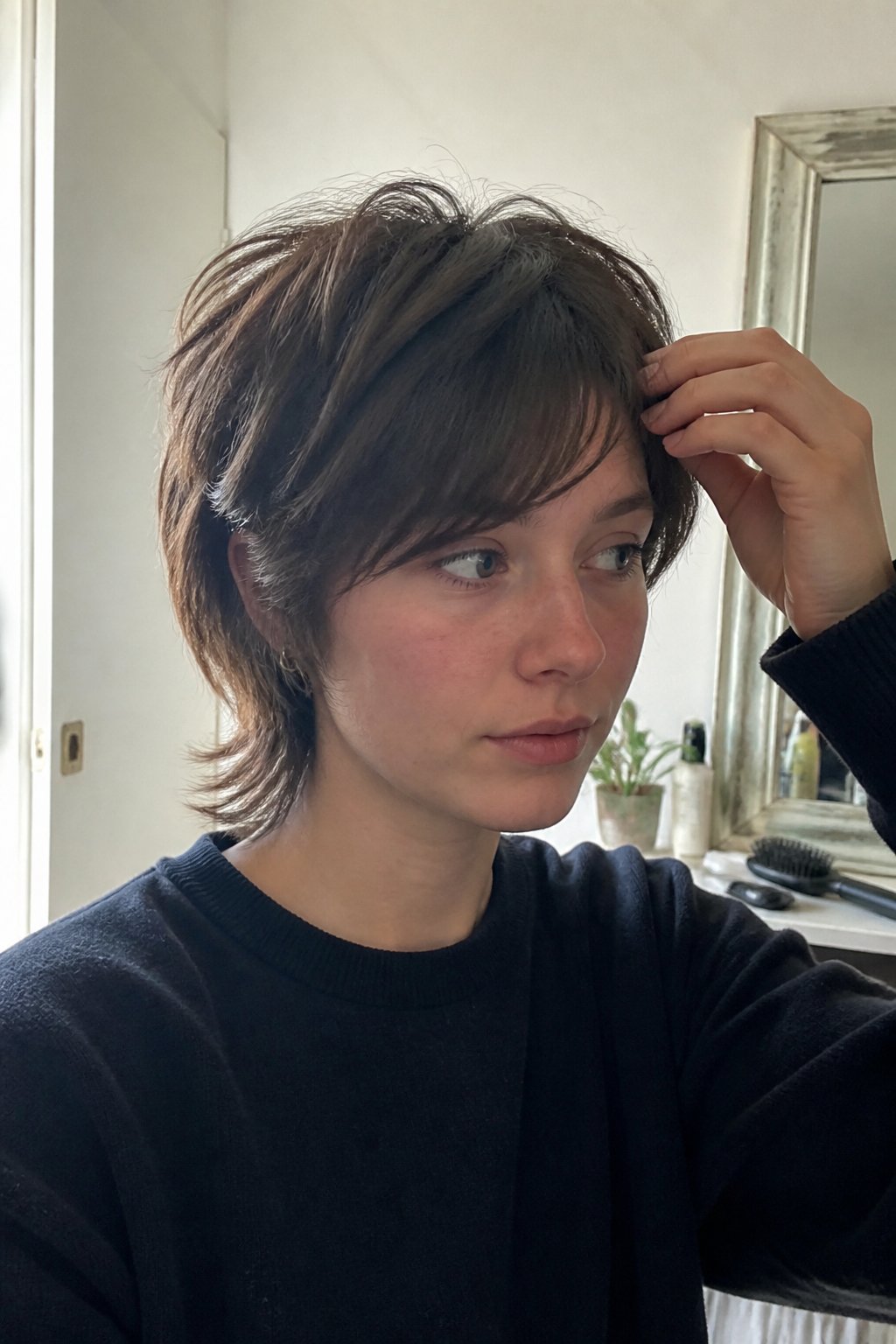
Choose a short wolf cut with side-swept bangs when you want texture without a harsh fringe. The angled bangs soften your forehead and blend into face-framing layers, while shorter crown layers add lift and movement.
Ask your stylist to keep the sides textured but not overly thin. This shape suits straight, wavy, and curly hair, though thick hair may need careful internal layering to prevent bulk. For fine hair, lighter layering can create the appearance of more volume.
To style it, blow-dry your bangs across your forehead with a small round brush. Use a light texturizing spray at the roots, then shape the ends with your fingers. Avoid heavy wax, which can flatten the crown and make the cut look greasy.
Bring a clear reference photo and explain how much styling time you can manage each morning.
14. Blunt-End Short Wolf Cut
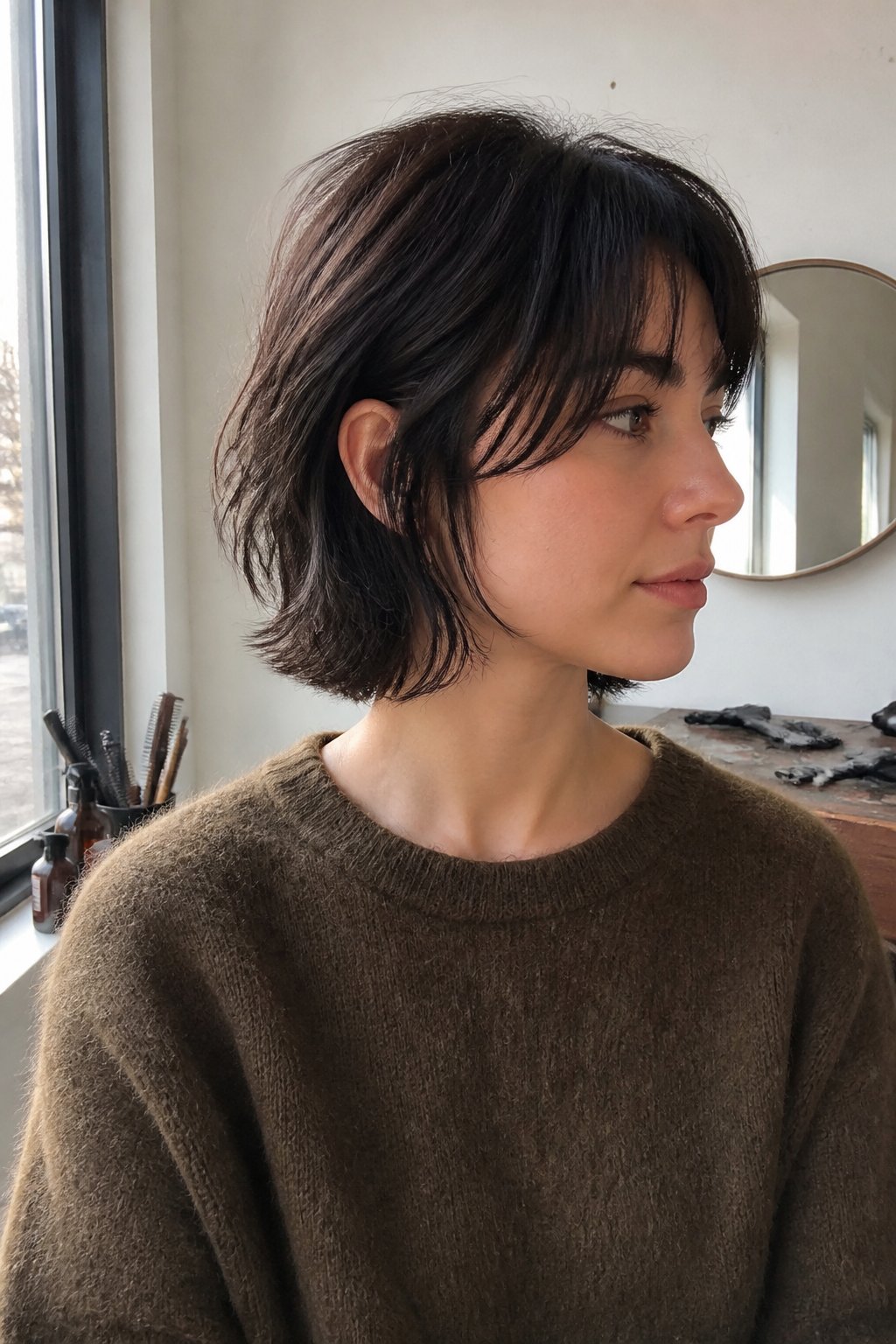
Choose a blunt-end short wolf cut when you want sharp shape with softer, choppy movement. This style keeps a clean edge through the bob-length ends while adding shorter layers around the crown, temples, and cheekbones.
Ask your stylist to preserve weight at the perimeter instead of heavily thinning the ends. Too much texturizing can make the haircut look wispy, especially on fine hair. On thick hair, selective internal layers can remove bulk without weakening the blunt outline.
Style the cut with a small amount of mousse or texture cream. Let wavy hair air-dry, or use a diffuser to bring out movement. For straight hair, bend a few layers with a flat iron while keeping the ends mostly straight for contrast.
Bring a reference photo and explain how much edge you want around your face. This helps your stylist balance the structured ends with the relaxed wolf-cut layers.
15. Short Wolf Cut with Tapered Sides
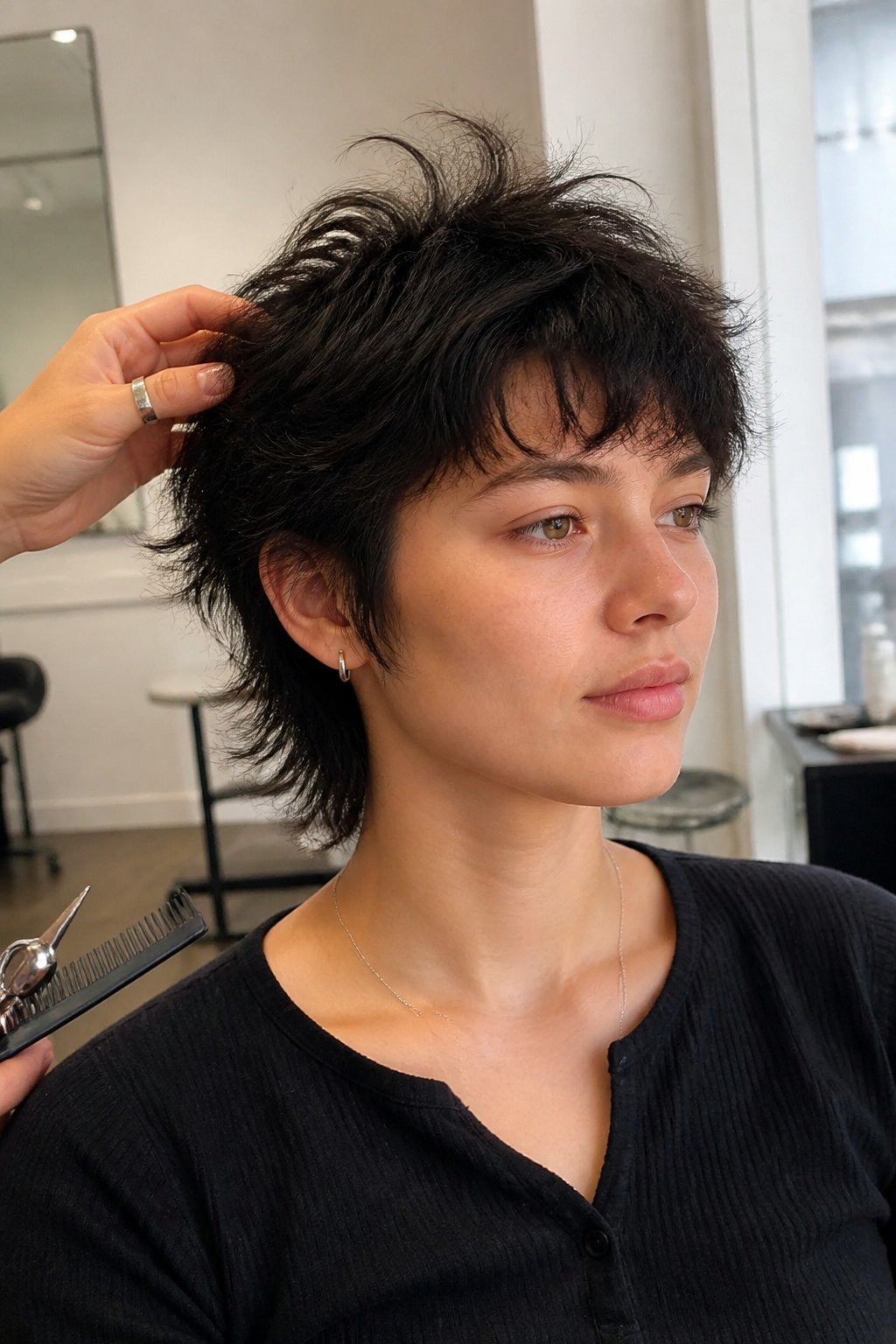
A short wolf cut with tapered sides gives you layered volume on top while keeping the sides and nape neat. This shape blends the relaxed texture of a shag with the clean outline of a shorter cut, making it suitable for straight, wavy, or curly hair.
Ask your stylist to keep extra length through the crown and soften the ends with point cutting. A light fringe or side-swept bang can frame your face without making the style look too heavy. For example, a tapered nape works well when you want a tidy finish at the back.
Avoid asking for sides that are too short, especially if your hair grows outward or feels thick. Use a small amount of texturizing cream on damp hair, then let it air-dry or use a diffuser to bring out natural movement. Bring a reference photo so your stylist can match the taper to your hair texture and preferred level of edge.
16. Wavy Short Wolf Cut

A wavy short wolf cut gives you airy volume, choppy layers, and a relaxed shape without heavy styling. The cut usually sits between the ears and collarbone, with shorter layers at the crown and lighter ends that let your natural waves move freely.
Ask your stylist to work with your wave pattern instead of thinning the hair too much. Excessive thinning can create frizz, uneven ends, or a triangle shape. Soft curtain bangs or wispy full bangs can frame your face, while longer front layers offer easier styling.
Apply lightweight mousse or curl cream to damp hair, then scrunch and air-dry or use a diffuser on low heat. Refresh the shape with water and a small amount of product between washes. Bring a photo that matches your hair’s density and wave pattern before your appointment.
17. Short Wolf Cut with Razored Layers
If you want a lighter, sharper wolf cut, ask for razored layers. This technique creates wispy ends and removes bulk, giving short hair more movement without making it look heavy.
Tell your stylist how much length you want to keep around your ears, crown, and nape. A soft fringe can frame your face, while shorter crown layers add lift. On straight hair, these layers create a sleek, piecey shape. On wavy hair, they help define texture and support a relaxed finish.
Style this cut with a small amount of texturizing cream or lightweight wax. Scrunch wavy hair while it dries, or use a flat iron to flick a few ends outward. Avoid applying too much product, since it can flatten the layers and make the hair look greasy.
Schedule trims every six to eight weeks to maintain the tapered shape and clean, razored ends.
Choosing a Short Wolf Cut for Your Face Shape and Hair Texture
Your best short wolf haircut balances your face shape, hair density, natural movement, and styling routine. Use the cut’s layers and fringe to add width, soften angles, control bulk, or create more height where you need it.
Face Shape Considerations
For a round face, ask for longer face-framing pieces that fall below the cheekbones. Keep crown layers lifted but avoid very short, wide layers at the cheeks, which can add visual width.
A square face often suits soft, broken layers and wispy bangs. Ask your stylist to remove weight around the jaw without cutting a blunt line that emphasizes strong angles.
If you have an oval face, you can wear most short wolf cuts. Try curtain bangs, choppy micro-fringe, or a longer nape based on your preferred level of edge.
For a heart-shaped face, keep some fullness near the jaw and use side-swept or curtain bangs to balance a wider forehead. A long face benefits from fuller sides, shorter fringe, and less height at the crown.
Bring two or three reference photos, then explain what you like about each one. Your stylist can adjust the layers to suit your features rather than copying a shape that worked for someone else.
Hair Density and Natural Wave
Fine hair usually needs fewer, well-placed layers. Too many choppy sections can make the ends look thin, so request crown movement with a fuller perimeter. A lightweight mousse can add lift without coating the strands.
Thick hair can support stronger wolf-cut layering, but internal debulking matters. Ask your stylist to remove bulk without heavily thinning the ends, which may cause frizz or uneven texture.
Straight hair shows every cutting line, so soft transitions and piecey styling help prevent a stiff shape. Wavy hair often forms the cut naturally, especially when the stylist cuts with its movement in mind. Curly hair requires extra care because it shrinks as it dries; choose a stylist experienced with curls and ask for a dry-cutting method if appropriate.
Avoid judging the shape while your hair sits wet. Your natural wave, curl, and shrinkage determine the final length and volume.
Maintenance Expectations
A short wolf cut looks best when you accept some daily styling. Scrunch wavy or curly hair with curl cream, then air-dry or diffuse it. For straight hair, use texture spray and lift the crown with your fingers or a round brush.
Plan a trim about every six to eight weeks to maintain the fringe, face-framing pieces, and nape shape. You may stretch appointments longer if you prefer a softer, grown-out look.
Ask your stylist how the haircut should be refreshed between washes. Overusing dry shampoo or heavy wax can flatten fine hair and make layered ends look greasy. If you want a wash-and-go style, say so before the cut; your stylist can create longer transitions and less demanding layers. Choose the version that matches the time you realistically want to spend styling your hair.
Styling and Upkeep Essentials
A short wolf haircut looks best when you support its layers without making them stiff. Use light styling, refresh the texture between washes, and schedule trims before the ends lose their shape.
Everyday Styling Techniques
Start with damp, towel-dried hair. Apply a small amount of lightweight mousse or texture cream, then scrunch the layers with your hands. For wavy or curly hair, let it air-dry or use a diffuser on low heat. Avoid brushing once the hair dries, since this can create frizz and flatten the shape.
For straight hair, direct the top layers upward with a small round brush while blow-drying. Twist a few sections away from your face to add movement, but keep the finish loose. A short wolf cut should look textured, not carefully curled.
On non-wash days, mist the roots with water and reshape them with your fingers. Add dry shampoo only where the hair looks oily. Too much product can make the short layers heavy and remove their natural lift.
Recommended Products
Choose products by hair type and use small amounts. Fine hair usually needs volumizing mousse or a light root spray. Thick hair may benefit from a smoothing cream on the ends. Wavy or curly hair works well with curl cream or a flexible gel that controls frizz without creating a hard cast.
A texture spray can define choppy layers, but spray it from a distance and build gradually. Salt sprays may add grip, though frequent use can dry the hair. Finish with a light hairspray if you need hold around the crown or bangs.
Use heat protectant before blow-drying, straightening, or curling. One common mistake involves applying oil before hot tools; many oils can increase heat damage, so check the product label and use a true heat protectant first.
Trimming And Growing Out The Cut
Book a trim every six to eight weeks to keep the crown, bangs, and side layers balanced. Ask your stylist to preserve the uneven texture rather than cutting every section to one length. Bring a photo of your current cut if you want the same shape maintained.
Trim sooner if your bangs block your eyes or the ends begin to tangle. Avoid cutting the layers yourself, especially around the crown, because short mistakes can take months to grow out.
When growing out a short wolf cut, keep the top layers connected to the sides. Your stylist can soften the contrast with small shaping trims instead of removing large amounts of length. Use conditioner on the ends and detangle from the tips upward to reduce breakage while the cut changes shape.
About the Author — Lena Harper
Lena Harper is a fashion writer and content strategist at Fashion Pops, known for creating thoughtful, trend-aware articles that feel both stylish and relatable. With a strong background in fashion journalism, she specializes in turning seasonal trends, outfit ideas, and styling concepts into easy-to-follow inspiration for modern women.
Her writing focuses on practicality without losing creativity — helping readers build outfits that feel current, wearable, and confident. When she’s not working on new articles, Lena enjoys exploring street style trends, discovering unique fashion finds, and curating inspiration boards that shape upcoming content at Fashion Pops.