13 Things Rosemary Oil Actually Does for Hair Growth: Benefits, Facts & Tips 🌿✨
If you have been wondering what rosemary oil actually does for hair growth, you are definitely not alone. Rosemary oil has become one of the most popular ingredients in natural hair-care routines, especially among people hoping for fuller, healthier-looking hair. While it is not a magical overnight growth treatment, some research suggests rosemary oil may have potential as part of a hair-growth routine. It may also make scalp care and regular hair maintenance feel more intentional and relaxing. Here are 13 realistic things rosemary oil may actually do for hair growth, along with practical tips for using it wisely.
1. Rosemary Oil May Support Hair Growth

One of the biggest reasons rosemary oil has become so popular is its potential connection with hair growth. A small clinical study found that rosemary oil showed promising results for hair count over several months when compared with 2% minoxidil, although this does not mean the two treatments are equivalent. Hair growth is influenced by many factors, including genetics, hormones, age, nutrition, and the underlying reason for hair loss. Rosemary oil should therefore be viewed as a possible supportive ingredient rather than a guaranteed solution. If you want to try it, consistency and realistic expectations are much more important than applying large amounts.
2. It May Support a Healthier-Looking Scalp Routine

A consistent scalp-care routine can make it easier to notice changes in your hair and scalp over time. Rosemary oil can be incorporated into that routine when it is properly diluted and used carefully. Gently massaging the scalp can also turn application into a relaxing self-care ritual rather than another complicated beauty step. However, rosemary oil should not be considered a treatment for persistent scalp conditions such as severe irritation, scaling, or infection. Keeping the routine simple and gentle is usually more sensible than repeatedly applying concentrated essential oil.
3. Rosemary Oil May Help Hair Look Fuller Over Time

When hair starts looking thinner, people often look for ingredients that may support a fuller appearance. Rosemary oil is interesting because preliminary research suggests it may have a role in supporting hair growth, although the evidence is still limited. Fuller-looking hair can also result from reducing breakage and improving the way existing strands are cared for. It is important to distinguish actual new growth from temporary styling volume or thicker-feeling strands. If noticeable thinning continues, finding the underlying cause should be a priority rather than relying only on an oil.
🖼️ IMAGE PROMPT:
2:3 aspect ratio, attractive cute adult female model around 20 years old, slim delicate natural body type, fair light skin tone, naturally visible collarbone and graceful neck, soft feminine clearly adult facial features, long voluminous brunette hair with healthy-looking roots, gently lifting hair at the crown while looking into a professional salon mirror, small rosemary oil bottle on workstation, luxury salon interior with large mirror and styling chair, soft flattering natural lighting, realistic skin texture, highly detailed individual hair strands, face and hair extremely sharp and crisp, head-to-waist framing, subject perfectly focused, subtle background blur only, premium Pinterest beauty photography, no text.
4. It Makes Scalp Massage More Enjoyable

One simple benefit of adding rosemary oil to your routine is that it can make scalp massage feel more relaxing. Using a diluted oil gives your fingertips some slip and allows you to move gently across the scalp without excessive friction. A few minutes of gentle massage can become an easy self-care ritual that encourages regular attention to your scalp. You should use your fingertips rather than your fingernails because scratching can irritate the skin. The goal is a comfortable, soothing massage rather than aggressive rubbing in an attempt to force faster growth.
5. It May Help Reduce the Appearance of Dryness

Rosemary oil is primarily associated with scalp care, but oils can also influence how dry hair feels and looks. When used in a properly diluted formulation with a suitable carrier oil, it can provide some lubrication and make the hair feel less rough. This can be particularly appealing when the lengths and ends feel dry from heat styling or environmental exposure. However, oil is not the same thing as a moisturizing conditioner and should not completely replace one. If your hair feels dry, combining occasional oil use with conditioning and gentle styling is a more balanced approach.
6. Rosemary Oil Can Be Part of a Pre-Shampoo Treatment
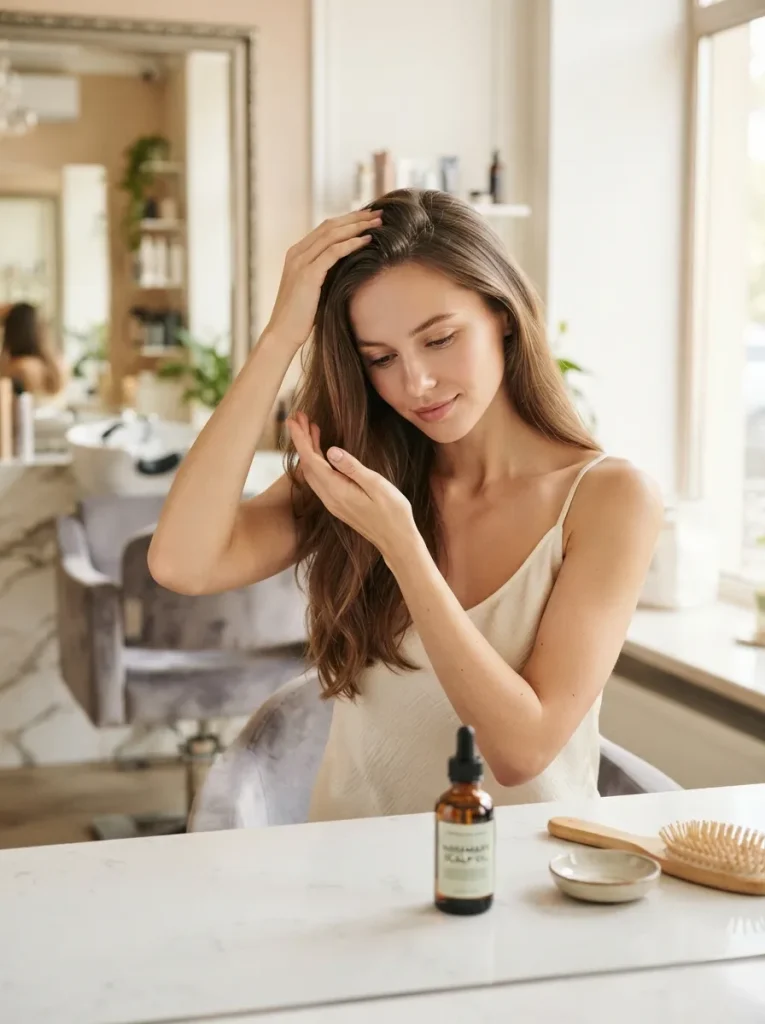
A pre-shampoo treatment is one practical way to include rosemary oil without leaving your hair oily all day. A small amount of properly diluted oil can be applied to the scalp or lengths before washing, depending on your hair-care goals. This gives you an opportunity to massage the scalp and then remove the excess during your normal wash routine. Fine hair may become weighed down easily, while thicker or drier hair may tolerate oil treatments more comfortably. Start with a small amount and follow the instructions for your specific product instead of assuming more oil will create better results.
7. It May Help Hair Feel Smoother and More Manageable

Hair that is easier to manage can be less frustrating to style and detangle. A small amount of oil can provide lubrication and temporarily improve the feel of dry or rough strands. This may help hair look more polished and make everyday handling gentler. However, rosemary oil does not permanently repair damaged cuticles or split ends. Conditioner, leave-in products, gentle detangling, and reduced heat exposure are still important if your goal is healthier-looking hair.
8. Rosemary Oil Is Not an Overnight Miracle

Social media can make hair-growth routines appear much faster than they really are. Rosemary oil cannot suddenly produce inches of new hair overnight because hair growth follows a natural biological cycle. Even when a treatment is helpful, visible changes generally require patience and consistent use over time. Results can also vary considerably depending on the person’s genetics, scalp condition, and reason for hair loss. Taking progress photos under similar lighting is a better way to monitor changes than checking your hair in the mirror every day.
9. It May Support Better Hair-Length Retention

Getting longer hair is not only about growing new strands at the scalp; retaining the length you already have is equally important. Breakage can make it seem as though your hair is not growing because damaged ends continue to snap. A thoughtful oiling routine may encourage gentler handling while helping dry strands feel more manageable. Still, rosemary oil cannot prevent all breakage or replace proper conditioning and heat protection. Combining scalp care with healthy length-retention habits is a much more realistic strategy for achieving longer-looking hair.
10. It May Complement a Gentle Hair-Care Routine

Rosemary oil is best viewed as one small part of a broader hair-care routine rather than the entire solution. Healthy-looking hair also benefits from gentle washing, regular conditioning, protection from excessive heat, and avoiding hairstyles that create constant tension. If your hair is repeatedly breaking, adding more oil will not necessarily solve the underlying problem. Creating a routine that protects both the scalp and the lengths is much more useful for long-term hair maintenance. Rosemary oil can fit into that routine if your scalp and hair tolerate it well.
11. It May Be Useful for People Who Prefer Simple Hair Care

For people who enjoy minimalist beauty routines, rosemary oil can be an appealing ingredient because a small amount can be incorporated into a straightforward scalp-care ritual. You do not necessarily need a complicated collection of products to create a consistent routine. However, natural ingredients are not automatically suitable for every scalp, and essential oils can cause irritation when used incorrectly. Proper dilution, sensible application, and patch testing are important when trying a new product. If your scalp reacts with burning, redness, itching, or discomfort, discontinue use rather than trying to push through the reaction.
12. It Should Not Replace Professional Hair-Loss Care

Persistent or significant hair loss can have many different causes, and rosemary oil cannot address every one of them. Genetics, hormonal changes, nutritional deficiencies, stress, medications, and scalp conditions can all contribute to shedding or thinning. If you are experiencing sudden or substantial hair loss, it is more useful to investigate the cause than to rely exclusively on a home treatment. A dermatologist or qualified healthcare professional can help determine whether a medical treatment is appropriate. Rosemary oil may be considered a complementary routine for some people, but it should not delay professional evaluation when hair loss is concerning.
13. The Best Approach Is Consistency and Realistic Expectations

The biggest truth about rosemary oil is that it may be helpful for some people, but it is not a guaranteed miracle for hair growth. Research into rosemary oil is promising but still much smaller than the body of evidence behind established hair-loss treatments. If you choose to use it, consistency, correct dilution, and patience are more sensible than applying excessive amounts or expecting instant results. Pay attention to how your scalp and hair respond and combine the routine with gentle hair care and good length-retention habits. Most importantly, remember that persistent or unexplained hair loss deserves professional attention rather than relying entirely on a viral DIY remedy.
Conclusion
Rosemary oil can be an interesting addition to a thoughtful hair-care routine, especially when you use it properly and keep your expectations realistic. Research suggests it may have potential for supporting hair growth, but it is not an overnight solution and results can vary from person to person. It can also make scalp massage and regular hair care feel like a relaxing self-care ritual. For the best overall approach, combine gentle scalp care with conditioning, heat protection, and habits that reduce unnecessary breakage. Save these rosemary oil hair-growth tips for later and give your routine time to work. 🌿✨
About the Author — Lena Harper
Lena Harper is a fashion writer and content strategist at Fashion Pops, known for creating thoughtful, trend-aware articles that feel both stylish and relatable. With a strong background in fashion journalism, she specializes in turning seasonal trends, outfit ideas, and styling concepts into easy-to-follow inspiration for modern women.
Her writing focuses on practicality without losing creativity — helping readers build outfits that feel current, wearable, and confident. When she’s not working on new articles, Lena enjoys exploring street style trends, discovering unique fashion finds, and curating inspiration boards that shape upcoming content at Fashion Pops.