Rainy Day Capsule Wardrobe: 15 Chic Essentials for Any Forecast
Rainy weather can make getting dressed feel like a choice between comfort and style. You need clothing that handles wet streets, changing temperatures, and daily routines without filling your closet with one-use pieces.
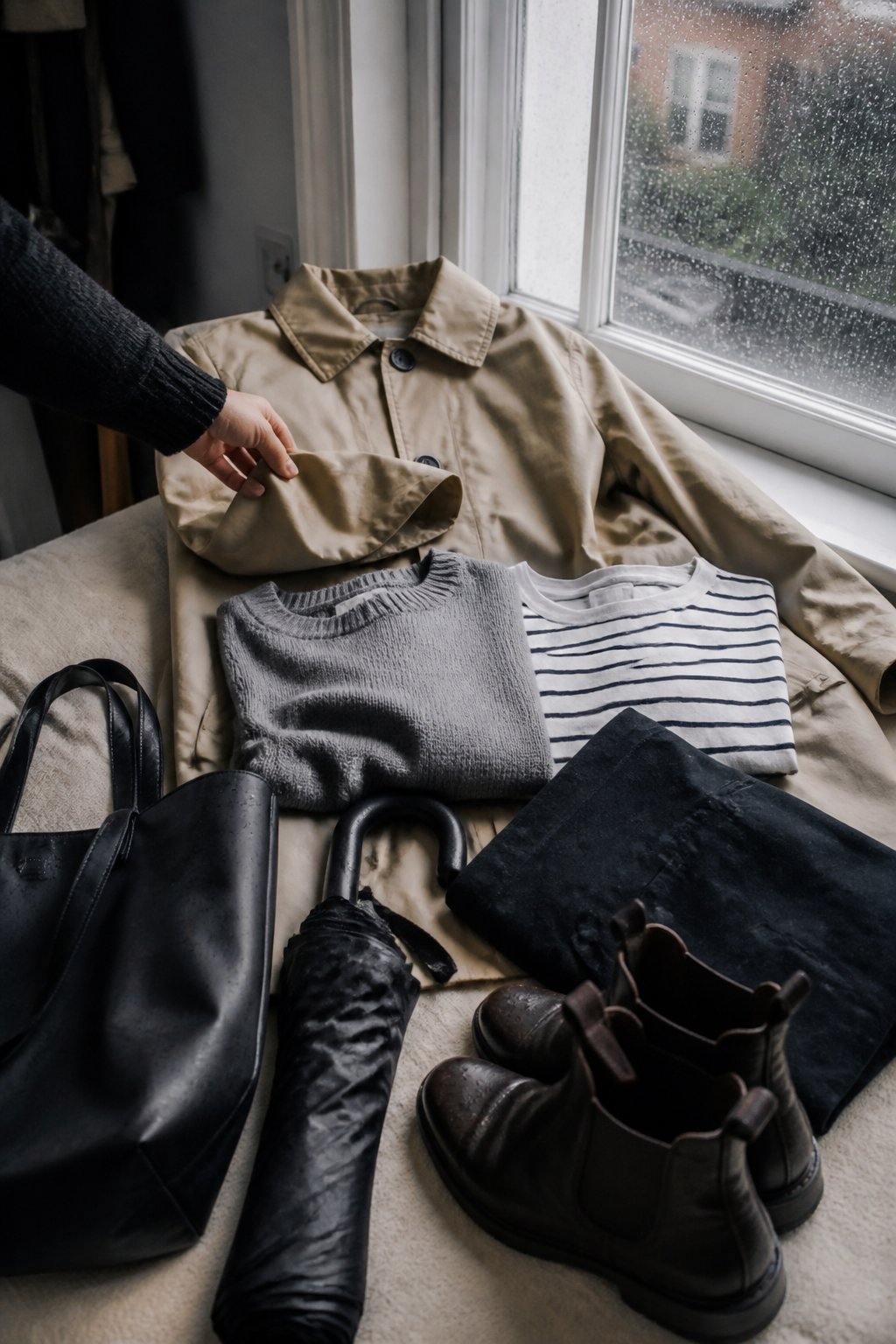
A rainy day capsule wardrobe helps you build practical outfits with versatile layers, weatherproof shoes, and accessories that keep you dry without sacrificing a polished look. You’ll learn how to choose breathable fabrics, combine lightweight layers, and care for wet-weather clothing so your wardrobe stays useful season after season.
1. Waterproof trench coat
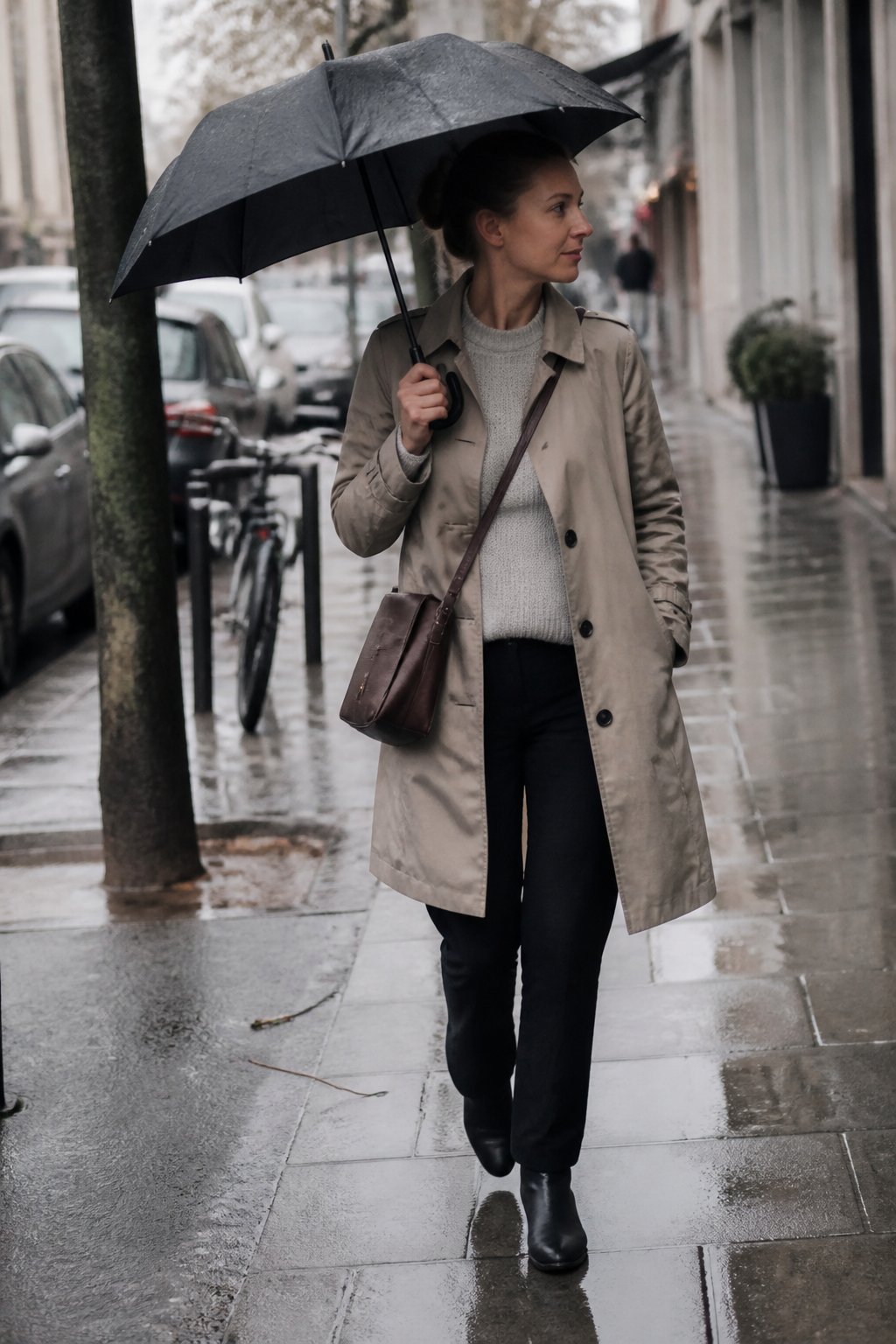
A waterproof trench coat gives you polished coverage without making your rainy day capsule wardrobe feel bulky. Choose a breathable coated fabric or technical material, sealed seams, and a hood that adjusts over your hairstyle.
Look for a mid-thigh length, two-way zipper, and adjustable cuffs. These details help block wind and rain while keeping the coat practical for walking or commuting. A removable belt also lets you switch between a defined and relaxed shape.
Check the label carefully: water-resistant fabric may handle light showers, but waterproof construction offers stronger protection. Avoid coats with decorative buttons that leave gaps or linings that feel clammy against your clothes.
Choose a neutral shade such as black, navy, olive, or stone so the coat works with trousers, jeans, knitwear, and dresses. Before buying, test the hood, pockets, and sleeve length with the layers you wear most.
2. Lightweight Hooded Rain Jacket
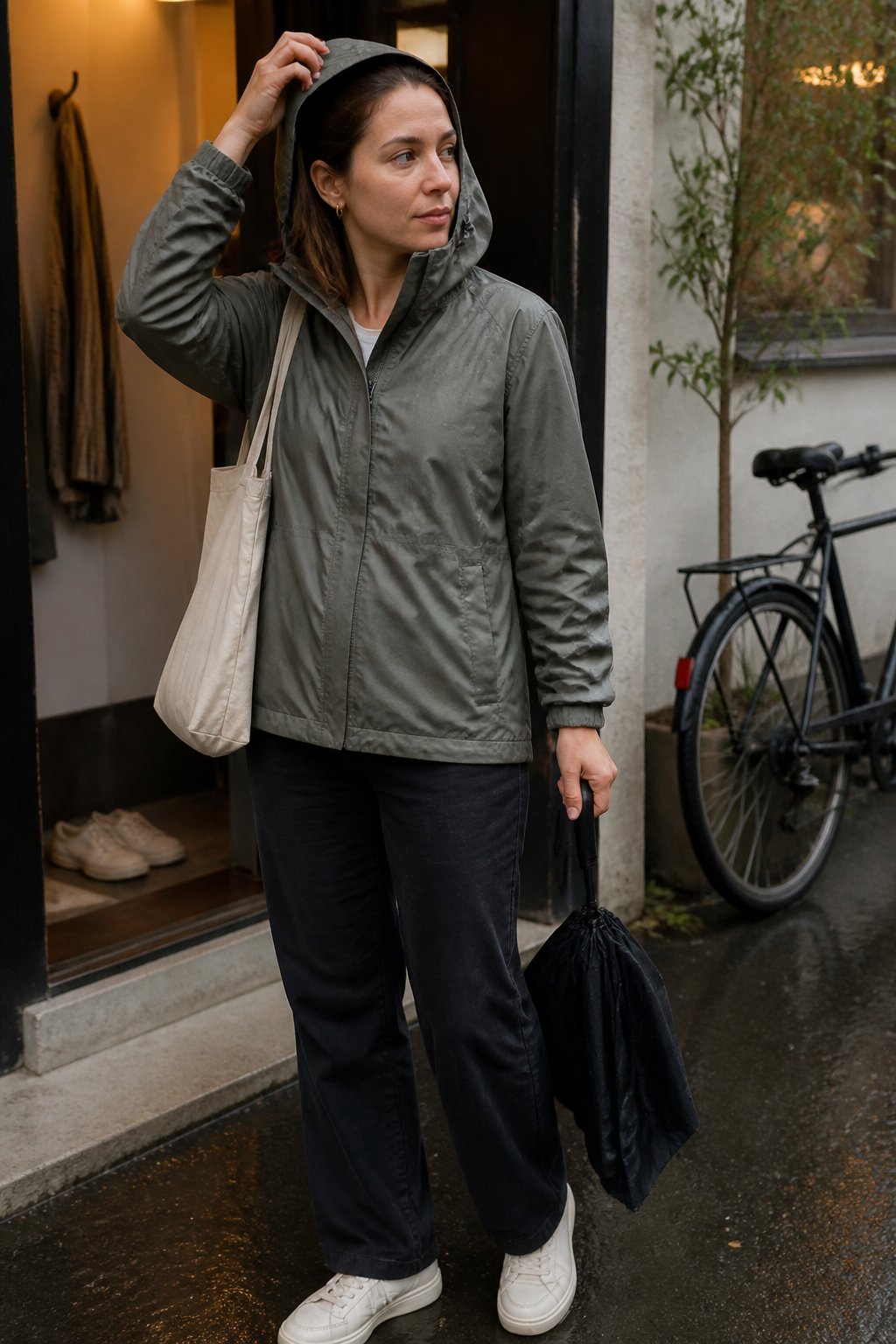
Choose a lightweight hooded rain jacket as the main layer in your rainy day capsule wardrobe. Look for a waterproof or water-repellent shell, sealed seams, adjustable cuffs, and a hood that stays secure in wind. Zippered pockets also keep your phone and keys dry.
Pick a neutral shade such as black, navy, olive, or tan so the jacket works with jeans, trousers, and casual dresses. A packable design fits easily into a work bag or travel case, which helps when forecasts change during the day.
Check the fit before buying. You need enough room for a sweater, but an overly loose jacket can let rain in at the cuffs and neck. Pair yours with quick-drying layers rather than heavy cotton, which holds moisture and takes longer to dry.
3. Breathable Waterproof Shell
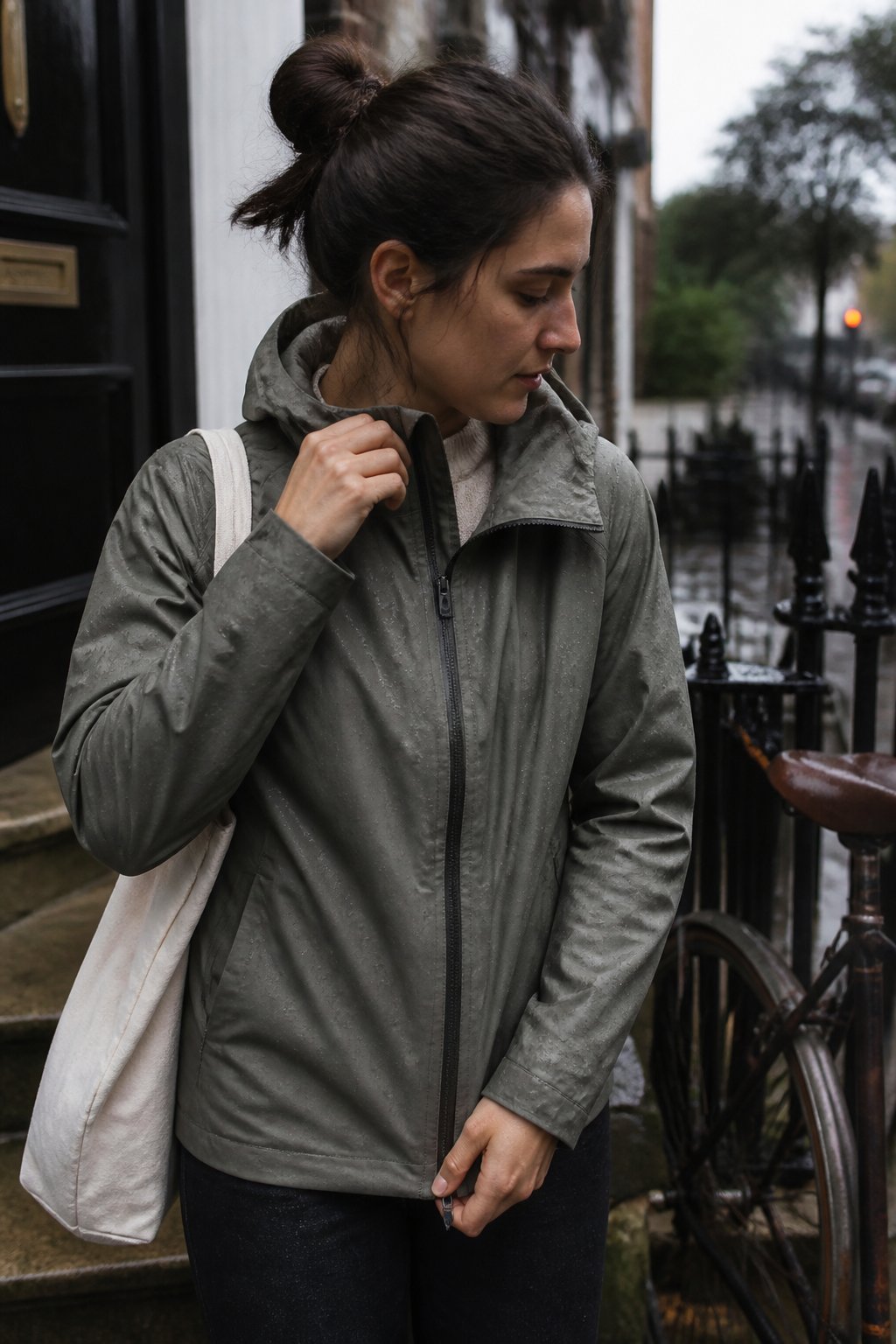
Choose a breathable waterproof shell as the main layer in your rainy day capsule wardrobe. Look for sealed seams, an adjustable hood, and fabric that blocks rain while allowing sweat vapor to escape. A packable design can fit in your work bag when the forecast changes.
Prioritize breathability for mild or humid weather, but do not ignore waterproofing. A jacket may feel comfortable during a short walk yet leak during steady rain if it lacks sealed seams or a reliable waterproof membrane.
Select a neutral color such as black, navy, or olive so the shell works with jeans, trousers, and skirts. Avoid buying a jacket that fits too tightly; leave room for a sweater or light fleece underneath. Test the hood and cuffs before you buy, then keep the shell ready by the door for your next wet commute.
4. Merino Wool Crew-Neck Sweater
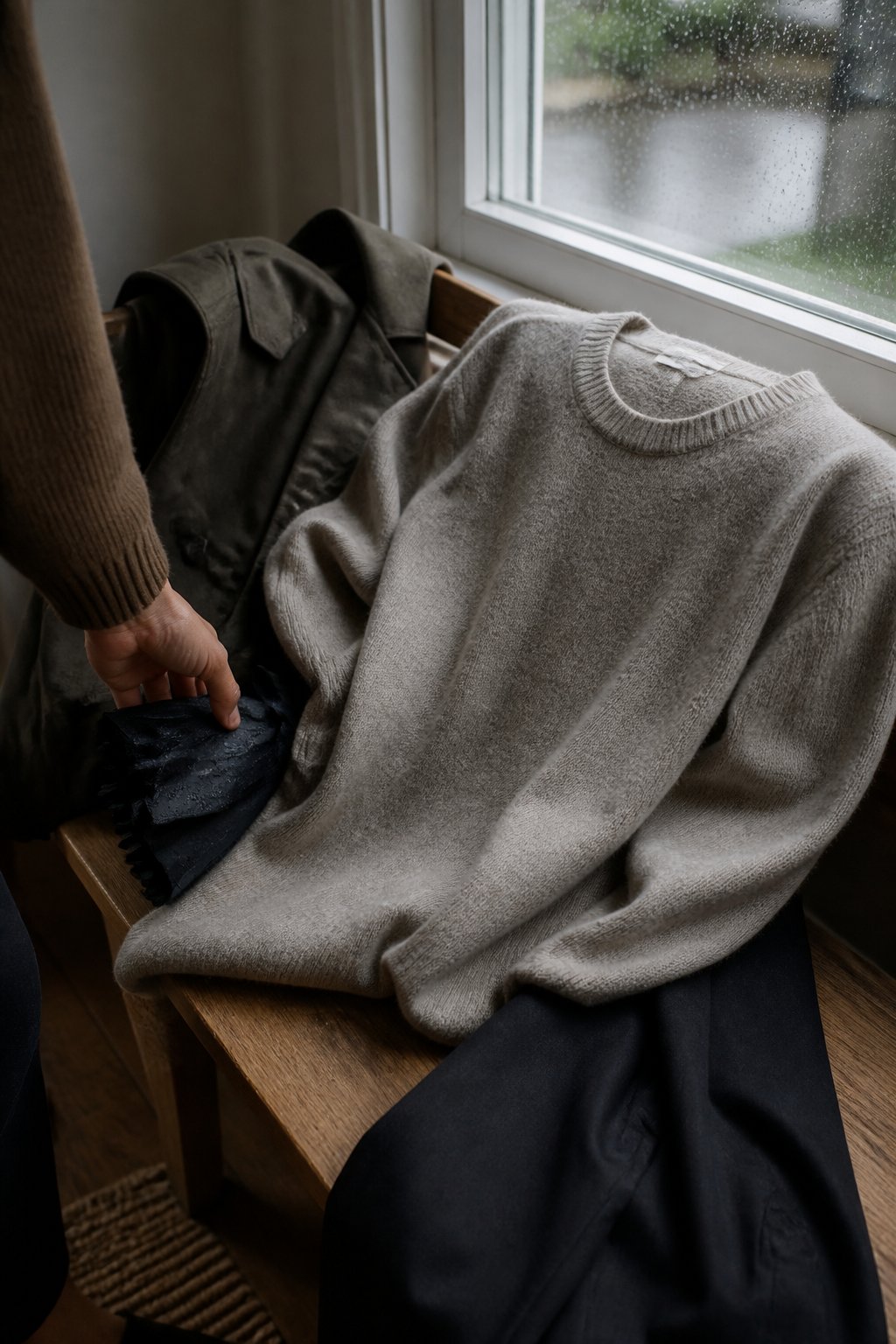
A merino wool crew-neck sweater gives your rainy day capsule wardrobe warmth without adding much bulk. Its breathable fibers help manage moisture and temperature, while its natural odor resistance makes it useful for travel days when frequent washing is not practical.
Choose a lightweight or midweight knit that fits comfortably over a T-shirt and under a waterproof shell. A neutral shade, such as charcoal, navy, or oatmeal, works with jeans, tailored trousers, and skirts. You can also layer it over a collared shirt for a sharper outfit.
Avoid wearing thick merino under a tight rain jacket, since compressed layers can feel restrictive and may reduce airflow. Let the sweater dry fully after damp weather, and follow the care label to prevent shrinking. Add one well-fitting crew neck to extend your outfit options through cool, wet days.
5. Quick-Drying Striped Shirt
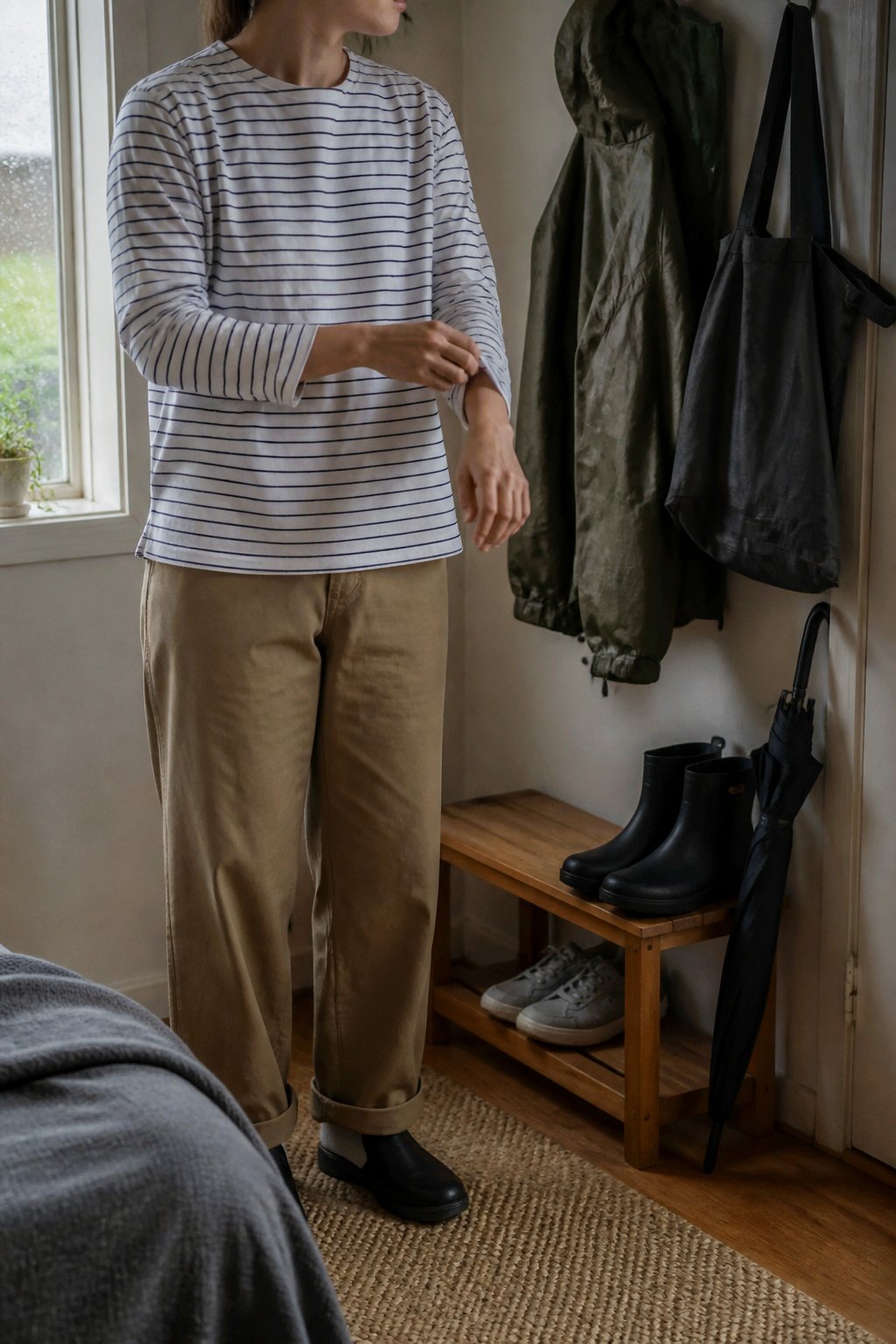
A quick-drying striped shirt gives your rainy day capsule wardrobe a useful base layer with simple visual interest. Choose a lightweight polyester, nylon, or merino blend that dries faster than cotton and feels comfortable under a rain jacket.
Look for a relaxed fit, flat seams, and stripes in neutral colors such as navy, gray, cream, or black. You can wear the shirt with water-resistant trousers and sneakers for errands, then add a cardigan when temperatures drop.
Avoid thick cotton stripes, which can stay damp for hours and feel cold against your skin. Check the care label, and hang the shirt as soon as you get home so it can dry fully before your next outing. Choose one versatile striped shirt that works across several layers and outfits.
6. Cotton Long-Sleeve Base Layer
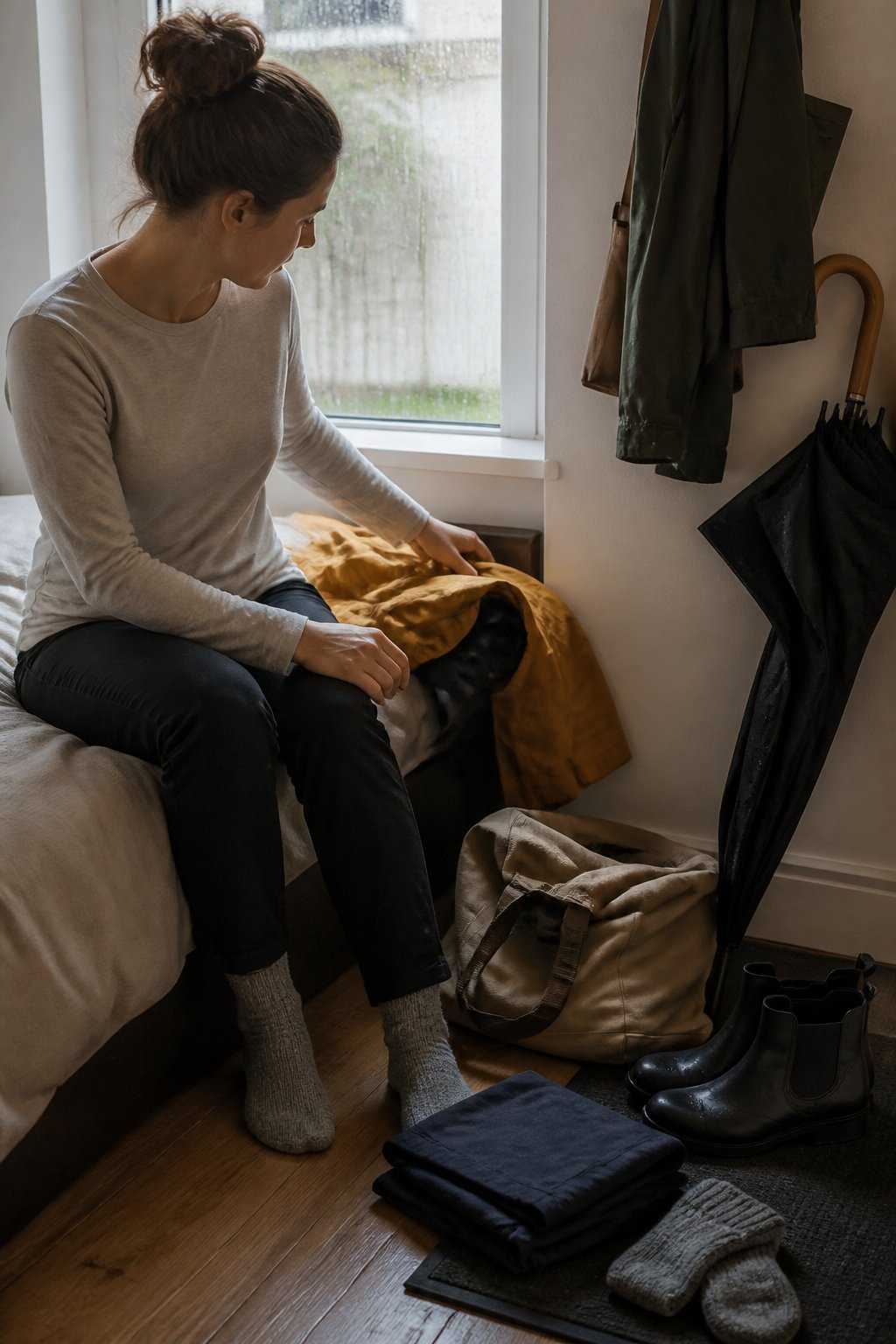
Choose a fitted cotton long-sleeve shirt as your first layer on cool, rainy days. It adds light warmth under a sweater, flannel shirt, or waterproof jacket without making your outfit bulky.
Cotton feels soft and works well for commuting, errands, and other low-intensity activities. However, it absorbs moisture and dries slowly, so avoid it for hiking or long periods outdoors in steady rain. Merino wool or a synthetic blend performs better when you expect sweat.
Pick neutral shades such as white, gray, navy, or black so the shirt works with several outfits. Look for a smooth, close-fitting design that will not bunch under your outer layers.
A common mistake involves choosing a loose cotton tee, which can wrinkle beneath a jacket and leave cold gaps at the wrists. Test the fit under your raincoat, then keep one clean shirt ready for changing weather.
7. Water-resistant straight-leg trousers
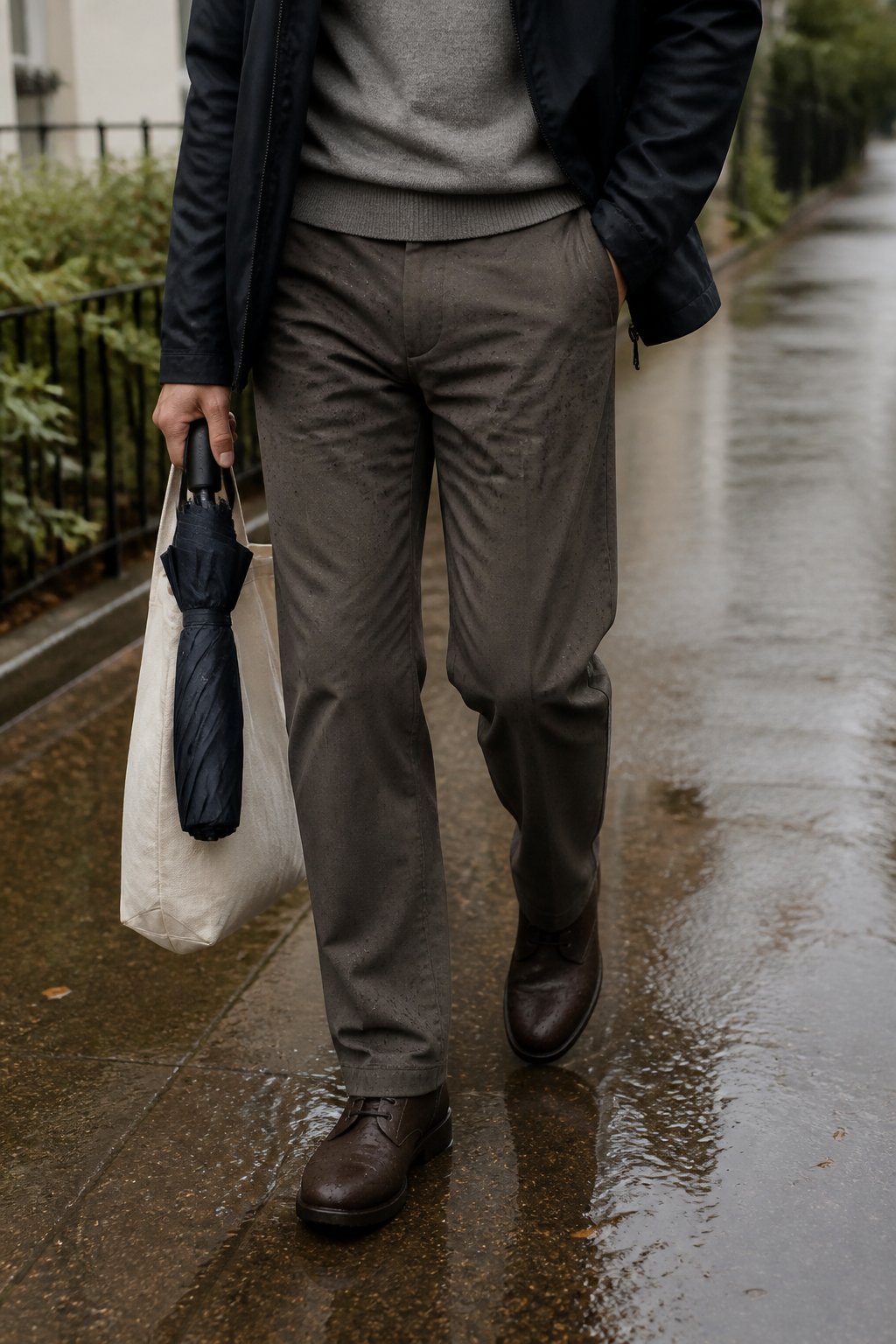
Choose straight-leg trousers when you want rain protection without a sporty look. Look for a lightweight, water-resistant fabric with enough room to fit over thin leggings. Polyester blends can dry quickly, while nylon offers better durability for daily commutes.
Pair them with a tucked-in merino sweater, a short waterproof jacket, and ankle boots with strong traction. Black, navy, olive, and stone work well because they coordinate with most capsule wardrobe layers.
Check the hem before buying. Trousers that brush the ground will absorb water and collect dirt, even if the fabric repels light rain. A cropped or slightly tapered hem usually works better with boots, but avoid an overly narrow cut if you need to layer underneath.
Choose breathable fabric and practical pockets so you stay comfortable while walking, commuting, or running errands in wet weather.
8. Dark Denim Jeans for Wet-Weather Outfits
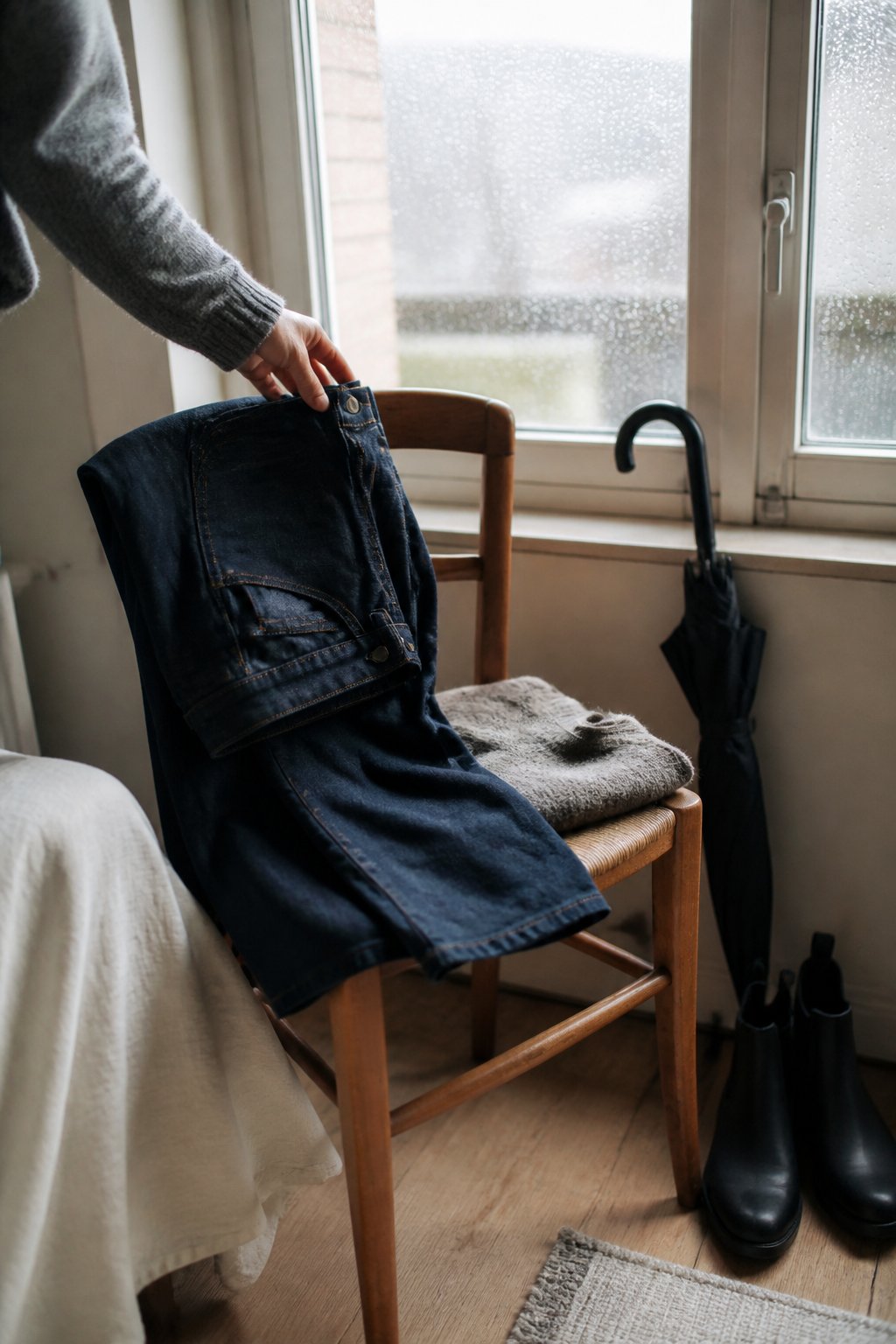
Dark denim jeans give your rainy day capsule wardrobe a practical, polished base. Choose a straight or slim-leg pair in a firm, midweight fabric. Dark washes hide small splashes better than pale denim, while a simple cut works with sweaters, shirts, and raincoats.
Keep the hem above puddle level, or cuff it once when you wear ankle boots. Avoid dragging wide-leg jeans through wet streets, since soaked hems take longer to dry and may lose their shape. If your jeans become damp, hang them to air-dry instead of using high heat.
For a weekday outfit, wear dark jeans with a white button-down, khaki trench coat, and black Chelsea boots. On casual days, add a fitted sweater, waterproof jacket, and rubber-soled sneakers. Choose stretch denim only when it still holds its shape after sitting and walking.
9. Ankle-Length Midi Skirt
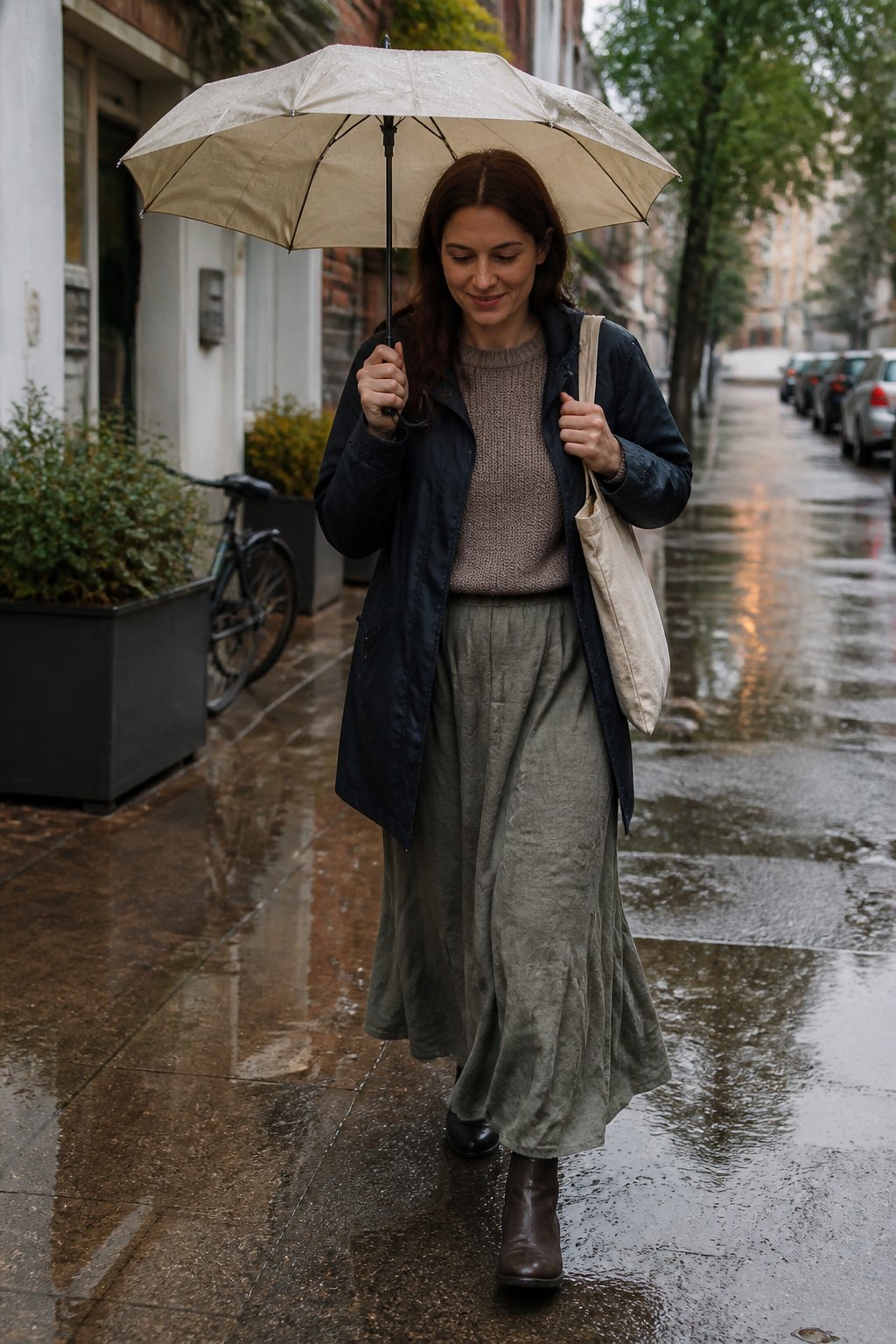
An ankle-length midi skirt adds coverage without trapping heat, making it useful for mild, wet days. Choose a water-resistant fabric or a tightly woven blend in a dark shade, such as navy, charcoal, or black. These colors hide light splashes and pair easily with sweaters, button-down shirts, and waterproof jackets.
Keep the hem above the ground so it does not drag through puddles. A-line and gently pleated styles give you room to walk, while a side slit can improve movement. Avoid delicate fabrics such as unlined silk, which may cling when damp and need special care.
Wear the skirt with waterproof ankle boots, wool socks, and a cropped raincoat. If you commute, check that the skirt fits comfortably under your coat and does not catch on your bag. Choose a practical midi skirt you can walk, sit, and travel in during wet weather.
10. Waterproof Chelsea rain boots
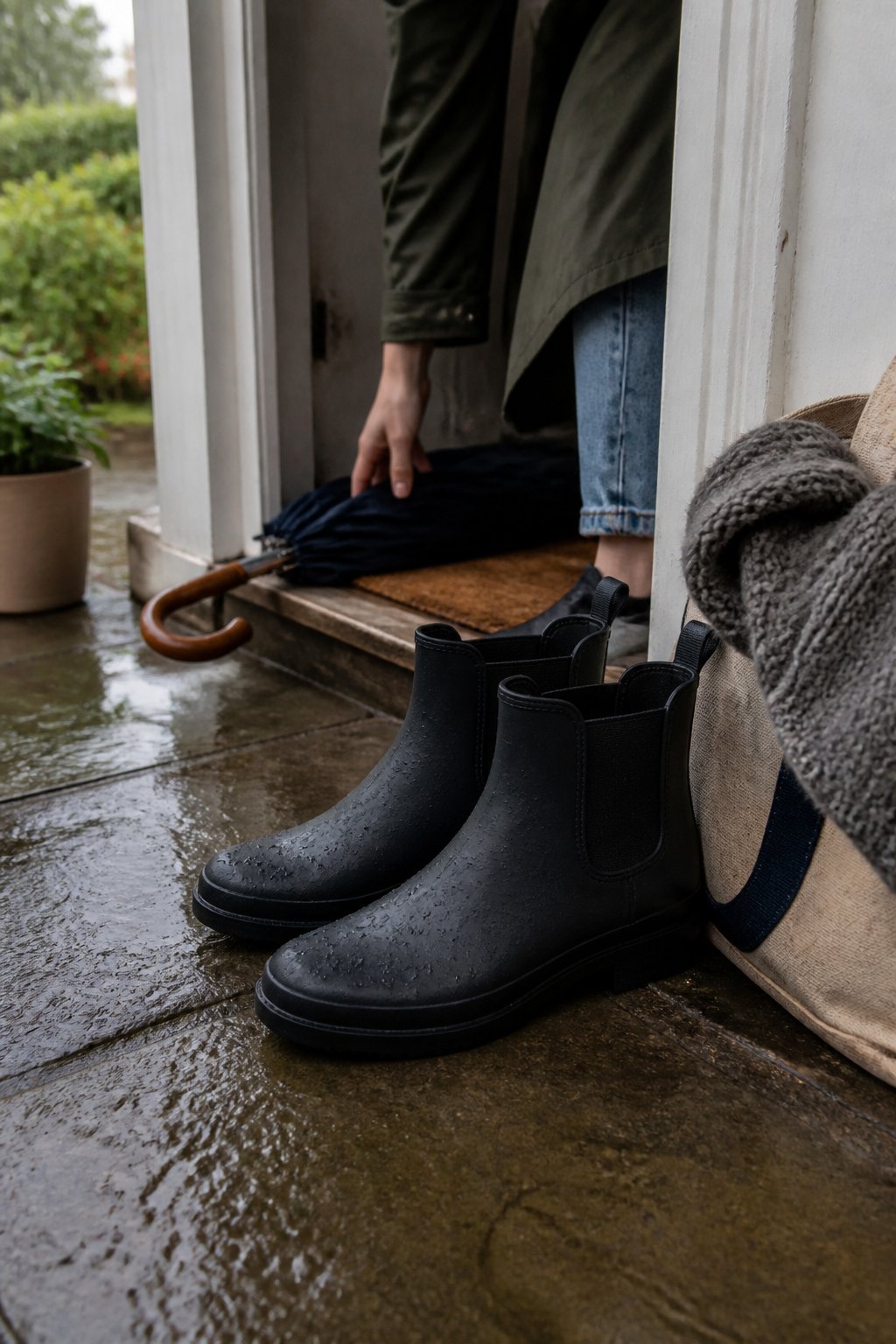
Waterproof Chelsea rain boots give your rainy-day capsule wardrobe a polished alternative to bulky rain shoes. Choose a simple black, brown, or dark green pair so you can wear them with jeans, trousers, skirts, and casual dresses.
Look for fully waterproof rubber, sealed seams, and elastic side panels that keep rain out while making the boots easy to pull on. A treaded sole also helps you stay steady on wet sidewalks. If you walk often, prioritize cushioned insoles and enough room for warm socks.
Avoid confusing water-resistant leather Chelsea boots with waterproof rain boots. Leather may handle light showers, but standing water can cause stains and damage. After wearing rubber boots, wipe away dirt and let them air-dry before storing them. A sleek pair can carry you from a wet commute to weekend errands without disrupting the rest of your outfit.
11. Leather loafers with rubber soles
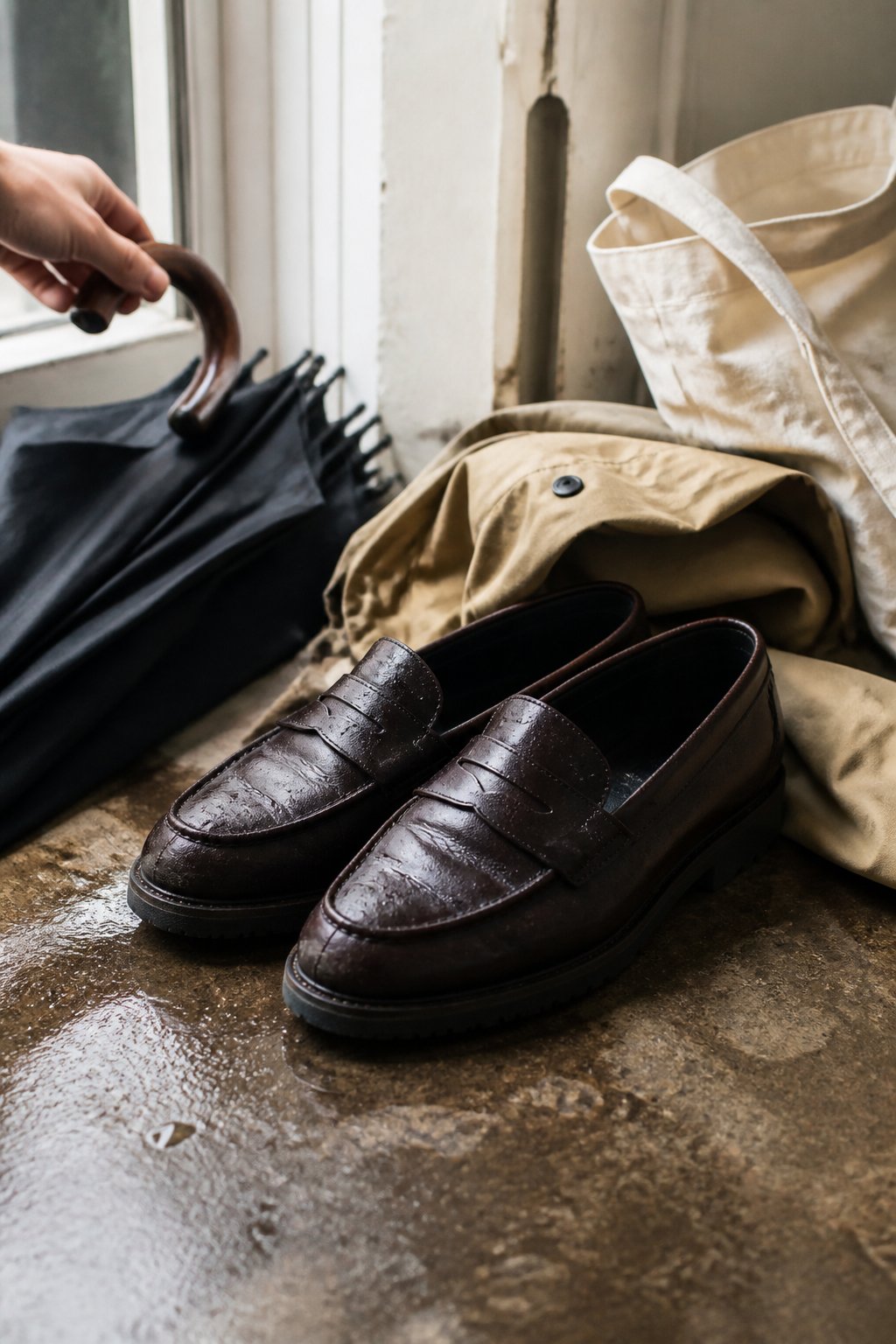
Leather loafers with rubber soles give you a polished option for damp commutes and cool, rainy days. Choose treated leather or a water-resistant finish, since standard leather can stain or absorb moisture. A rubber sole also adds traction on wet sidewalks, while a low heel keeps the shoe practical for walking.
Pair black or dark brown loafers with cropped trousers, straight-leg jeans, or a midi skirt. Add wool socks when temperatures drop, but check that they do not make the fit too tight. For example, you can wear loafers with ankle-length pants and a trench coat for an office-ready outfit.
Avoid wearing leather loafers through deep puddles, which can soak the seams and damage the lining. Dry them at room temperature, then apply a suitable leather conditioner once they are fully dry. Choose a pair with a textured sole before your next rainy commute.
12. Packable Waterproof Sneakers
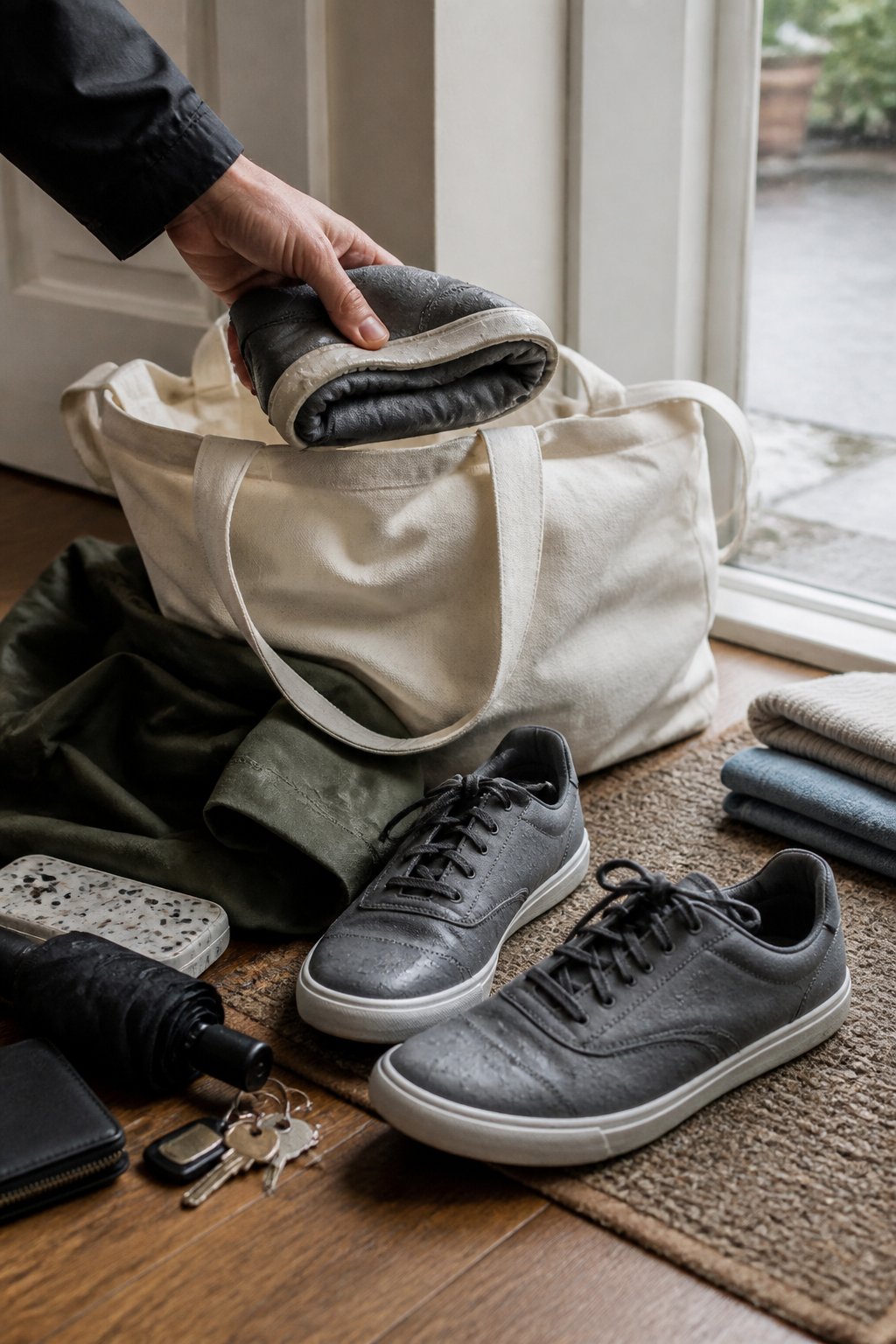
Packable waterproof sneakers give you a practical option for wet city walks without taking up much luggage space. Choose a pair with sealed seams, a water-resistant upper, good traction, and enough support for several hours of walking.
Look for flexible materials that compress without losing their shape. A low-profile design works well with jeans, travel pants, and casual dresses, making the shoes easier to use throughout your trip. Avoid very thin soles, which may feel uncomfortable on uneven, wet pavement.
Test the fit with the socks you plan to wear. Leave room for slight swelling, and break the shoes in before traveling. Pack them in a separate waterproof bag, especially if rain catches you during the day. Choose a pair that keeps your feet dry while still folding neatly into your carry-on.
13. Compact Automatic Umbrella
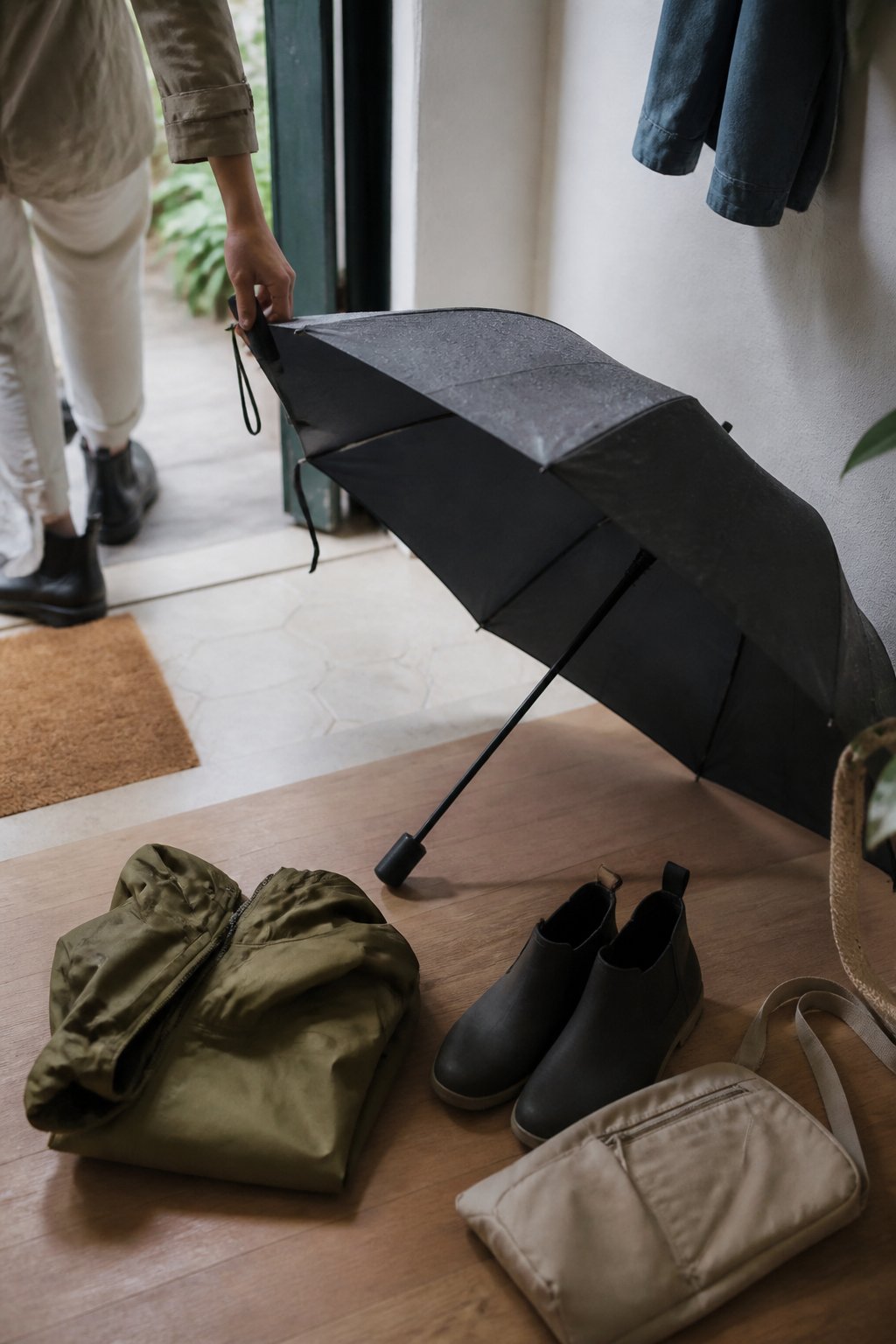
A compact automatic umbrella gives your rainy day capsule wardrobe practical coverage without taking up much space. Choose one that folds small enough for your daily bag, yet opens wide enough to protect your shoulders and upper body.
Look for a push-button open-and-close design, flexible fiberglass ribs, and a water-resistant canopy. A wind-resistant frame can help during gusts, but no compact umbrella should be treated as stormproof. Black, navy, or another neutral shade will coordinate easily with coats, boots, and workwear.
Test the folded length before buying. Many shoppers choose a mini umbrella that fits a purse but leaves little coverage, while a slightly larger travel umbrella often works better for backpacks and briefcases. Let it dry fully before storing it to reduce mildew and odors. Keep it in a sleeve or separate pocket so wet fabric does not soak your other essentials.
14. Water-resistant crossbody bag
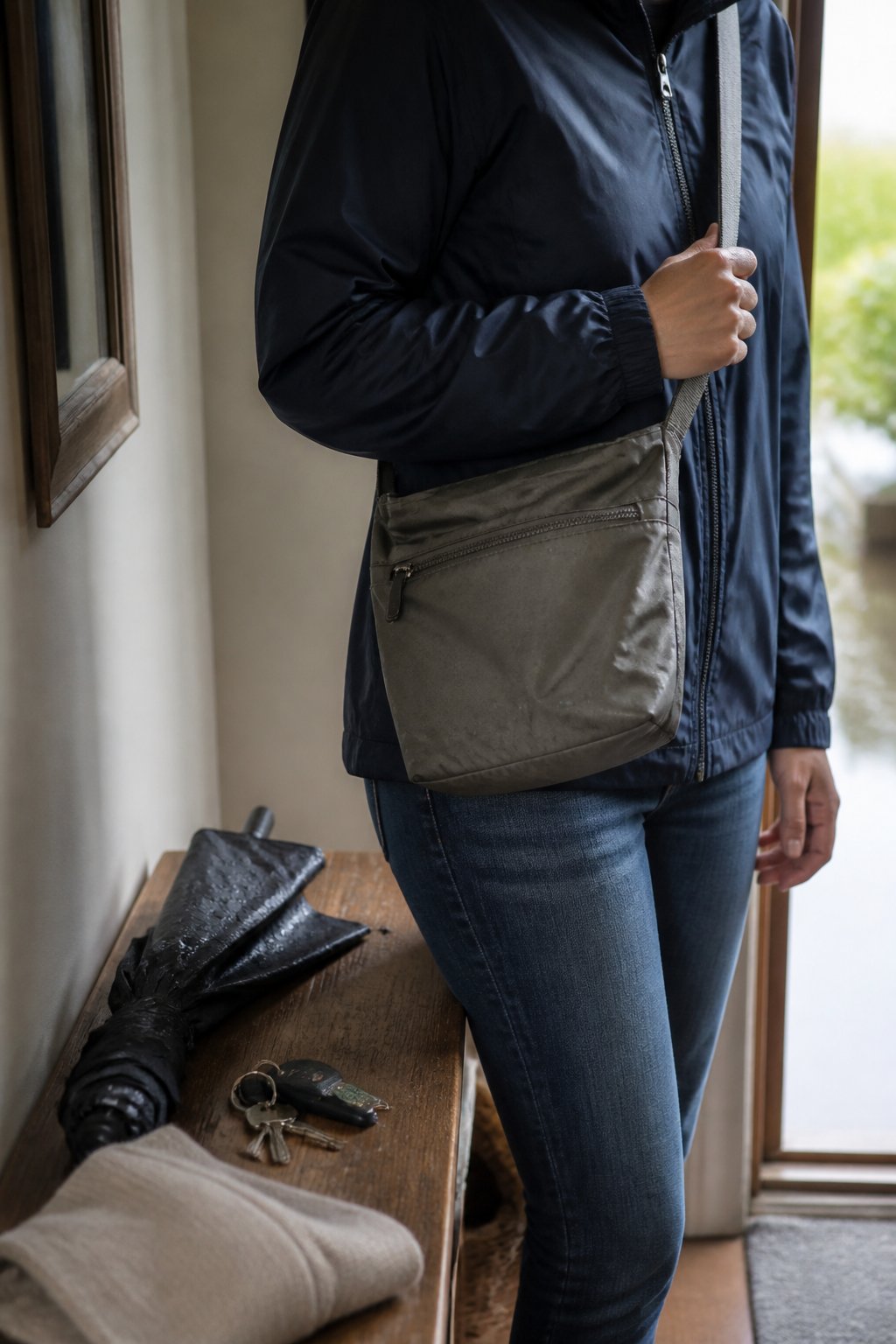
A water-resistant crossbody bag keeps your phone, wallet, and keys close while helping protect them from light rain. Choose a compact style with a secure zipper, an adjustable strap, and enough space for your daily essentials without adding bulk.
Look for coated nylon, treated canvas, or other fabrics labeled water-resistant. Water-resistant does not mean waterproof, so use a dry pouch for electronics during heavy rain. Sealed seams and covered zippers offer better protection than fabric treatment alone.
Wear the bag under your raincoat for extra shelter, or adjust the strap so it rests securely across your body. Avoid overfilling it, since strain can leave gaps around the zipper and make the bag less comfortable. A dark neutral shade, such as black or navy, pairs easily with the rest of your rainy day capsule wardrobe.
15. Wide-brim waterproof hat
A wide-brim waterproof hat protects your face, hair, and neck when an umbrella feels impractical. Choose one with a sloped brim, sealed seams, and an adjustable chin strap so wind and rain do not easily shift it.
For a rainy day capsule wardrobe, select a neutral shade such as black, navy, olive, or tan. A packable design works well for commuting because you can fold it into a tote when the weather clears. Avoid cotton, straw, and loosely woven fabric; these materials may absorb water or lose their shape.
Check the fit before leaving home. The hat should sit securely without pressing your temples, and the brim should not block your view while walking or driving. Pair it with a waterproof jacket and simple boots for a practical outfit that still looks polished.
Weatherproof Fabrics and Layering Principles
Build your rainy-day capsule wardrobe around breathable fabrics, light insulation, and a dependable outer shell. You can stay dry and comfortable by managing moisture first, then adding warmth in thin layers instead of relying on one heavy garment.
Managing Moisture and Breathability
Start with a moisture-wicking base layer made from merino wool or synthetic fabric. These materials move sweat away from your skin and dry faster than cotton, which can feel cold and heavy when wet. Choose a close-fitting top and leggings or thin trousers for active days.
Your middle layer should provide warmth without trapping too much moisture. A lightweight fleece, merino sweater, or quilted vest works well under a rain jacket. For the outer layer, choose a jacket with a waterproof rating, sealed seams, an adjustable hood, and underarm vents if possible.
Avoid treating water resistance and waterproofing as the same thing. A water-resistant jacket may handle light drizzle, while steady rain requires a waterproof shell. Also check the fabric’s care label; worn-out water-repellent finishes can cause rain to soak into the surface, even when the membrane still works.
Balancing Warmth Without Bulk
Use the three-layer system: a wicking base, an insulating mid-layer, and a protective shell. Each piece should fit comfortably with the others. If your rain jacket feels tight over a sweater, choose a roomier cut rather than sizing up every layer.
For mild rain, pair a long-sleeved merino top with a thin fleece or cardigan. In colder weather, add a packable synthetic vest or light down jacket beneath your shell. Synthetic insulation handles damp conditions better, while down offers strong warmth but loses efficiency when wet.
Keep colors coordinated so you can remove a layer without disrupting your outfit. A navy shell, gray fleece, and black trousers create several combinations with minimal pieces. Avoid thick cotton hoodies under fitted jackets; they add bulk, absorb moisture, and often restrict movement.
Care And Storage After Wet Weather
Proper care keeps rainwear, shoes, and accessories ready for the next forecast. Dry each item fully, clean away dirt quickly, and store pieces where air can circulate.
Drying Garments Properly
Start by checking the care label. Empty pockets, close zippers, and gently shake off surface water before hanging the garment on a wide, sturdy hanger. A narrow hanger can leave bumps in wet fabric, while a crowded closet slows drying.
Let raincoats, trousers, and synthetic layers dry at room temperature. Keep them away from radiators, heaters, and hair dryers, which can damage waterproof coatings, shrink fabric, or weaken glued seams. Turn damp garments inside out if the lining feels wet, and place them near an open window or fan with space between each item.
Do not put wet clothes straight into a hamper. Trapped moisture can create mildew and stale odors. If mud has dried, brush it off before washing. Follow the label for water temperature and detergent, and avoid fabric softener on technical waterproof clothing because it can reduce the fabric’s water resistance.
Protecting Shoes And Accessories
Remove insoles and laces from wet shoes so air can reach the inside. Stuff leather or fabric shoes with plain paper to help them hold their shape, replacing the paper when it becomes damp. Avoid newspaper because ink can transfer.
Let shoes dry for at least a full day before wearing them again. Do not place boots directly on a heater. Excess heat can crack leather, loosen adhesive, and warp rubber. Once leather shoes dry, apply a suitable conditioner; use a waterproofing spray only when the product matches the material.
Wipe umbrellas, bags, and belts with a clean cloth, then leave them open until dry. Store an umbrella loosely closed rather than tightly wrapped, and keep bags upright in a dry cupboard. Check pockets for wet tissues, receipts, or small items before storage, since these can stain linings or encourage odors.
About the Author — Lena Harper
Lena Harper is a fashion writer and content strategist at Fashion Pops, known for creating thoughtful, trend-aware articles that feel both stylish and relatable. With a strong background in fashion journalism, she specializes in turning seasonal trends, outfit ideas, and styling concepts into easy-to-follow inspiration for modern women.
Her writing focuses on practicality without losing creativity — helping readers build outfits that feel current, wearable, and confident. When she’s not working on new articles, Lena enjoys exploring street style trends, discovering unique fashion finds, and curating inspiration boards that shape upcoming content at Fashion Pops.