What to Wear in Alaskan Cruise in July: Ultimate Stylish Layering Guide
You want to enjoy Alaska’s summer without freezing on deck or overheating in the ship’s dining room. This guide shows you how to pick smart, layered clothes that handle chilly mornings, sunny afternoons, wet excursions, and shipboard evenings.
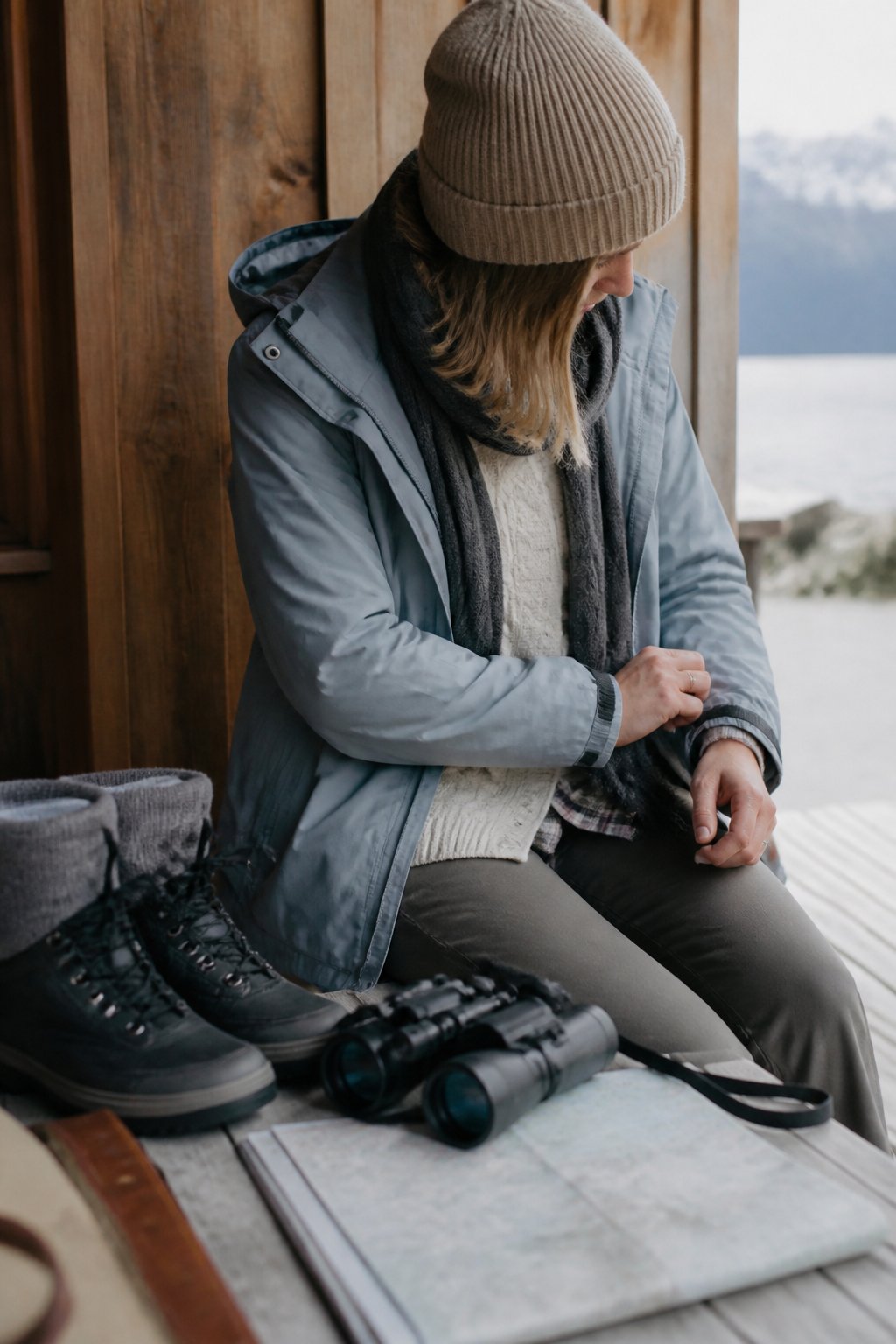
You’ll get clear tips on fabrics, core pieces, and packing choices so you feel prepared and confident from port day to gala night. Expect practical advice, common mistakes to avoid, and simple outfit ideas that work for both shore hikes and dinner.
1. Layered moisture-wicking base layers (merino wool or synthetic)
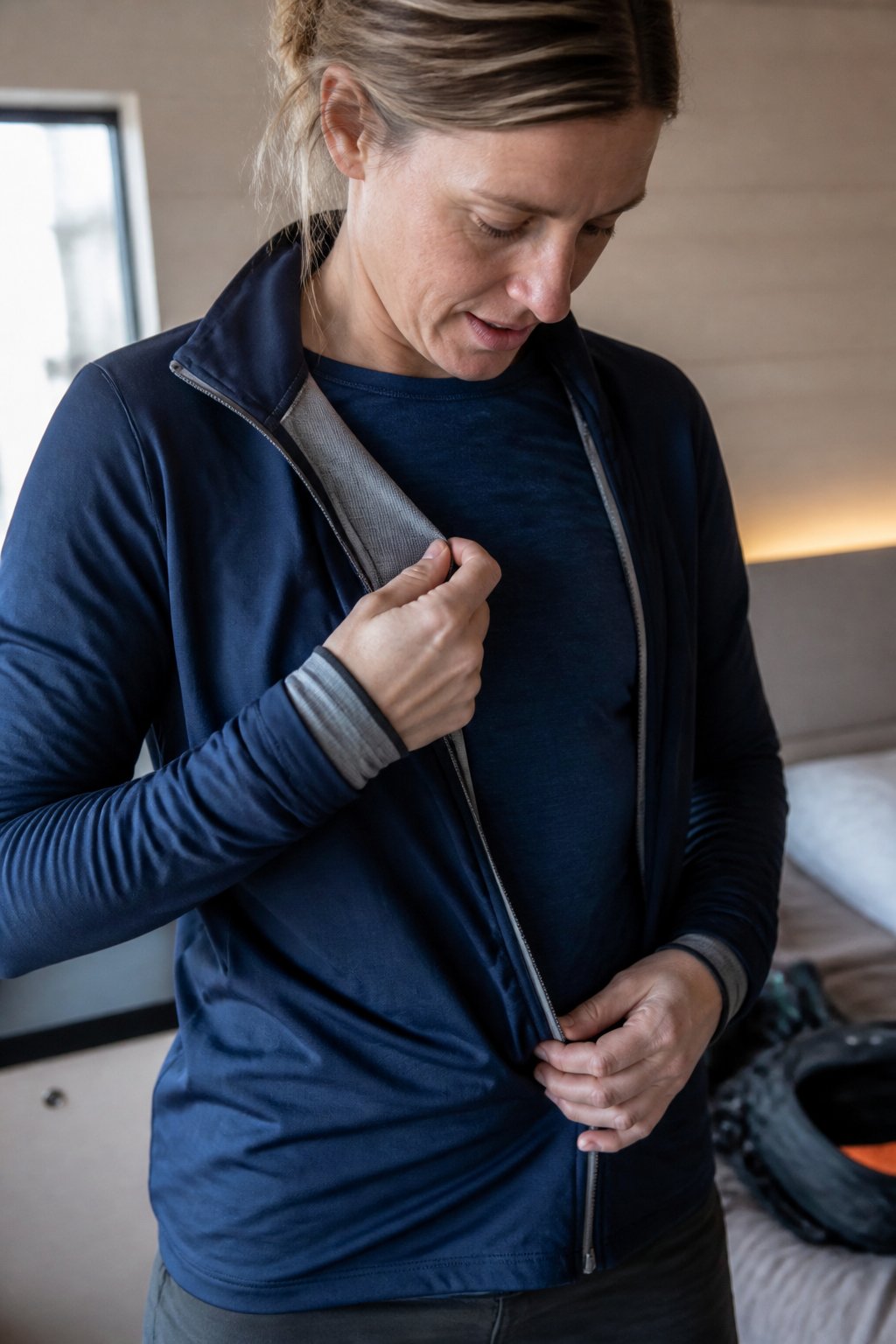
Guide: choose base layers that move sweat away from your skin so you stay warm and dry on chilly deck mornings. Pick merino for softness and odor control, or synthetic for fast drying and durability.
Wear two thin tops if you expect long days outdoors; a short-sleeve merino tee under a long-sleeve synthetic works well. Avoid cotton—people often regret it when damp air makes them cold.
Try a half-zip merino for easy ventilation during sunny wildlife stops, and pack an extra synthetic shirt in case one gets wet. A common mistake is bringing only heavy sweaters; thin, layered pieces pack smaller and perform better.
Test your layers before the cruise on a damp hike or boat trip. If one piece smells after a day, swap to merino; if it stays wet, choose synthetic next time.
2. Lightweight insulated jacket (e.g., Patagonia Nano Puff)
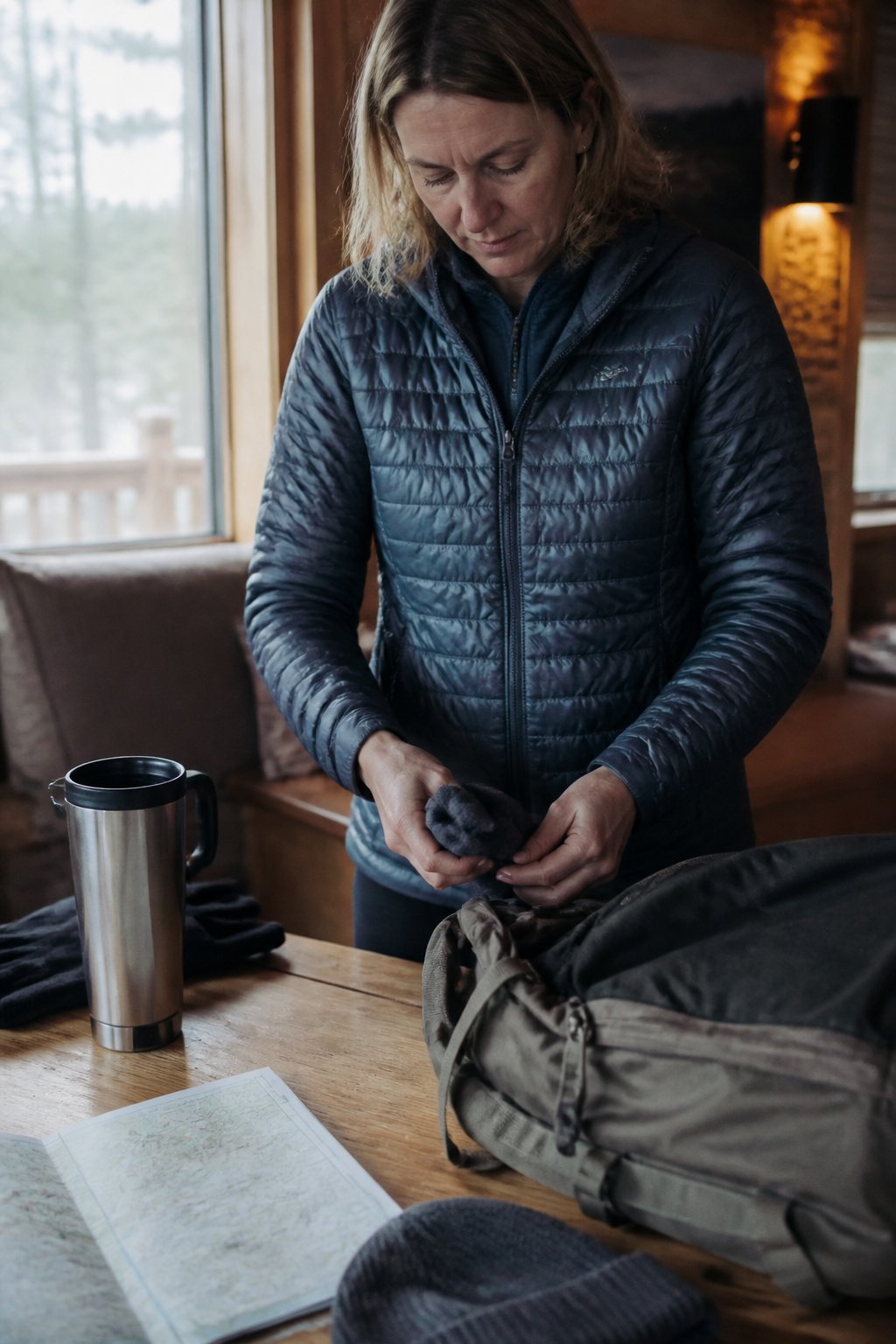
This is a guide. Bring a lightweight insulated jacket for cool mornings, windy decks, and damp evenings. It traps heat without bulky layers and packs small into a carry-on or daypack.
Choose a jacket with synthetic fill so it stays warm when wet. Patagonia Nano Puff is a good example, but look for similar jackets from The North Face or Columbia if you prefer other brands. Check pocket placement for phone and binocular access.
A common mistake is skipping a windproof outer—your jacket should block breezes or layer under a shell. Try it on with a midlayer to make sure you can move comfortably while spotting wildlife. Pack it where you can reach it quickly; you’ll use it more than you expect.
3. Waterproof breathable rain shell (e.g., Arc’teryx Beta)
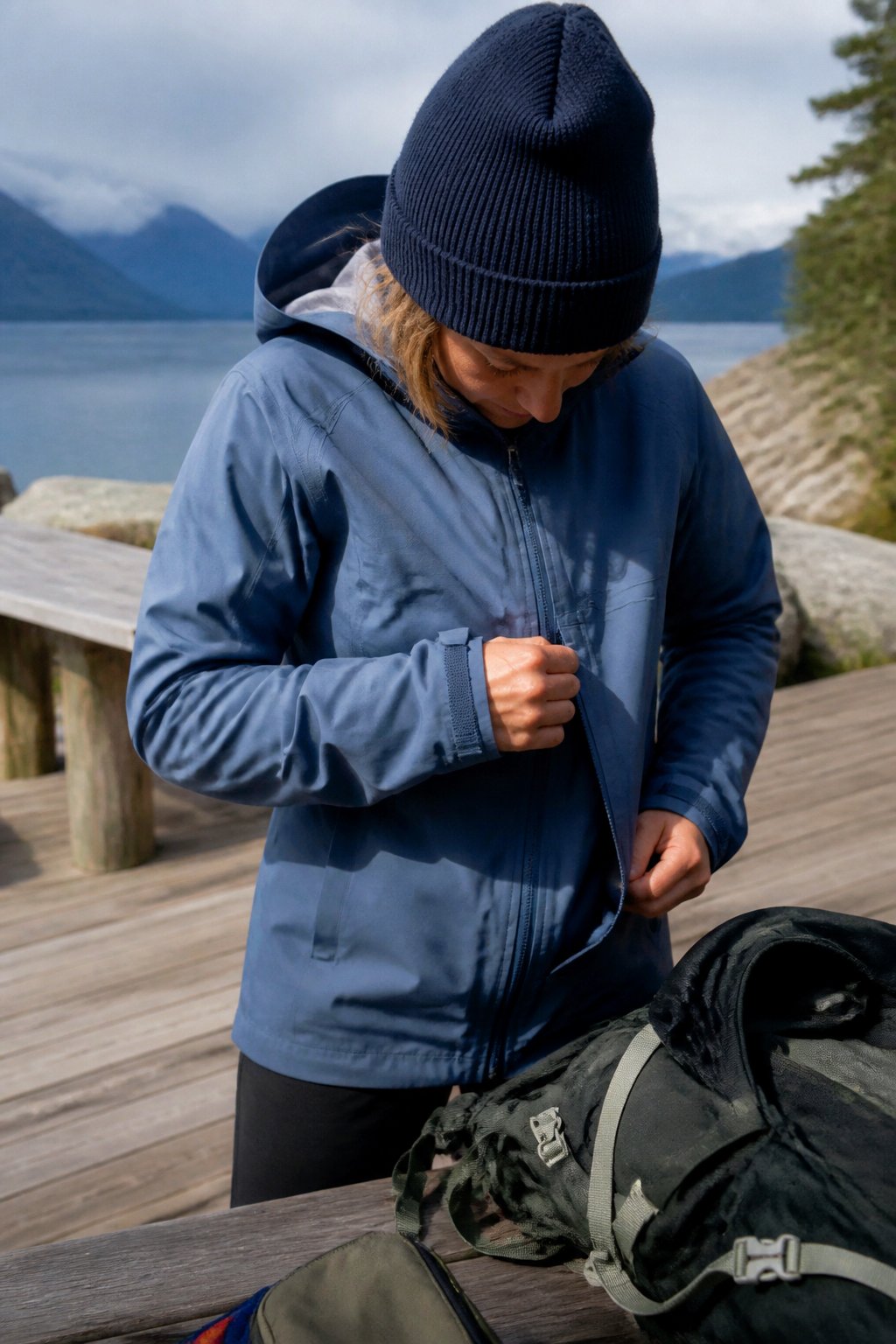
Guide: choose a waterproof breathable shell to keep you dry without trapping sweat.
Bring a hard-shell like an Arc’teryx Beta or similar GORE-TEX jacket. These block wind and heavy coastal rain while letting moisture escape, so you stay comfortable during deck time and shore excursions.
Pick a shell with taped seams, a helmet-compatible hood, and adjustable cuffs. Try it on with layers underneath; a too-tight jacket hurts mobility and a too-loose one lets wind in.
Common mistake: buying a cheap “water-resistant” coat that soaks through in steady rain. Test the jacket in a store shower or wear it on a rainy day before the trip to check breathability and fit.
Pack it in an easy-to-reach spot. You’ll use it often for rain squalls, wet boat decks, and glacier-viewing decks—grab it quickly when the weather turns.
4. Warm midlayer fleece (e.g., The North Face Denali)
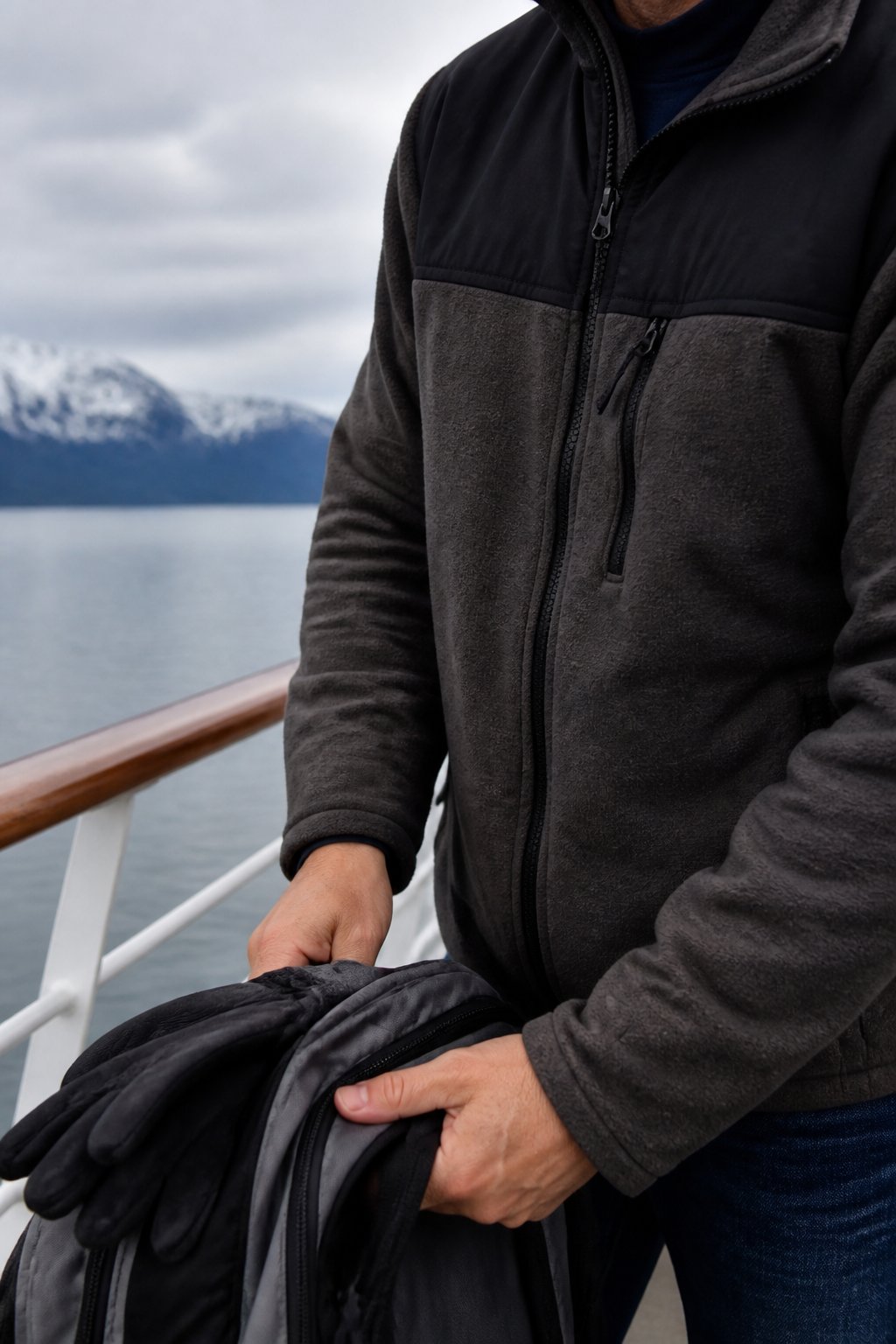
Guide: choose a warm midlayer that traps heat but breathes. A fleece like the Denali works well for damp, cool July mornings and for layering under a waterproof shell.
You’ll wear it on deck for wildlife spotting and at damp shore stops. Pick a midweight fleece with zip pockets so your phone and gloves stay dry and close.
Avoid cotton— it holds moisture and chills you fast. A common mistake is bringing only thin fleeces; pack one with enough loft so it still warms when slightly wet.
Try it on before travel to check fit over a base layer and under a puffer. If space is tight, a compressible synthetic sweater gives similar warmth without bulk.
5. Comfortable, broken-in waterproof hiking boots (e.g., Salomon X Ultra 4)
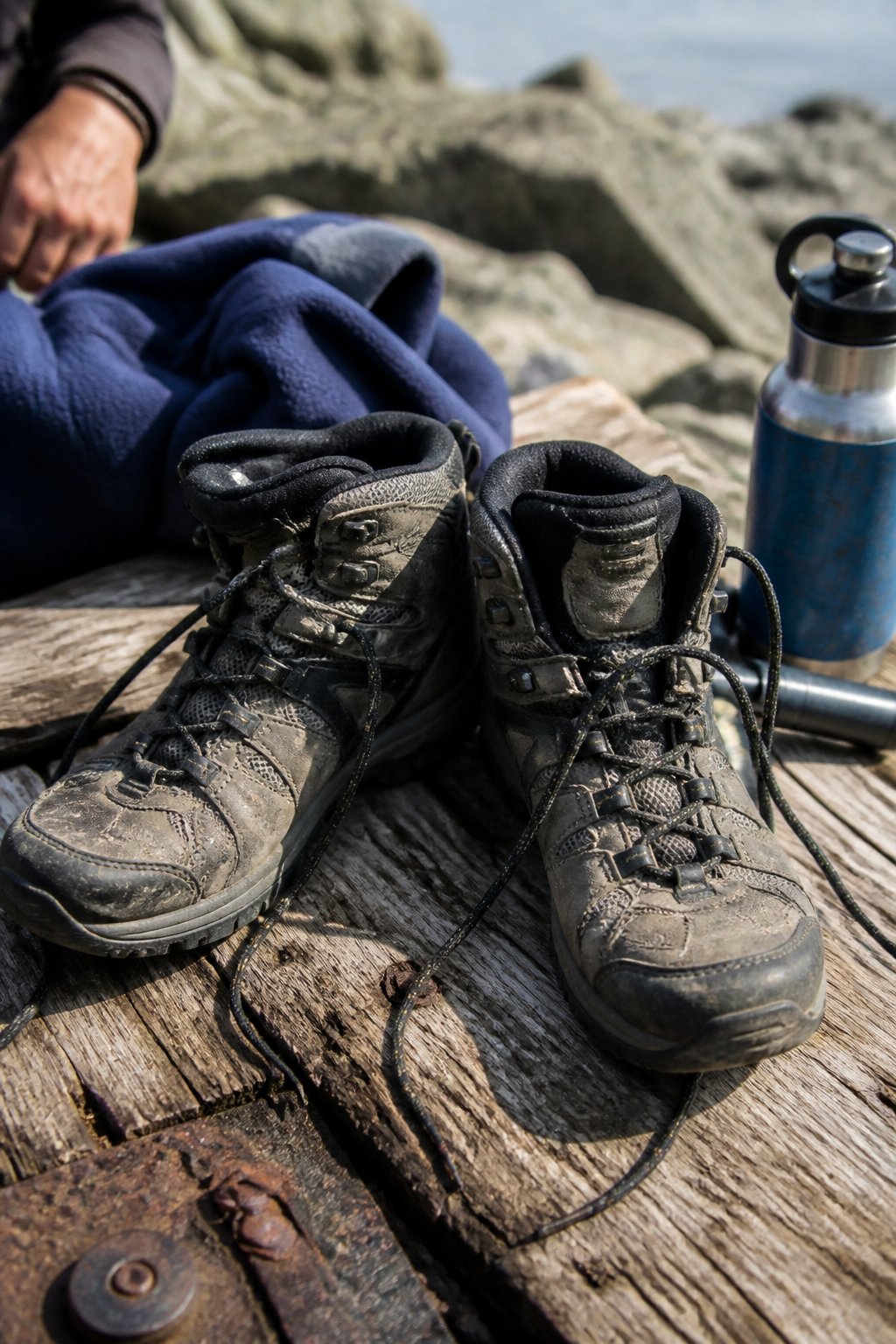
Guide: pick boots that keep your feet dry and blister-free on wet trails and rocky shorelines. You’ll want waterproof membranes like Gore‑Tex and soles with good grip for slippery boardwalks and mud.
Break them in before the cruise. Wear them on short hikes and around town for at least a few weeks so seams, insoles, and your feet adapt. New boots or socks cause blisters at the worst time.
Choose a fit with room for toes and a snug heel. Add wool or synthetic socks and consider a thin liner sock to prevent rubbing. Carry lightweight camp shoes for evenings and short walks off the ship.
Common mistake: buying heavy mountaineering boots for casual coastal hikes. Aim for midweight hikers that balance support and comfort. Test traction on wet surfaces before you go.
6. Casual jeans or stretchy travel pants for onboard wear
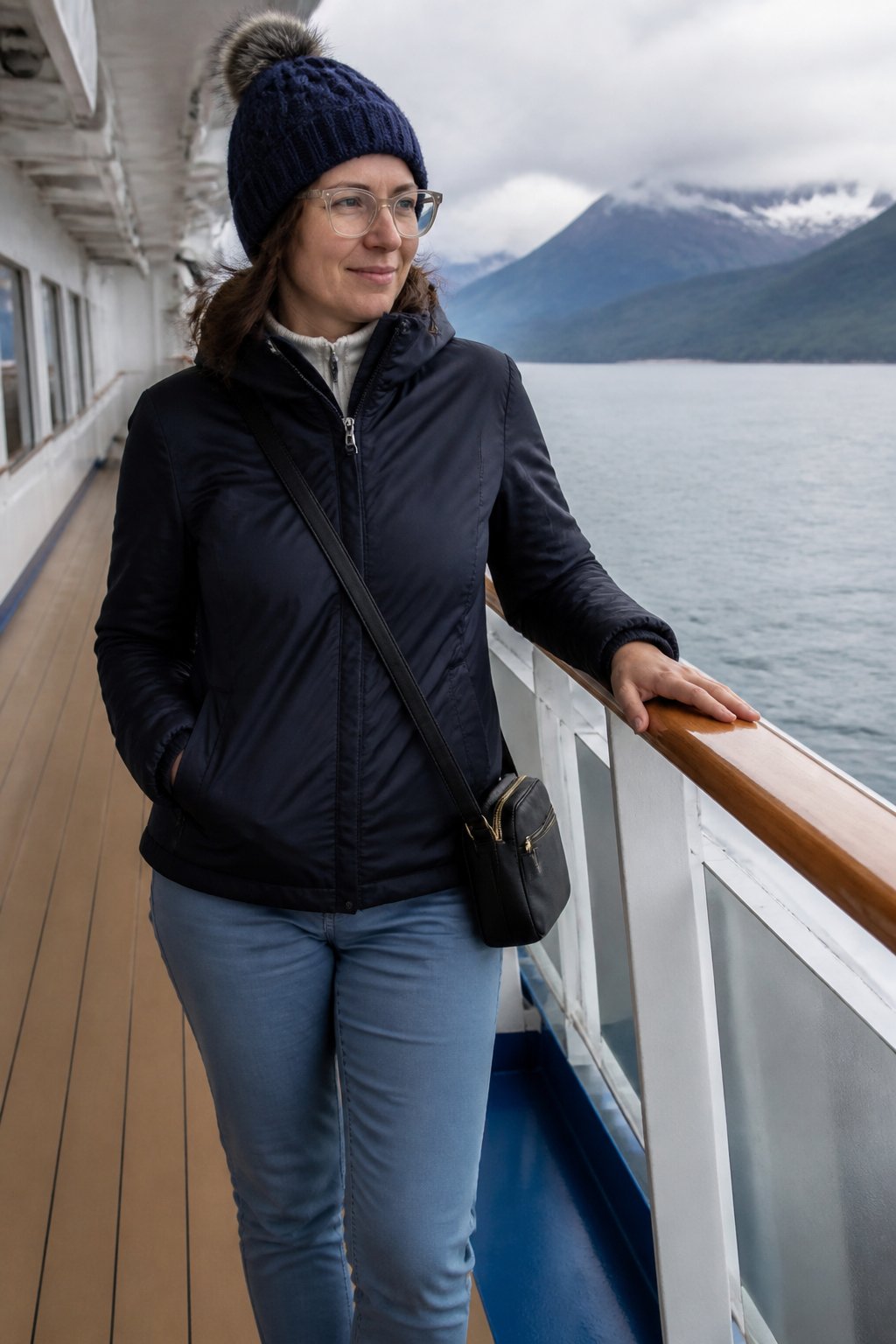
Guide: choose comfy pants that work on deck, in dining rooms, and for short walks ashore.
Bring one pair of casual jeans and one pair of stretchy travel pants. Jeans look neat for dinners and port stops, while stretchy pants keep you comfortable during long sailings and excursions. Aim for dark-wash jeans and quick-dry, wrinkle-resistant travel pants.
Watch for common mistakes: don’t pack stiff jeans that chafe after hours of sitting. Avoid fragile fabrics that show salt spray or stains. Try pants at home with your favorite shoes and a light jacket to test fit and range of motion.
Example: wear jeans with a merino tee for dinner, then switch to travel pants and sneakers for a rainy shore walk. Pack a compact stain pen and a lightweight belt to adjust fit. Choose one neutral color for easy mixing.
7. Quick-dry convertible hiking pants (zip-off)
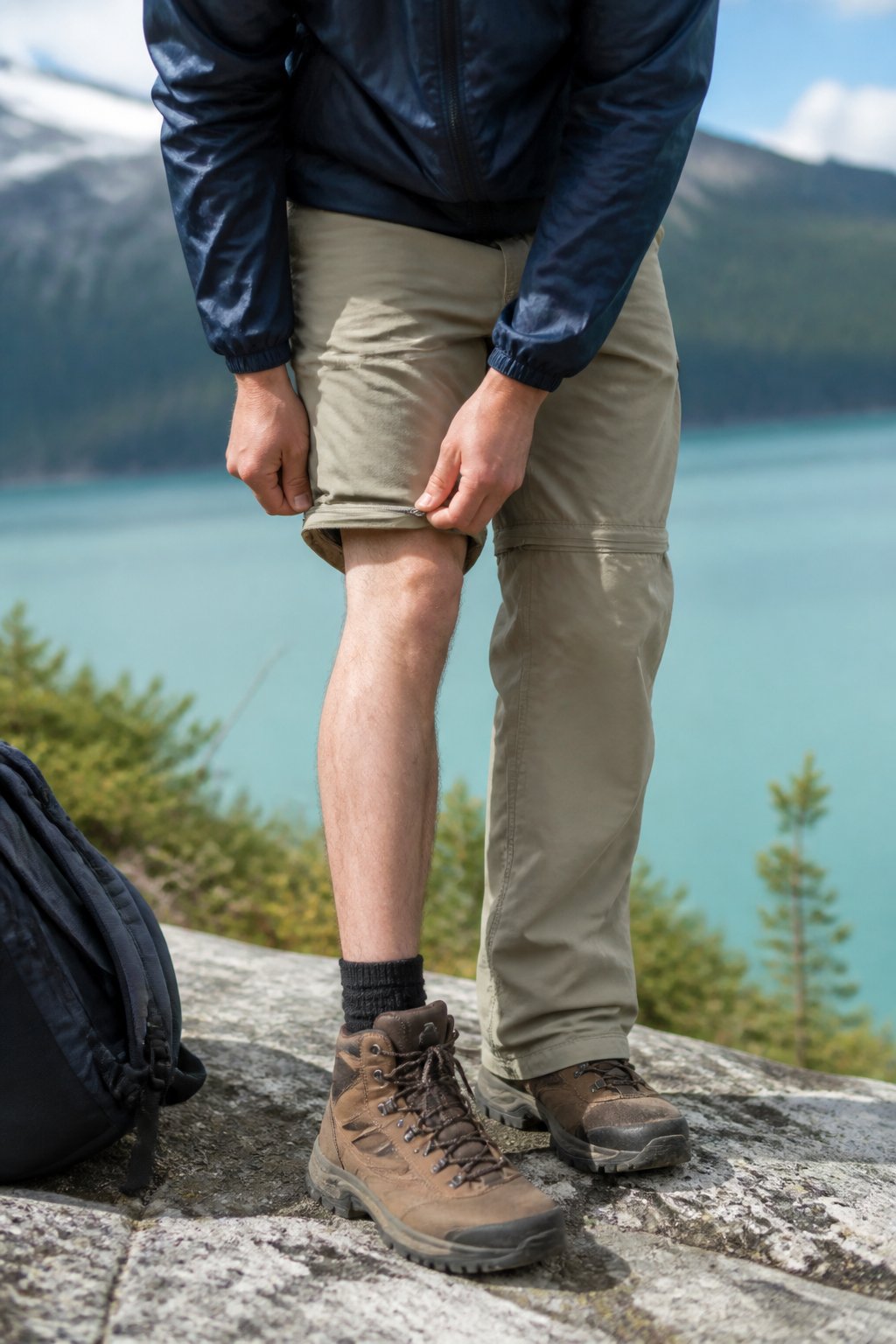
Guide: choose zip-off pants so you can adapt fast to sun and wind.
Bring a pair that dries fast and converts to shorts. You’ll stay comfortable hiking in coastal rain or sudden sun. Look for nylon-spandex blends and secure zip pockets for your phone and passport.
Try them on before the trip; sizing can run small and zip seams may chafe if too tight. A common mistake is packing heavy jeans instead—those stay wet and slow you down. If you plan glacier viewing and low temps, layer thermal leggings under the pants.
Use the zip-off feature early in warm afternoons and zip back on when wind picks up. Test the zippers at home so you don’t fight them on the trail. Consider one convertible pant as a main pair to save luggage space.
8. Warm hat and touchscreen-friendly insulated gloves
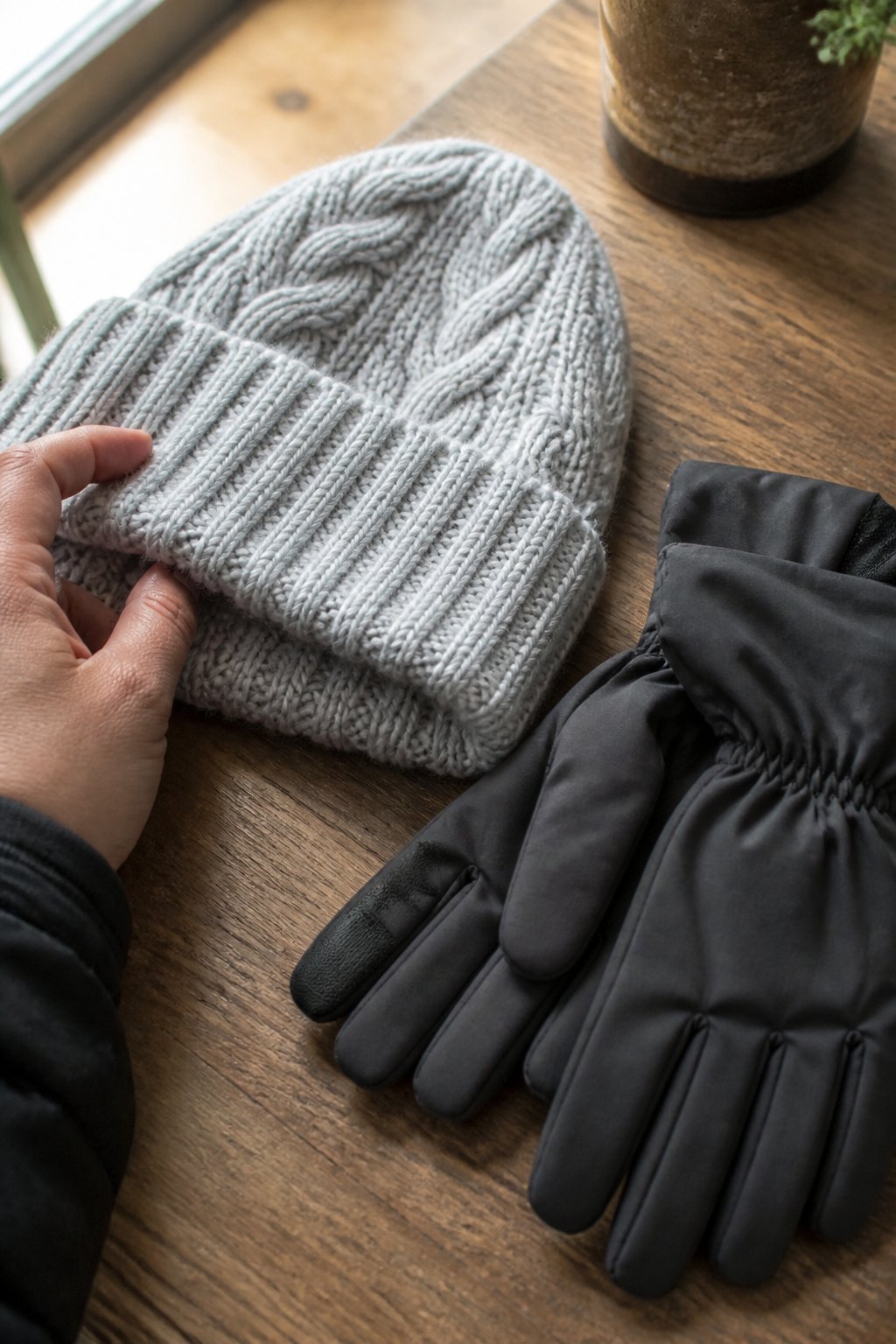
Guide: stay warm and keep your phone usable on deck. Bring a fleece-lined beanie or knit hat that covers your ears. Thin hat plus a hood adds flexible layering.
Choose insulated gloves with touchscreen tips or pack thin liner gloves under bulky mittens. This lets you snap photos, open zippers, and use your phone without exposing your hands to cold wind.
Common mistake: wearing only wool gloves that soak through on wet days. Pick water-resistant shells and quick-dry liners. Try them before you go — test touchscreens and zippers at home.
Example: I kept a pair of touchscreen liners and a waterproof insulated glove on a glacier zodiac day. You’ll stay warmer and still capture the views. Pack a spare pair in your daypack.
9. Non-slip deck shoes or boat loafers (e.g., Sperry Authentic Original)
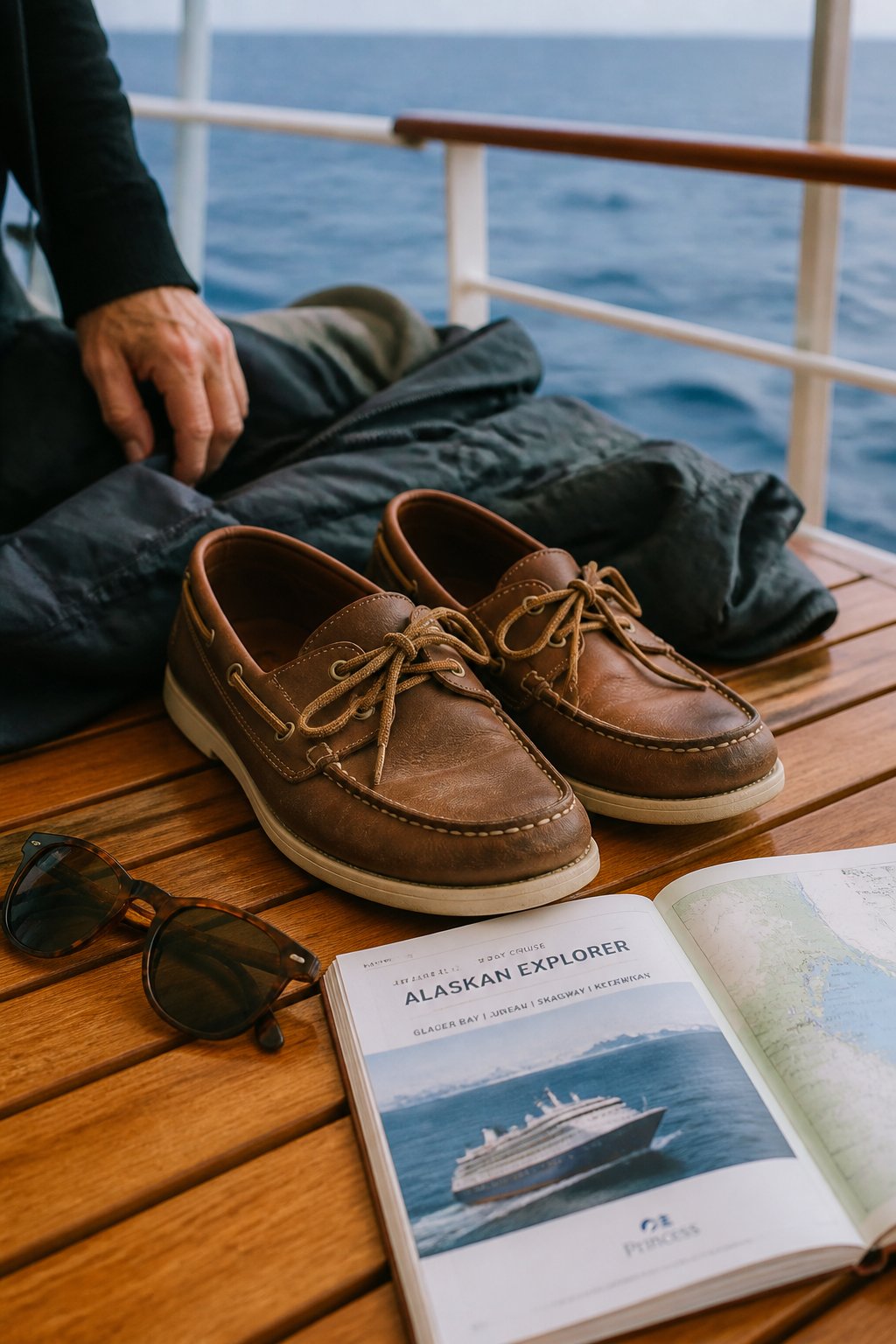
Guide: choose shoes that grip wet decks and stay comfortable for long days aboard.
Bring non-slip deck shoes or boat loafers to prevent slips on wet surfaces. Look for wave-grip or siped soles and full leather uppers that dry fast. Sperry Authentic Original is a classic example, but any tested non-marking sole works.
Break them in before boarding to avoid blisters. Wear thin wool or moisture-wicking socks for warmth and odor control. A common mistake is bringing dress shoes or slick soles; they offer little traction and feel unsafe.
Keep shoes clean and let them air dry each evening. Pack a spare pair in case one gets soaked or muddy. Choose neutral colors that match both casual shore wear and evening ship events.
10. Evening smart-casual outfit (dress or blazer with chinos)
Guide: pick an outfit that balances comfort and polish for ship evenings and shore dinners. A simple dress or a blazer with chinos works well in July’s cool, damp evenings.
Choose a lightweight blazer in navy or charcoal; it layers easily over a shirt or knit. Pair with chinos in a neutral shade and leather or clean sneakers. For women, a knee-length dress in a wrinkle-resistant fabric pairs with a cardigan or blazer for warmth.
Watch common mistakes: don’t pack heavy formalwear you’ll never wear, and avoid thin cotton that chills when wet. Bring a compact umbrella and a scarf—small items that make an outfit feel finished and keep you comfortable. Try outfits on before packing so you know they fit and layer right for Alaska nights.
Understanding the Alaskan Cruise Climate
You will see wide swings in temperature, frequent coastal fog or sun, and wet conditions at times. Plan clothing that adapts quickly and keeps you comfortable on deck and in port.
Typical July Weather Patterns
July is the warmest month in Alaska, but “warm” usually means daytime highs of about 55–65°F (13–18°C) in coastal towns. Nights can drop into the 40s°F (4–9°C). Expect sun, clouds, and sudden light rain on the same day. Wind on open decks makes air feel several degrees colder, so a windproof layer matters more than a heavy coat.
Common mistakes: packing only T‑shirts or only heavy sweaters. Bring base layers, an insulating midlayer, and a lightweight waterproof shell. Sunglasses and sunscreen are essential — long daylight and reflective water increase sun exposure. Pack quick‑dry fabrics and a small umbrella or compact rain jacket.
Regional Variations Along the Cruise Route
Weather shifts by region. Southeast Alaska (Juneau, Ketchikan) gets more rain and milder temps; plan for more waterproof gear and rubber‑soled shoes for wet docks. Glacier Bay and northern routes (Skagway, College Fjord) are colder, with icy wind gusts near glaciers that can make temps feel 10–20°F (6–11°C) colder.
On small excursion boats or shore hikes, microclimates matter: fog can be thick in channels but clear on a nearby ridge. Check daily forecasts from the ship and bring a small daypack with layers so you can adjust mid‑trip. Avoid cotton; it stays wet and chills you during glacier or whale‑watching outings.
Practical Considerations for Packing
You need gear that handles wet weather, sudden temperature swings, and active days ashore. Prioritize waterproof outerwear, layered clothing that mixes easily, and shoes built for both the gangway and muddy trails.
Accommodating Shore Excursions
Guide: pick gear for planned activities and keep a small daypack ready.
List your booked excursions before you pack. For glacier walks, bring waterproof hiking boots with good tread and wool socks. For whale watching, pack a warm windproof jacket and a binocular harness or pocket for quick access. If you plan city strolls or cultural tours, include a pair of comfortable walking shoes and a lightweight rain shell.
Keep a small zip-top bag in your carry-on with essential layers, sunscreen, lip balm, and any meds. A dry bag protects electronics on zodiac rides and beach landings. Common mistake: leaving hiking shoes in checked luggage—store them in your carry-on if you might disembark quickly.
Managing Layering and Versatility
Guide: build outfits from a few interchangeable pieces that handle 40–65°F (4–18°C) conditions.
Start with a moisture-wicking base (short or long sleeve depending on your tolerance). Add a thin fleece or merino midlayer, then a waterproof breathable shell. Pack one insulated jacket for colder mornings or deck watching. Choose pants that dry fast—convertible styles or nylon blends work well.
Use accessories to adapt: a neck gaiter, lightweight beanie, and glove liners take up little space but add warmth. Color-coordinate to avoid overpacking; three tops, two bottoms, and one smart-casual outfit cover most needs. Test outfits at home once to spot gaps before you leave.
About the Author — Lena Harper
Lena Harper is a fashion writer and content strategist at Fashion Pops, known for creating thoughtful, trend-aware articles that feel both stylish and relatable. With a strong background in fashion journalism, she specializes in turning seasonal trends, outfit ideas, and styling concepts into easy-to-follow inspiration for modern women.
Her writing focuses on practicality without losing creativity — helping readers build outfits that feel current, wearable, and confident. When she’s not working on new articles, Lena enjoys exploring street style trends, discovering unique fashion finds, and curating inspiration boards that shape upcoming content at Fashion Pops.